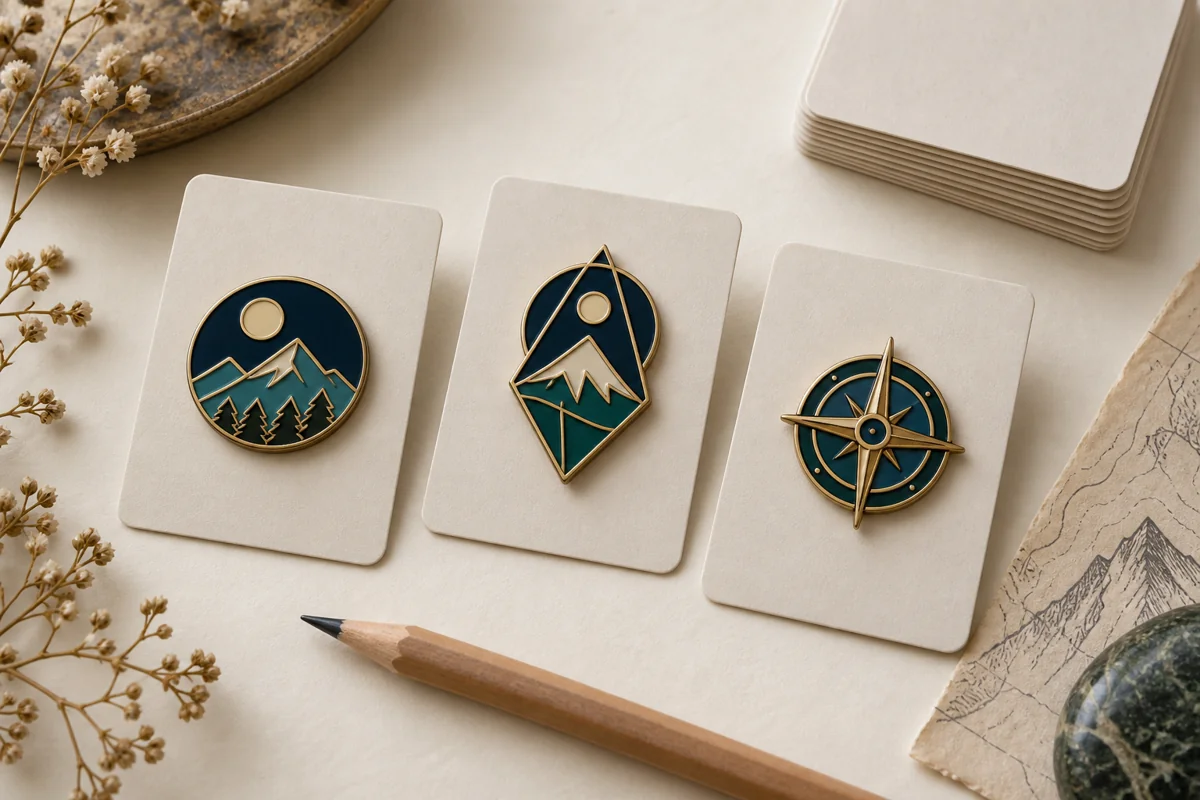




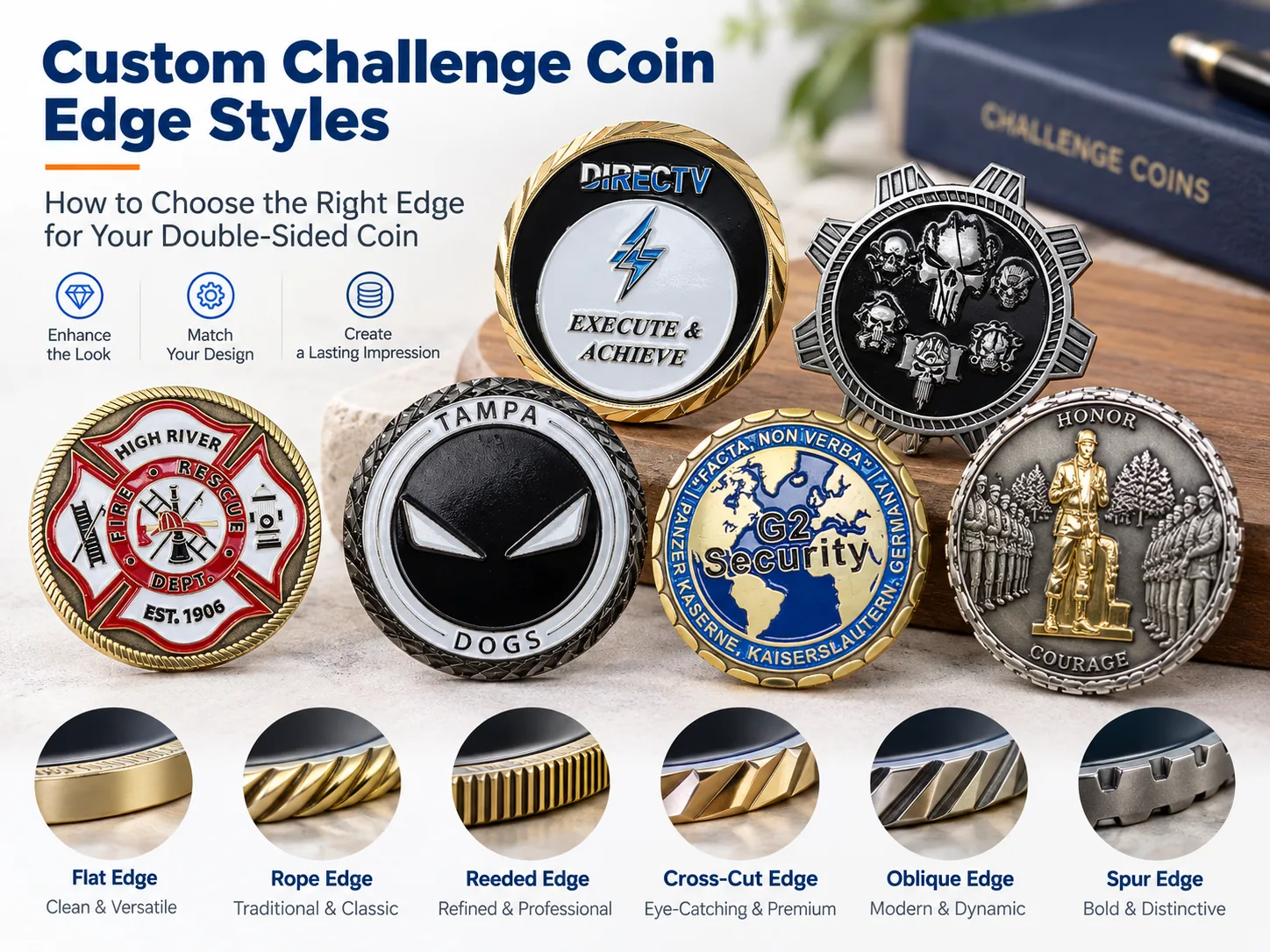
Custom lapel pins are one of the most flexible branded products a company can order. They are small enough for daily wear, premium enough for recognition programs, and collectible enough for events, launches, schools, clubs, nonprofits, and retail merchandise. When designed well, a lapel pin can communicate identity without taking up much space. It can mark membership, celebrate achievement, support a campaign, or turn a simple event badge into something people want to keep.
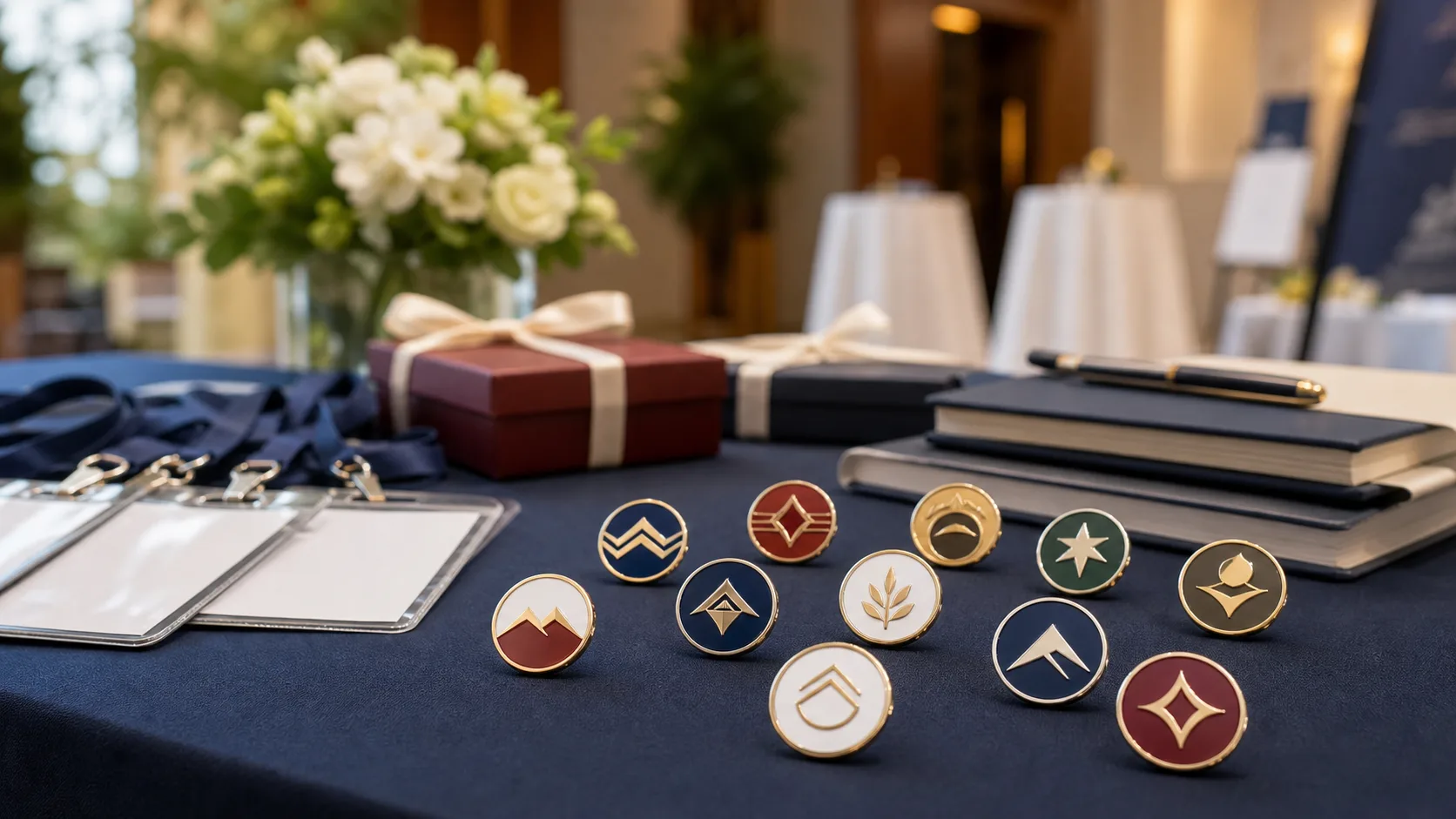
What makes lapel pins effective?
The strength of a lapel pin is its balance of visibility and subtlety. A custom T-shirt may be seen only when someone chooses to wear it. A printed brochure may be discarded after the event. A pin, however, can move from a jacket to a bag, from a lanyard to a display board, and from an event table to a collector’s box. It is small, but it is personal.
For organizations, lapel pins are useful because they can be produced in many styles and quantities. A company may order a polished corporate pin for employees, a colorful enamel pin for fans, a die struck metal pin for awards, and a limited-edition pin set for a product launch. Each version can serve a different audience while staying connected to the same brand system.
Common uses for custom lapel pins
Custom lapel pins are often used in corporate recognition, trade shows, conferences, school clubs, sports teams, museum shops, tourism campaigns, charity fundraising, product packaging, employee onboarding, and VIP gifts. The format works for both formal and casual audiences. A simple metal logo pin can feel professional on a blazer, while a colorful enamel character pin can sell well as lifestyle merchandise.
- Events: welcome gifts, speaker badges, sponsor gifts, volunteer recognition, and attendee collectibles.
- Companies: employee milestones, internal culture programs, dealer awards, and branded uniforms.
- Retail: collectible sets, seasonal drops, fan merchandise, and gift shop products.
- Nonprofits: donor thank-you gifts, awareness campaigns, and volunteer rewards.
- Schools and clubs: membership symbols, graduation keepsakes, team identity, and student awards.
Choose the right pin style
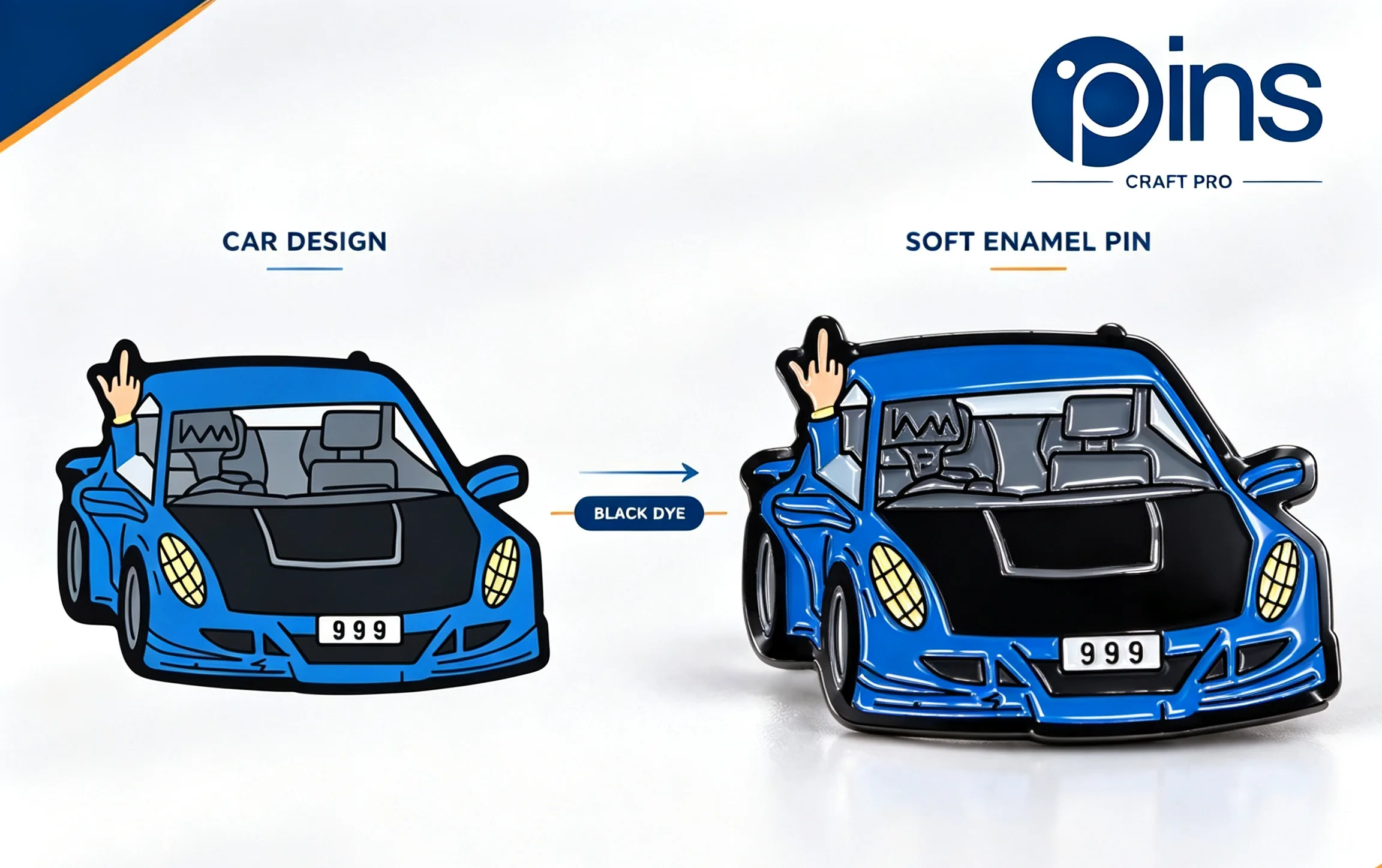
The right pin style depends on the design and the purpose. Anstecknadeln aus weichem Emaille are popular for bold, colorful designs with raised metal outlines. Hard enamel pins are polished smooth and feel more premium. Die struck pins use metal relief without enamel color, making them suitable for formal awards or classic emblems. Printed pins can reproduce photos, gradients, and detailed artwork that would be difficult to separate into enamel areas.
If the pin will be worn on professional clothing, a clean shape, limited colors, and polished plating often work best. If the pin will be sold as merchandise, stronger colors, playful shapes, and themed packaging may help it stand out. If the pin will be used for awards, weight, finish, and presentation box may matter more than bright color.
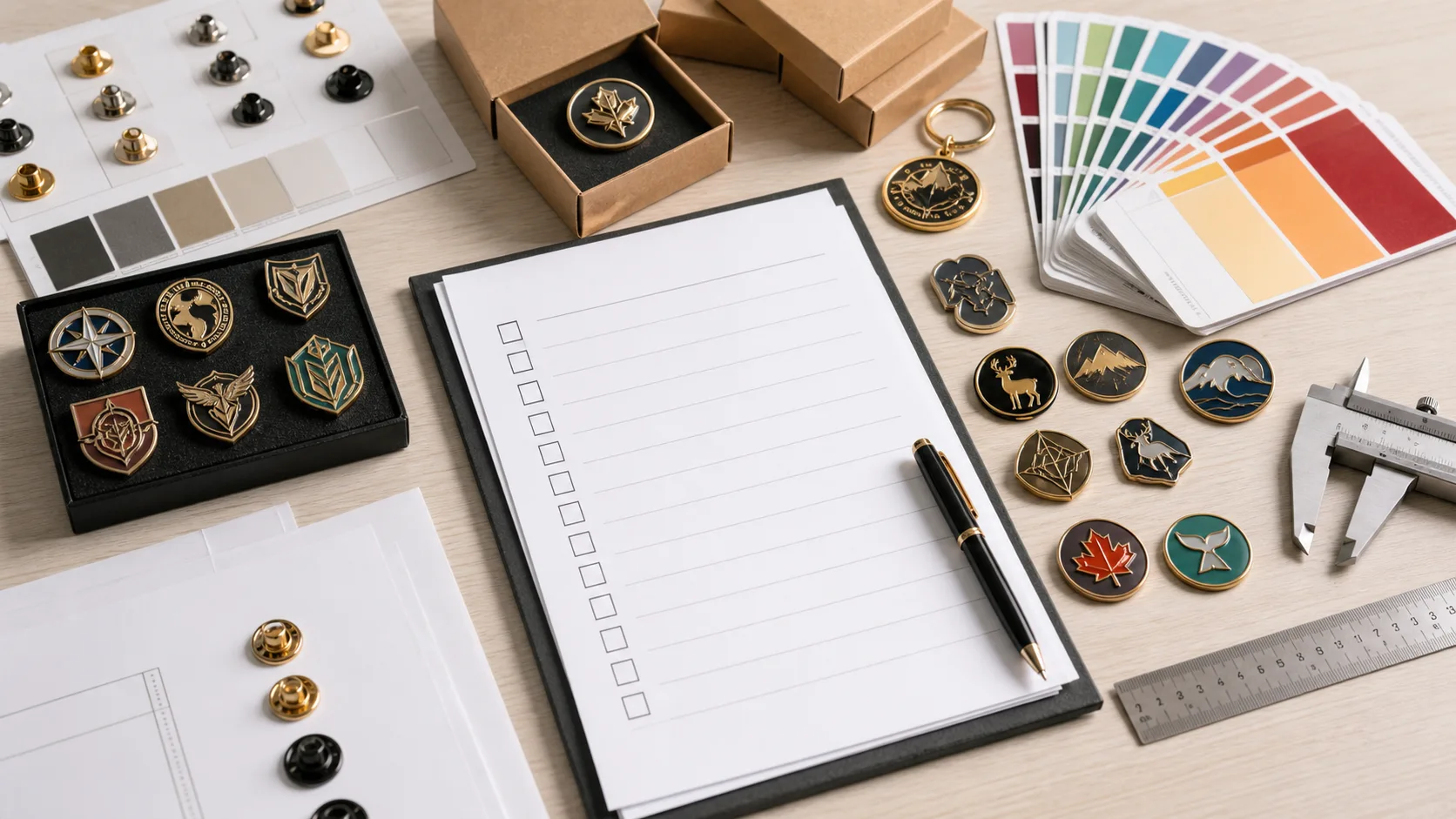
How to prepare a clear custom pin order
A complete order brief makes the process faster and helps avoid misunderstanding. Start with the purpose of the pin, then define the technical requirements. If the supplier understands whether the pin is for a conference, employee recognition program, retail sale, or fundraising campaign, it can recommend a more suitable style and packaging option.
| Order detail | What to specify | Why it matters |
|---|---|---|
| Artwork | Vector file, logo, sketch, or reference image | Determines mold and color layout |
| Größe | Width or height in inches or millimeters | Affects detail, price, and wearability |
| Menge | Estimated order volume | Controls unit cost and production planning |
| Pin type | Soft enamel, hard enamel, die struck, printed | Defines surface feel and production method |
| Fertig | Gold, silver, black nickel, antique brass, rose gold | Changes the visual tone |
| Backing | Butterfly clutch, rubber clutch, safety pin, magnet | Affects usability and comfort |
| Verpackung | Bulk bag, individual bag, backing card, pouch, box | Improves protection and presentation |
Design details that improve the final pin
Because lapel pins are small, simple design usually wins. Strong outlines, clear shapes, balanced negative space, and controlled color count make the finished pin easier to read. If the artwork includes text, use fewer words and increase the size. If the design includes a mascot or detailed illustration, keep the most recognizable features and simplify the rest.
For branded pins, consistency is important. Use brand colors carefully, but remember that enamel, plating, and light reflection can shift how colors appear. For collectible pins, consider creating a visual system that can expand into future designs. A series may use the same shape, border style, backing card layout, or finish so customers recognize the collection immediately.
Packaging and presentation
Packaging can turn a simple pin into a giftable product. Backing cards are useful for retail because they provide space for branding, product names, collection themes, care notes, and barcodes. Individual poly bags protect pins during shipping and handling. Velvet pouches and boxes create a more premium experience for awards, VIP gifts, or commemorative pins.
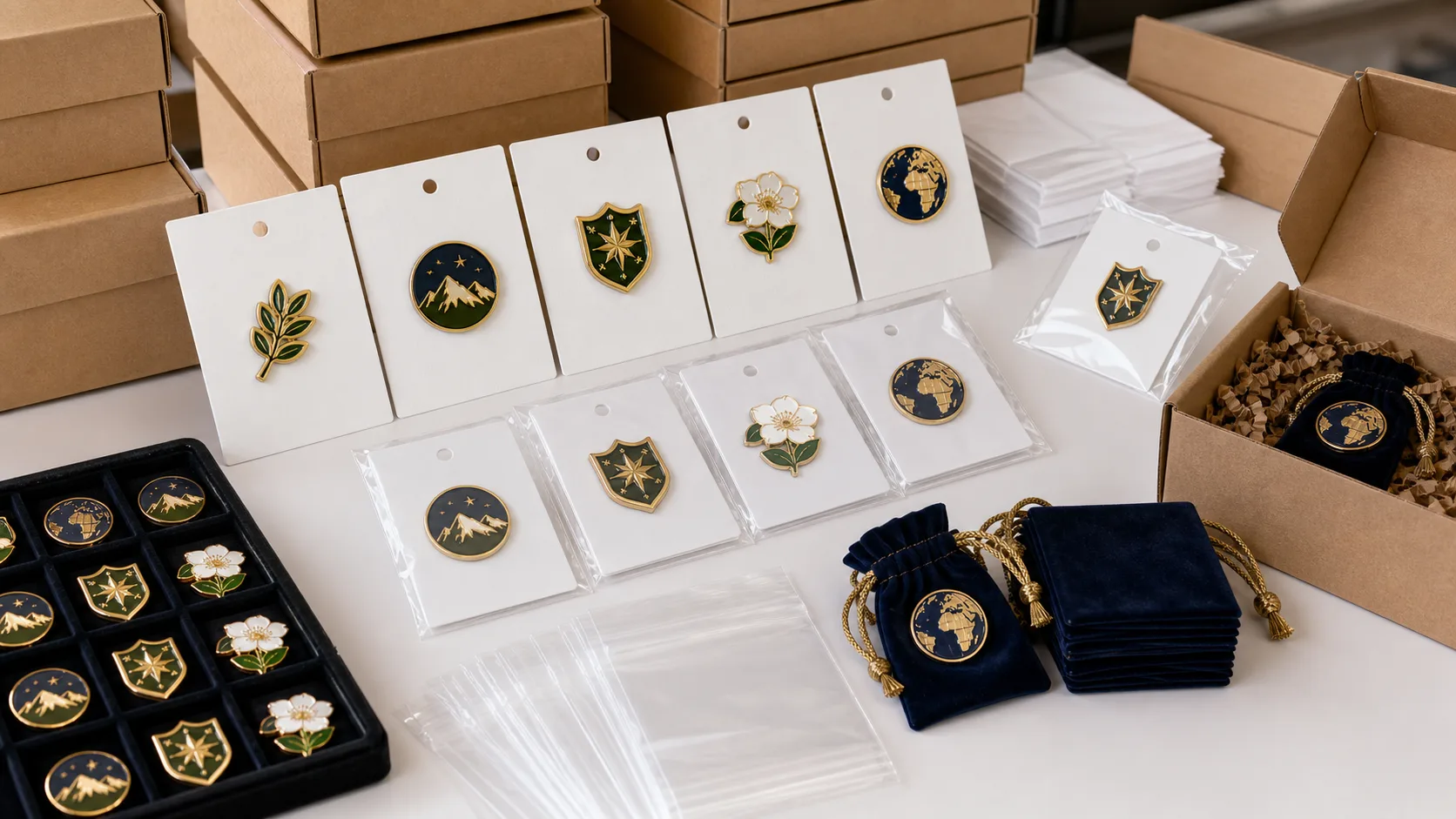
When choosing packaging, think about where the pin will be given or sold. A conference giveaway may need efficient bulk packing and fast distribution. A museum shop pin may need a branded backing card that looks good on a display rack. A corporate award pin may need a small box to make the presentation feel more formal. The packaging should support the moment in which the recipient receives the pin.
Timeline and production planning
Production time depends on artwork complexity, proofing speed, sample requirements, order quantity, packaging, and shipping destination. To avoid rush fees or missed event deadlines, begin the project early. Build in time for artwork adjustment, digital proof approval, production, inspection, packing, and transit. If the pin is needed for a fixed event date, share that deadline with the supplier at the beginning.
For first-time orders, a sample can be helpful. A physical sample lets you check size, weight, finish, color, backing strength, and packaging before the full run. For repeat orders with a stable design, production can often move faster because the artwork and specifications are already established.
Questions to ask before ordering
- Who will receive or buy the pin?
- Will it be worn, collected, gifted, or resold?
- Should the pin feel playful, premium, formal, or vintage?
- Does the artwork need simplification for metal production?
- Which backing will be easiest for the intended use?
- Does the packaging need branding or retail information?
- What is the latest acceptable delivery date?
Final recommendation
The best custom lapel pins are planned as complete products, not just small metal items. Design, material, plating, backing, packaging, and delivery all influence the final experience. If you prepare a clear brief and work with a supplier that understands production details, your pins can become effective brand merchandise, event keepsakes, employee awards, or collectible retail products.
PinsCraftPro can help turn a logo, sketch, campaign idea, or product concept into production-ready custom lapel pins. Share your artwork, quantity, deadline, and preferred style to receive practical recommendations for manufacturing, packaging, and shipping.
How to match lapel pins with buyer intent
Different customers search for lapel pins with different goals. A corporate buyer may search for custom lapel pins for employees because they need a recognition item that feels professional. An event organizer may search for event pins because they need a memorable giveaway before a deadline. A store owner may search for enamel pins wholesale because they are building a merchandise line. A school or club may search for custom pin badges because they need an affordable identity item. A strong supplier page should speak to these different buying situations instead of treating every visitor the same way.
When building a custom pin order, connect the pin specification to the final use. A retail pin should include attractive packaging and product photography. An employee pin should be comfortable, durable, and easy to wear every day. A fundraising pin should communicate the cause clearly and be simple enough to recognize quickly. A collector pin may benefit from limited-edition numbering, special plating, or a themed card.
Bulk ordering and reorder strategy
For bulk orders, consistency matters. If you plan to reorder the same design later, keep a record of size, plating, color references, mold details, backing choice, packaging, and approval proofs. This makes reorders faster and helps maintain the same look across batches. If your organization runs annual events, create a repeatable system: keep the same base shape, change the year or theme color, and preserve the packaging format. This gives each year’s pin a collectible identity while keeping production efficient.
Bulk buyers should also think about distribution. Pins for conferences may need to be counted by carton or separated by design. Retail pins may need barcoded backing cards. Employee award pins may need individual pouches or boxes. Fundraising pins may need compact packaging for mailing. These details should be discussed before production, because packaging and sorting can affect both cost and timeline.
Ordering checklist for buyers
- Define the audience and purpose of the pin.
- Choose a style that matches the audience: formal, playful, collectible, premium, or economical.
- Prepare clear artwork or reference images.
- Confirm size, color, plating, backing, and packaging.
- Ask for a proof and review it carefully before mass production.
- Build in enough time for production, inspection, packing, and shipping.
- Keep final specifications for future reorders.
FAQ
What is the minimum information needed for a quote? Send artwork, size, quantity, pin type, finish, backing, packaging preference, and deadline. If you are unsure, send the intended use and the team can suggest options.
Are custom lapel pins only for formal wear? No. They can be worn on jackets, bags, hats, lanyards, uniforms, or displayed as collectibles.
Which pin type is best for a premium gift? Hard enamel or die struck pins with polished plating and a pouch or box often create a premium impression.
Can I order packaging with the pins? Yes. Packaging options can include individual bags, backing cards, velvet pouches, and gift boxes depending on the project.
Recommended Next Steps
Compare production options on the Seite des Herstellers von individuell gestalteten Ansteckern, review custom enamel pin styles, or start a free custom pin quote.
Verwandte PinsCraftPro-Ressourcen
Wenn Sie maßgefertigte Metallprodukte für eine bevorstehende Kampagne vergleichen, können Ihnen diese Ratgeber und Produktseiten dabei helfen, den passenden Stil, die richtige Oberflächenbehandlung und den geeigneten Bestellweg zu finden.