



Pin backings, plating, and packaging are not the loudest parts of a custom pin order. Most people start with the front of the pin: the logo, the mascot, the enamel colors, the shape, the line art. That makes sense. The front is what everyone sees first. However, pin backings play a crucial role in the overall experience.
But if you have ever handed out pins at a booth, packed them into gift bags the night before an event, or watched someone try to fasten one to a jacket in a hurry, you know the quiet details matter. A backing that feels awkward makes the whole item feel cheaper. A plating choice with poor contrast can flatten a good design. Packaging that looks like an afterthought can make a thoughtful giveaway feel unfinished.
This guide is a practical walk-through for brand events: trade shows, employee gatherings, conferences, school programs, retail launches, creator pop-ups, nonprofit campaigns, and corporate recognition moments. It is not a rigid rulebook. Different events have different budgets and different audiences. The point is to choose the details deliberately instead of leaving them as the final rushed decision.
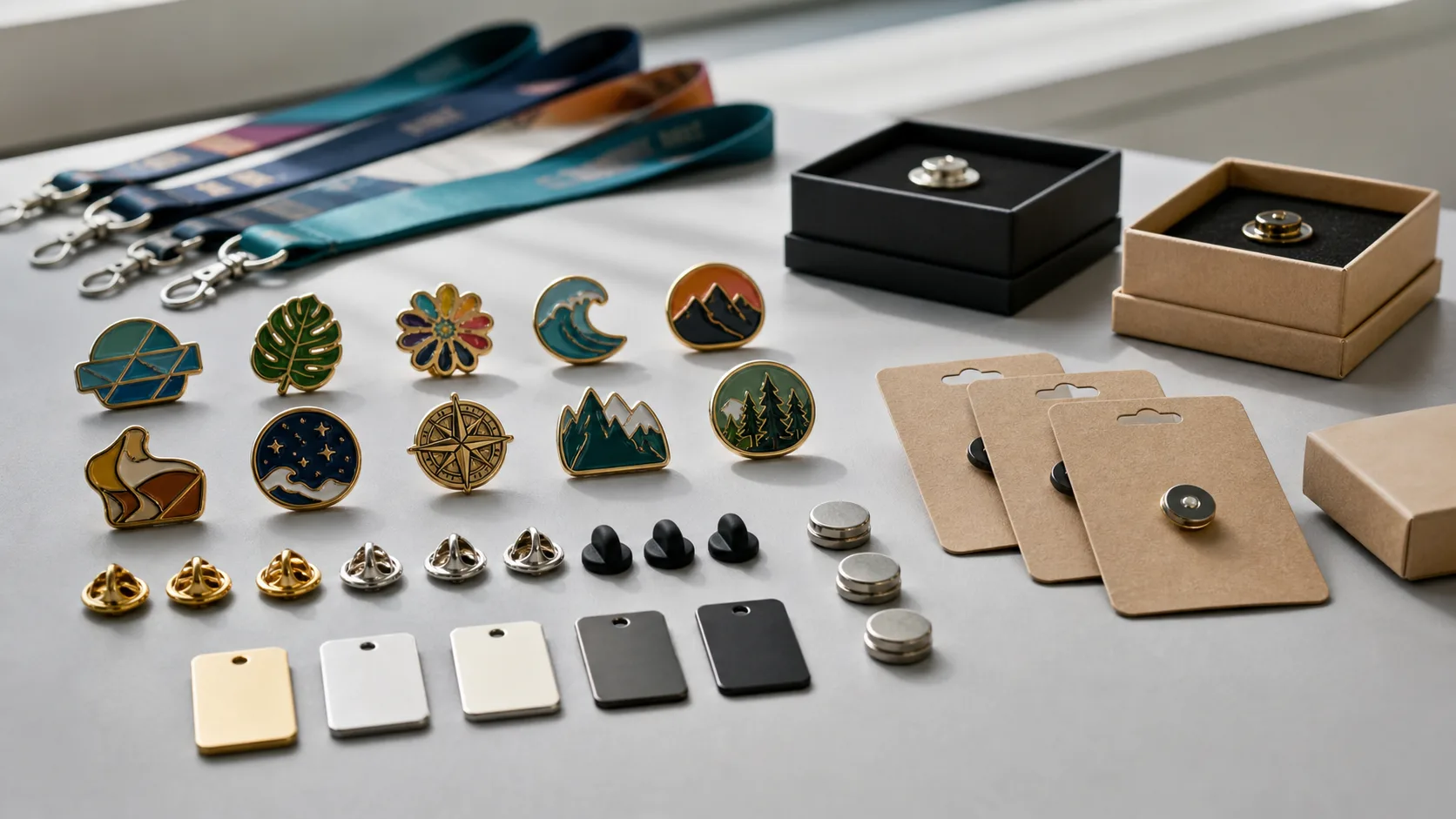
Begin with the moment of use
A custom pin does not live only in the artwork proof. It lives in a real moment. Someone opens a gift box. Someone reaches into a conference tote. Someone pins it to a denim jacket. Someone buys it from a merch table and photographs it before posting. Someone receives it from a manager after years of service. The same physical product can feel very different depending on that moment.
When selecting pin backings, consider how they will enhance the recipient’s interaction with the pin.
So before choosing a backing or plating finish, ask a simple question: what will the recipient do with this pin within the first five minutes?
Different pin backings may offer varying levels of comfort and security, which are essential for the recipient’s experience.
If they will put it on immediately at a busy event, convenience matters. If they will keep it as a collectible, presentation matters. If they will wear it on a uniform, security and comfort matter. If they will receive it as an award, weight, finish, and packaging matter. If they will resell it, the backing card and visual story matter.
This sounds obvious, but it prevents a lot of mismatched choices. A premium box may be unnecessary for a casual booth giveaway. A bare poly bag may feel wrong for a formal recognition pin. A single post may not be enough for a wide design. A magnet may be perfect for a corporate event where guests do not want holes in clothing.
The everyday choice: butterfly clutch
The butterfly clutch is the familiar standard backing. It is small, affordable, and easy to source. For many promotional pins, it does the job well. If you are producing a standard enamel pin for a conference, school group, brand activation, or general giveaway, a butterfly clutch is often the default for good reason.
In many cases, choosing the right pin backings can elevate the perception of the entire product.
Its strength is simplicity. It keeps the quote predictable and works for a wide range of pin sizes. It is also easy for recipients to understand because many people have used one before.
The limitation is that it can feel basic, especially for higher-end gifts. It may also be less comfortable than rubber for some casual wear situations. On larger or heavier pins, a single butterfly clutch can allow the pin to rotate. That is not a failure of the clutch so much as a sign that the design may need two posts or a different backing strategy.
Rubber clutch: softer, quieter, more casual
Rubber clutches as pin backings provide a softer touch, which is more comfortable against the skin.
Rubber clutches are popular for pins that will be worn on jackets, backpacks, hats, and casual apparel. They feel softer against the body and can be easier to grip. For a brand event with a younger audience, a creator merch drop, or a pin that is likely to end up on bags and denim, rubber can feel more relaxed.
The cost difference is usually not the largest part of the quote, but it is still a choice. Rubber clutches may not always feel as formal as metal clutches. That is not a problem if the pin itself is playful or merch-focused. It may be less ideal if the pin is an executive award or formal lapel pin.
One small human detail: people often judge quality through touch before they can explain why. A backing that feels comfortable can improve the whole impression, even though it is hidden most of the time.
Deluxe clutch: when the back should feel as considered as the front
Deluxe clutches as pin backings can create a more premium feel, especially for formal occasions.
Deluxe clutches are useful when the pin is meant to feel more secure or premium. They are often chosen for recognition pins, corporate gifts, formal lapel pins, and higher-value merchandise. If the front of the pin has a polished hard enamel finish, premium plating, or a restrained corporate mark, a deluxe clutch can make the entire item feel more complete.
This is not always necessary. A deluxe clutch on a simple mass giveaway might be overspending. But for pins that carry status, anniversary value, or brand prestige, it is worth considering. The recipient may not describe the backing in detail, but they can feel that the item was not treated like a throwaway.
Choosing appropriate pin backings can significantly influence the recipient’s perception of quality.
Magnet backing: useful when clothing matters
Magnet backings are helpful for corporate events, hospitality settings, conferences, and any situation where recipients may be wearing suits, dresses, uniforms, or delicate fabrics. The benefit is obvious: no puncture holes, and pin backings can significantly impact the overall feel of the item.
The trade-off is that magnets are not right for every use case. They can be less secure on thick fabric or active movement. They may add cost. They also need to be considered carefully for safety and audience context. For children’s items or situations where magnets could be mishandled, choose cautiously.
When magnets make sense, they can remove friction. People are more likely to wear a pin immediately if they do not have to pierce clothing. For a one-day conference, that can matter more than it seems.
Safety pin and other practical backings
Safety pin backs are useful for some larger badges, fabric applications, or temporary event identification. They are not always the prettiest option, but they can be practical. If the item is closer to a badge than a small lapel pin, a safety pin backing may make sense.
When it comes to larger badges, pin backings like safety pins can be very practical.
There are also specialty backings for specific needs. Some buyers need keychain attachments, tie tack options, cufflink conversions, or adhesive solutions. Those choices should be discussed early because they may change the design structure. A pin designed for a jacket is not automatically ready to become a charm, keychain, or magnet without small adjustments.
One post or two?
This tiny question deserves more attention than it usually gets. A small round pin can often work with one post. A wide rectangular pin, long logo, irregular cut-out shape, or heavier design may need two posts so it does not spin. Rotation is one of those annoyances that makes a pin feel less polished even if the front looks good.
If the design is wider than it is tall, unusually shaped, or intended for formal wear, ask whether two posts are recommended. It may add cost, but it can protect the user experience. A recipient should not have to keep straightening the pin all day.

Plating sets the temperature of the design
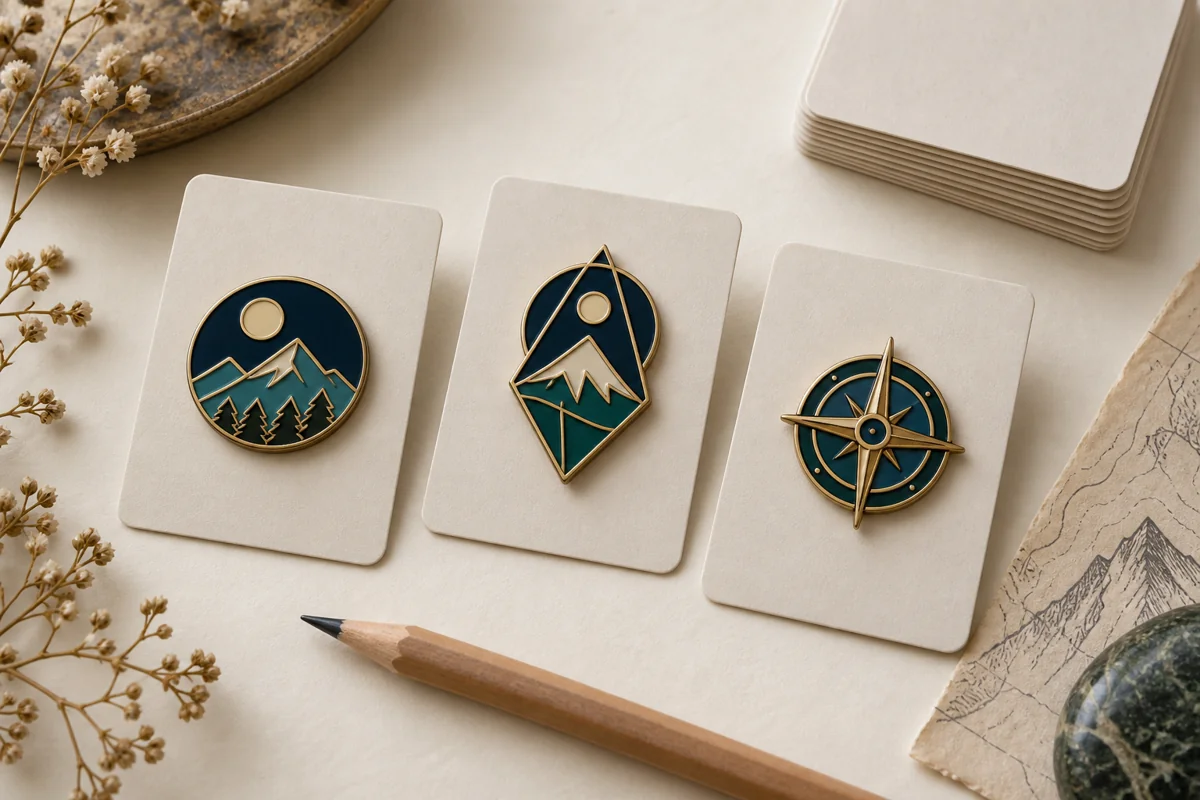
Plating is the metal finish around and behind the enamel. It frames the design. Gold plating brings warmth and a sense of celebration. Silver plating feels clean, flexible, and easy to match with many brand palettes. Black nickel creates contrast and can make bright colors feel more modern. Antique gold, antique silver, or antique copper can make a design feel established, commemorative, or heritage-driven.
There is no neutral plating choice. Even silver, which feels the most flexible, still changes the mood. A friendly illustrated mascot may feel cheerful in gold, sleek in silver, and dramatic in black nickel. The same artwork can shift personality quickly.
Consider how pin backings will complement the design and overall presentation.
For brand events, match plating to the audience and setting. A luxury product launch may want polished gold or black nickel. A school event may want bright, approachable metal. A military or first responder recognition piece may benefit from antique finishes. A tech conference might lean toward silver or black nickel. These are not hard rules, but they are useful starting points.
Contrast matters more than people think
Contrast matters not only for the design but also for the effectiveness of pin backings.
The most beautiful plating choice can still fail if it reduces contrast. Pale enamel on silver may look subtle in a proof and almost invisible in real life. Dark enamel on black nickel can look sleek but may lose detail under dim event lighting. Gold can overpower certain yellows or oranges. Antique finishes can add depth but may make tiny lettering harder to read.
Ask to review the design at a realistic viewing size. Do not only inspect a large digital proof on a bright monitor. Imagine the pin on a jacket, in a convention hall, under warm indoor light, or inside a gift box. If the main mark is not easy to read, adjust color, plating, or line thickness before production.
Thoroughly reviewing the design includes considering the impact of pin backings on the overall aesthetic.
Packaging: the part people experience before the pin
Packaging is the first physical interaction. A recipient often touches the card, bag, pouch, or box before touching the pin. That means packaging can frame the entire experience.
Packaging can also include references to pin backings, enhancing the overall message.
For high-volume giveaways, simple poly bags are practical. They protect pins during shipping and make distribution easy. For retail or creator merch, backing cards are usually better because they create a finished product. They can carry brand color, collection names, QR codes, care notes, or campaign context. For awards and VIP gifts, boxes or pouches can make the item feel more ceremonial.
Do not choose packaging only at the end. It can affect artwork planning, shipping weight, fulfillment time, and photography. If the pin will be sold online, the backing card may need to fit standard mailers. If the pin will be handed out at a booth, staff need packaging that is quick to distribute. If the pin will be placed at dinner seats, a box may be worth the extra setup.
Backing cards are underrated
A backing card can do a surprising amount of work. It gives the pin a home. It can explain the campaign. It can make a simple pin feel like a collectible. It can carry the brand without forcing too much text onto the pin itself.
For example, if a brand wants a tiny mascot pin and a long campaign phrase, the phrase may not belong on the metal. Put the mascot on the pin and the phrase on the card. The final product will be more readable and probably better looking.
Backing cards also help with retail display. A pin on a card can hang, stack, photograph, and ship more easily. If the pin is part of a limited series, the card can carry numbering, collection context, or event information.
Artwork proof approval should include the back and packaging
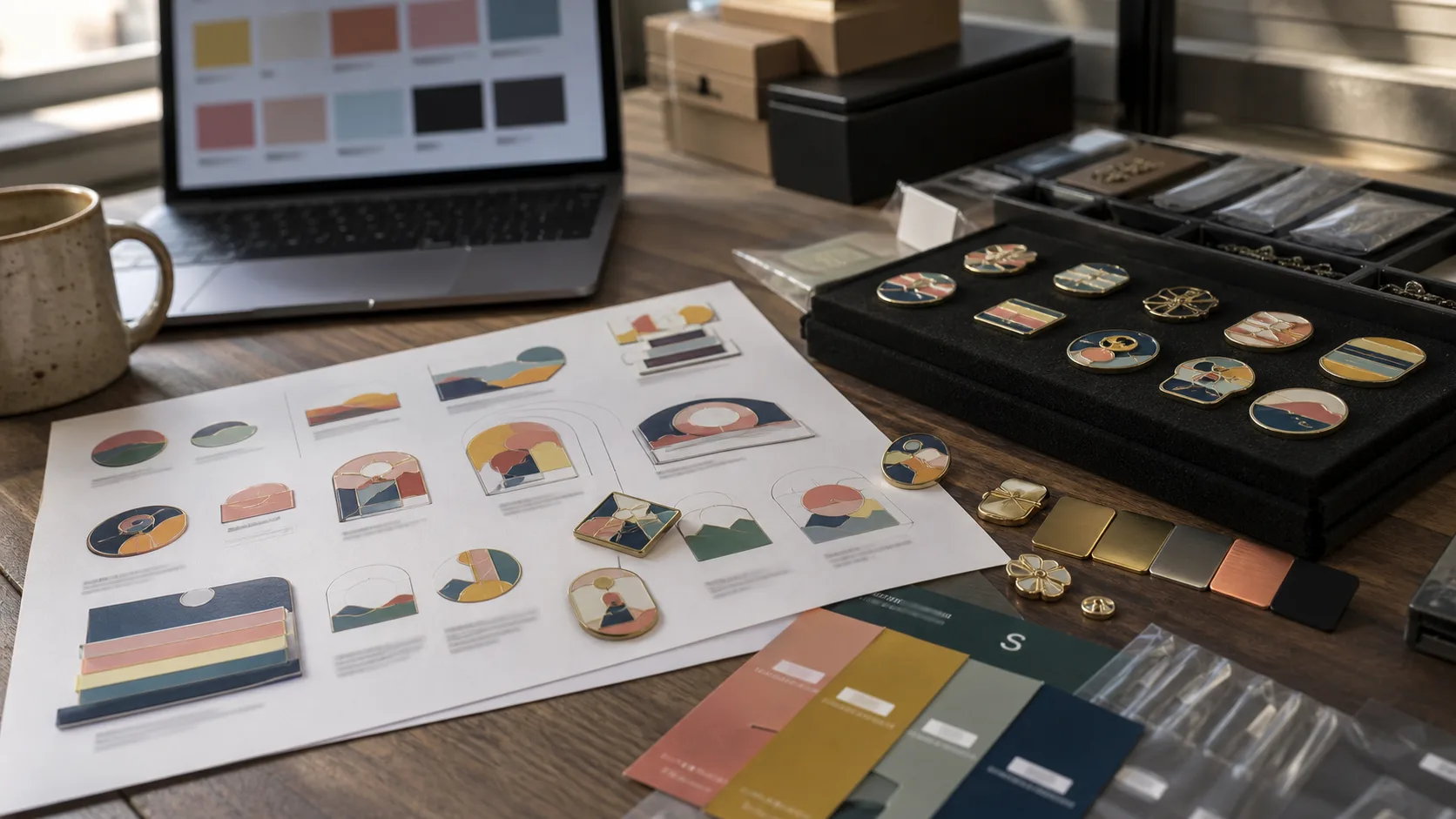
Many buyers review only the front of the pin during proof approval. That is understandable, but incomplete. The proof stage should confirm the whole object: front design, size, plating, backings, post placement, card orientation, packaging, and any special notes.
If the pin uses two posts, the placement should make sense. If it uses a magnet, the factory should confirm the structure. If it goes on a backing card, the pin holes and card layout should align. If the packaging is a gift box, confirm whether the pin sits securely inside the insert. These are boring details until they go wrong.
A good proof process feels a little slower at the beginning and much faster later. It gives everyone one shared reference before production begins.
A few event scenarios
For a cohesive product, ensure that the pin backings align with the overall design goals.
For a trade show giveaway, I would usually keep the backing simple, make the design bold, and use packaging that staff can hand out quickly. If the goal is lead generation, the backing card may include a QR code or campaign message, but the pin itself should stay clean.
For an employee anniversary pin, I would think more carefully about plating, weight, and presentation. A hard enamel finish, polished metal, and better clutch may be worth it. A small box can make the moment feel official.
The choice of pin backings should reflect the importance of the occasion and recipient.
For a creator merch drop, I would focus on the card and photography. The pin should look good in a product image, but the backing card can carry the collection identity. Rubber clutches may fit the casual use case well.
For a school or club event, durability and budget may matter more. Soft enamel, standard plating, and simple packaging can work beautifully if the design is clear and colorful.
Durability of pin backings may also be a key consideration for budget-conscious events.
For a sponsor gift or VIP event, cheap packaging can undermine the whole effort. This is where a better box, upgraded plating, or more refined backing becomes part of the message.
Erros comuns a evitar
Common mistakes can also include overlooking the quality of pin backings.
- Choosing one post for a wide pin that will rotate when worn.
- Using low-contrast plating and enamel because it looked subtle on screen.
- Putting too much campaign copy on the pin instead of using the backing card.
- Choosing premium packaging for a giveaway where speed matters more.
- Forgetting to mention the event date until after the proof is approved.
- Approving a proof without checking backings, packaging, and post placement.
A simple decision path
If you feel stuck, use this order. First, choose the pin style based on the artwork. Then choose plating based on contrast and brand mood. Next, choose backing based on how the pin will be worn. After that, choose packaging based on how the recipient will receive it. Finally, review the quote and remove upgrades that do not support the event goal.
This order also includes evaluating the quality of pin backings as part of the decision process.
This order keeps the design from being distorted by packaging decisions too early, but it also prevents packaging from becoming an afterthought. It is a practical middle path.
Final thought: small details create the “kept” feeling
The best event pins are not always the most expensive. They are the ones where the details agree with each other. The backing works. The plating suits the art. The packaging fits the moment. The card gives context without clutter. The proof was checked before production. The recipient knows what to do with the pin as soon as they receive it.
That is what makes a small metal item feel worth keeping.
Ultimately, the right pin backings contribute to a memorable and valued experience.
FAQ: Pin Backings, Plating and Packaging
Which pin backing is best for brand events?
For most high-volume brand events, butterfly clutches or rubber clutches are practical. For formal corporate events, magnets or deluxe clutches may be better because they feel more considered and can be easier on clothing.
When should a pin use two posts?
Use two posts when the pin is wide, heavy, irregularly shaped or likely to rotate during wear. Two posts can make the pin feel more stable and more professional, especially for formal or premium designs.
Does plating affect readability?
Properly selected pin backings can make all the difference in visual impact.
Yes. Plating changes contrast. Pale enamel with silver plating, or dark enamel with black nickel, can lose detail under event lighting. Always review the artwork proof at a realistic size, not only as a large digital preview.
Are backing cards worth the extra cost?
Backing cards are worth it when the pin is sold, photographed, gifted or used as part of a campaign story. For simple internal giveaways, a poly bag may be enough. Match the packaging to the moment of use.
What should be checked before approving the proof?
Take the time to ensure the pin backings match the overall design intent.
Check front artwork, size, plating, color contrast, backing type, post placement, packaging, card orientation and deadline. Proof approval should cover the whole product, not just the visible front of the pin.
If you are planning a brand event, start with the main alfinetes personalizados page, compare broches de esmalte macio e broches de esmalte rígido, ou solicitar um orçamento gratuito com prova de impressão. Bring the event context into the quote request, not only the logo file. The final pin will be better for it.
Integrating the right pin backings can greatly enhance the overall presentation.
To summarize, selecting the right pin backings is essential for maximizing impact.