


People ask about دبابيس مخصصة cost as if there is one neat number hiding somewhere, like the price of a coffee or a postage stamp. I get why. A buyer has a launch date on the calendar, a manager waiting for a budget, and maybe a design file sitting in a shared folder with the filename final-final-v3. They just want to know what the دبابيس مخصصة cost will be for their order.
The honest answer is less tidy, but more useful: custom pin pricing is a chain of small decisions. None of those decisions feels dramatic on its own. A quarter inch of size. A second clutch. A backing card. A tighter delivery window. A switch from soft enamel to hard enamel. But together they shape the quote more than most first-time buyers expect.
Understanding the دبابيس مخصصة cost can help buyers make informed decisions about their orders.

This guide is written for the person who is actually trying to place an order, not for someone casually reading about pins. If you are planning pins for a brand event, employee program, merch table, school club, conference bag, creator drop, or team recognition moment, the goal is not simply to make the cheapest object possible. The goal is to choose the details that matter, skip the details that do not, and avoid surprise costs after the artwork proof is already approved.
Knowing the various factors that influence custom pins cost allows for better budgeting and planning.
The quick version, before we get into the weeds
In 2026, the biggest cost drivers for custom pins are still the practical ones: size, quantity, mold complexity, enamel style, plating, backings, packaging, and timeline. The cost per piece usually drops as quantity increases because setup work is spread across more pins. A simple one-inch soft enamel pin with standard plating and a butterfly clutch is easier to quote than a large cut-out pin with multiple colors, upgraded packaging, dual backings, and rush production.
Each of these factors contributes to the custom pins cost, making it essential to understand them fully.
That does not mean simple is always better. Sometimes the upgraded option is exactly what makes the pin worth keeping. A retail pin on a custom backing card can feel complete in a way that a loose pin in a poly bag does not. A hard enamel finish can make a brand gift feel more premium. A magnet backing can save a corporate buyer from worrying about holes in suits and uniforms. The trick is knowing why you are paying for each detail.
Start with the job the pin has to do
Before asking for a quote, pause for a minute and name the job. Not the product name. The job.
A trade show giveaway has one job: be attractive enough to pick up and simple enough to produce at volume. A staff recognition pin has a different job: it needs to feel earned. A creator merch pin has to photograph well, sit nicely on a backing card, and survive being shipped to individual customers. A school club pin may need to be affordable, colorful, and easy to reorder next semester. A commemorative event pin may need a date, a sponsor mark, and a finish that feels more official.
By identifying the job, you can better assess the custom pins cost associated with different designs.
When the job is clear, pricing choices become easier. You can spend money where the recipient will notice it and avoid spending money on invisible upgrades. This is also why two pins with the same size can have different quotes. The physical dimensions are only one part of the story.
Quantity changes the conversation
The quantity will significantly impact custom pins cost, so it’s important to determine the right amount.
The first big lever is quantity. Custom pins usually involve setup work before the first finished piece exists. The factory has to interpret the design, prepare production instructions, create or set up tooling, match colors, check plating and finish, and package the order. Whether you order a small batch or a larger run, some of that early work still happens.
That is why low quantities can feel expensive per piece. You are not only buying metal and enamel. You are also paying for the preparation that makes the pin possible. When the quantity increases, the setup cost is spread across more pieces, so the unit price can become more comfortable.
For buyers, the useful question is not always “What is the lowest MOQ?” It is “What quantity matches the actual use?” If you need 180 pins for an event, ordering exactly 180 may be too tight. A few pieces may be used for photos, staff samples, sponsor packs, replacements, or last-minute guests. On the other hand, ordering 1,000 pins because the unit price looks better can create a storage problem if the event audience is small.
A practical habit: estimate your real distribution number, add a modest buffer, and then ask for two or three quantity breaks. For example, request pricing for 200, 300, and 500 pieces. The quote will show whether a higher quantity meaningfully improves value or just creates more inventory.
This approach helps manage custom pins cost effectively while ensuring quality.
Size is simple until it is not
Pin size sounds straightforward, but it affects more than material. A larger pin uses more metal and enamel, but it can also change the strength of thin lines, the need for extra posts, the weight on fabric, and the amount of detail the design can hold.
Ultimately, the size you choose will affect not only the aesthetics but also the custom pins cost.
Small pins can be elegant, but they do not forgive crowded artwork. Tiny letters, complicated faces, thin outlines, or multiple icons can become muddy once translated into metal. Larger pins give the artwork more room, but they may need stronger backing choices. If the pin is wide or heavy, one post may let it rotate on a jacket or bag. Two posts cost more, but they can make the pin feel stable.
A human way to think about size is this: imagine someone seeing the pin from arm’s length. What should they understand first? If the answer is a logo silhouette, you can often keep the design compact. If the answer is a scene, mascot, badge shape, or several words, give the design breathing room or simplify the art.
Soft enamel, hard enamel, printed, die struck: the finish changes the feel
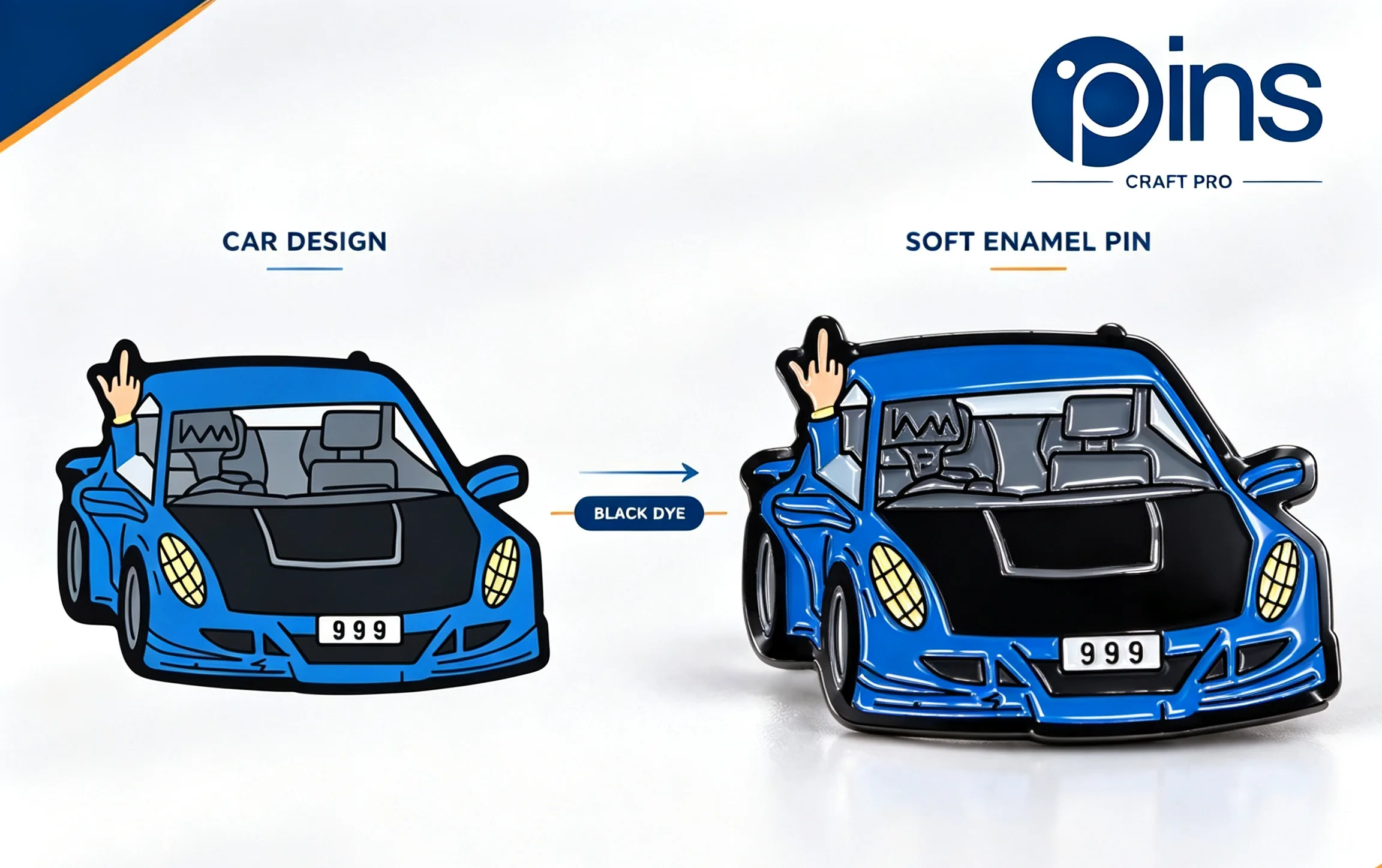
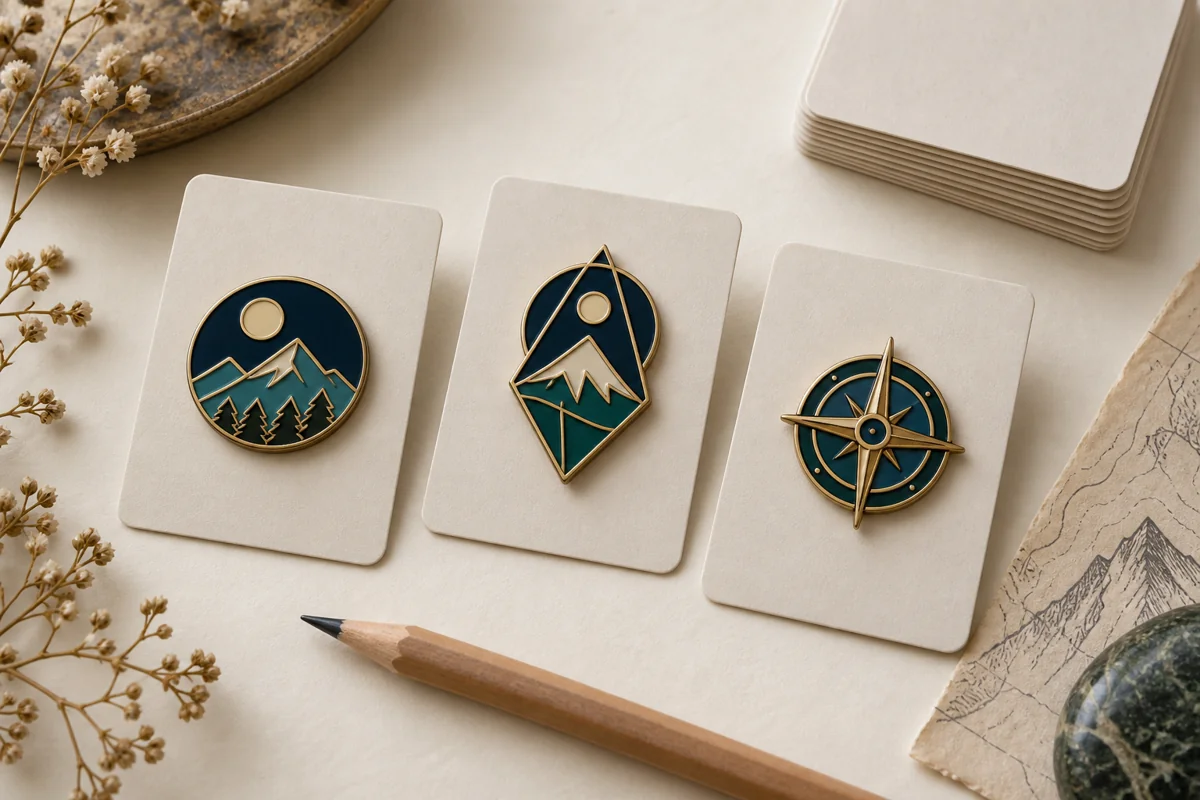
دبابيس المينا الناعمة remain popular because they offer bold color, visible metal lines, and a tactile surface. The enamel sits slightly lower than the raised metal borders, which gives the design texture. For many event pins, club pins, colorful merch pins, and promotional designs, soft enamel hits a good balance between cost and visual impact.
It’s crucial to understand how each finish influences the overall custom pins cost.
Hard enamel pins are polished smooth. The surface feels flatter and more jewelry-like, which can make the pin seem more premium. This finish is often chosen for corporate gifts, recognition pins, retail items, and designs where durability and a refined surface matter. It can cost more than soft enamel, but the difference may be worthwhile if the pin is meant to represent a brand at a higher level.
Printed pins are useful when the artwork includes gradients, tiny details, or full-color imagery that would not translate well into separated enamel cells. Die struck pins work well when the design relies on metal relief rather than color. They can feel traditional, official, and understated.
There is no universal best finish. A bright mascot may be perfect as soft enamel. A minimal anniversary mark may look better as hard enamel. A portrait or watercolor-style illustration may need printing. The price follows the production method, but the right method should follow the design first.
Plating quietly changes the mood
The right plating can enhance the pin’s appeal while also affecting the custom pins cost.
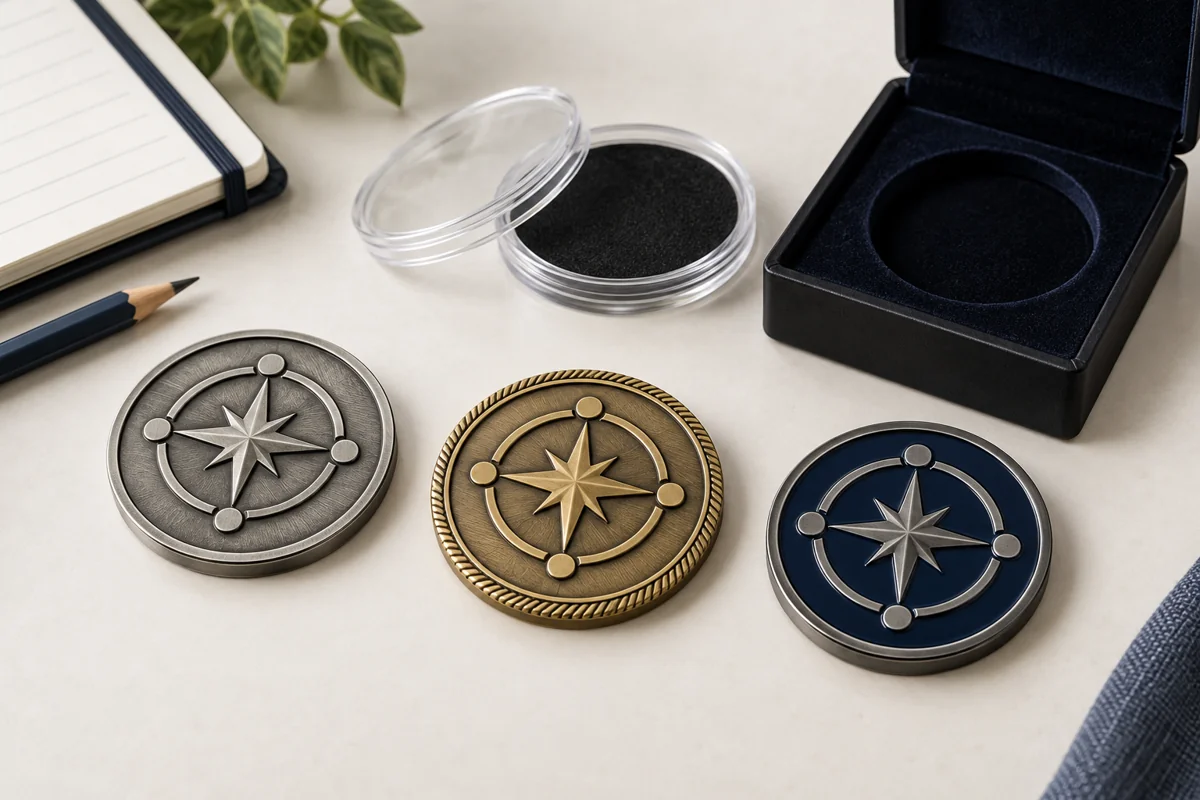
Plating is one of those details people sometimes choose quickly, then realize later it changed the whole personality of the pin. Gold plating feels warm and celebratory. Silver feels clean and versatile. Black nickel adds contrast and can make bright enamel colors stand out. Antique finishes create depth and are often useful for commemorative, military, vintage, or challenge-style designs.
The plating choice can affect cost, but it also affects readability. A design with dark enamel and black nickel may look sharp in the proof but too low-contrast in real life. A design with pale enamel and silver metal may feel elegant, or it may disappear from a distance. Good artwork review should include contrast, not only color matching.
If you are unsure, ask for advice during the proof stage. Sometimes the factory has seen a similar design fail or succeed in a particular plating. That experience is worth listening to.
Backings are small, but they matter
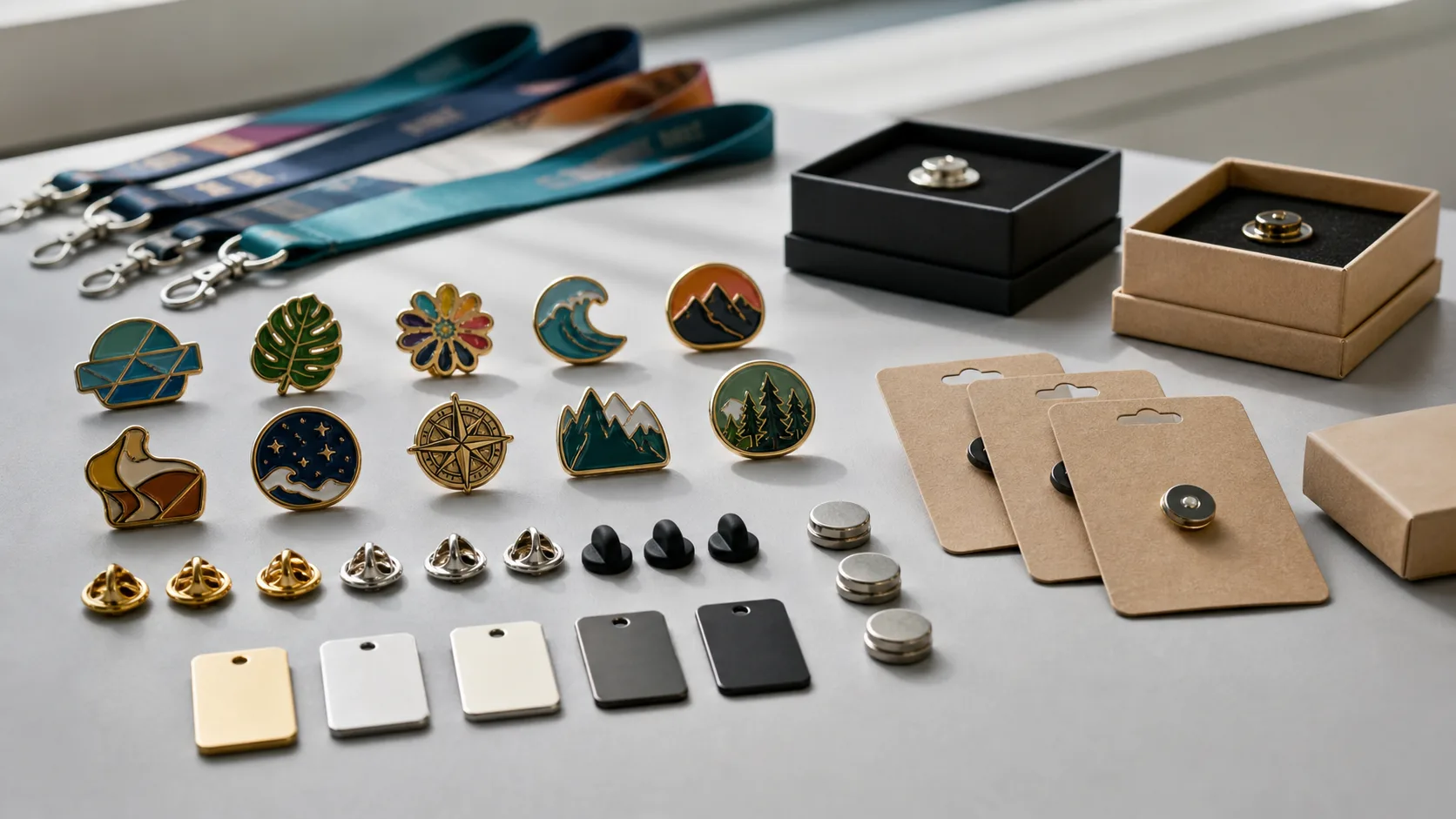
A backing is easy to ignore because it lives behind the pin. Recipients do not usually talk about it unless it annoys them. That is exactly why it matters.
Butterfly clutches are common and cost-effective. Rubber clutches can feel more comfortable and casual. Safety pins work for some larger badges or fabric applications. Magnets are helpful when the buyer wants to avoid puncturing clothing. Deluxe clutches can make a recognition pin feel more secure and premium.
The backing should match how the pin will be worn. A pin for backpacks can tolerate different assumptions than a pin for suits at a formal dinner. A pin meant for children, uniforms, or active event staff may need more thought than a collectible pin that stays on a card.
Packaging is where “cheap” and “finished” split apart
Packaging is not only a shipping detail. It changes how the pin is received. A poly bag is fine for simple distribution, especially when the pin will be handed out in volume. A backing card gives the item context and makes it feel more like merchandise. A gift box or pouch can turn a pin into a recognition piece.
Packaging choices can significantly alter the custom pins cost and impact the customer experience.
This is where buyers sometimes make a mistake. They approve a nice pin, then choose the cheapest packaging because the pin itself already looks good. But if the pin is being sold, gifted to VIPs, photographed for a launch, or sent to influencers, packaging may be part of the product experience. It can also protect the pin during shipping.
Packaging does add cost, so it should be intentional. Event giveaway? Keep it simple. Retail product? Use a backing card. Premium internal award? Consider a box. There is no need to overbuild every order.
Rush production has a real price, even when the factory says yes
Rush orders are possible in some cases, but they narrow the margin for mistakes. A rushed timeline can require faster proof approval, tighter production scheduling, quicker packaging decisions, and more expensive shipping. If artwork changes late, the timeline can get uncomfortable quickly.
Being aware of the implications on custom pins cost can help you make better decisions.
If the event date is fixed, share it immediately. Do not wait until after the quote to mention that the pins are needed for a conference, school opening, launch party, or tournament. A good production team can help plan backward from the deadline, but only if they know the deadline exists.
One small piece of advice: decide who has final approval before the proof arrives. Many delays are not caused by factories. They are caused by three people in one organization disagreeing about a tiny color or wordmark while the clock keeps moving.
The artwork proof is where cost control becomes practical
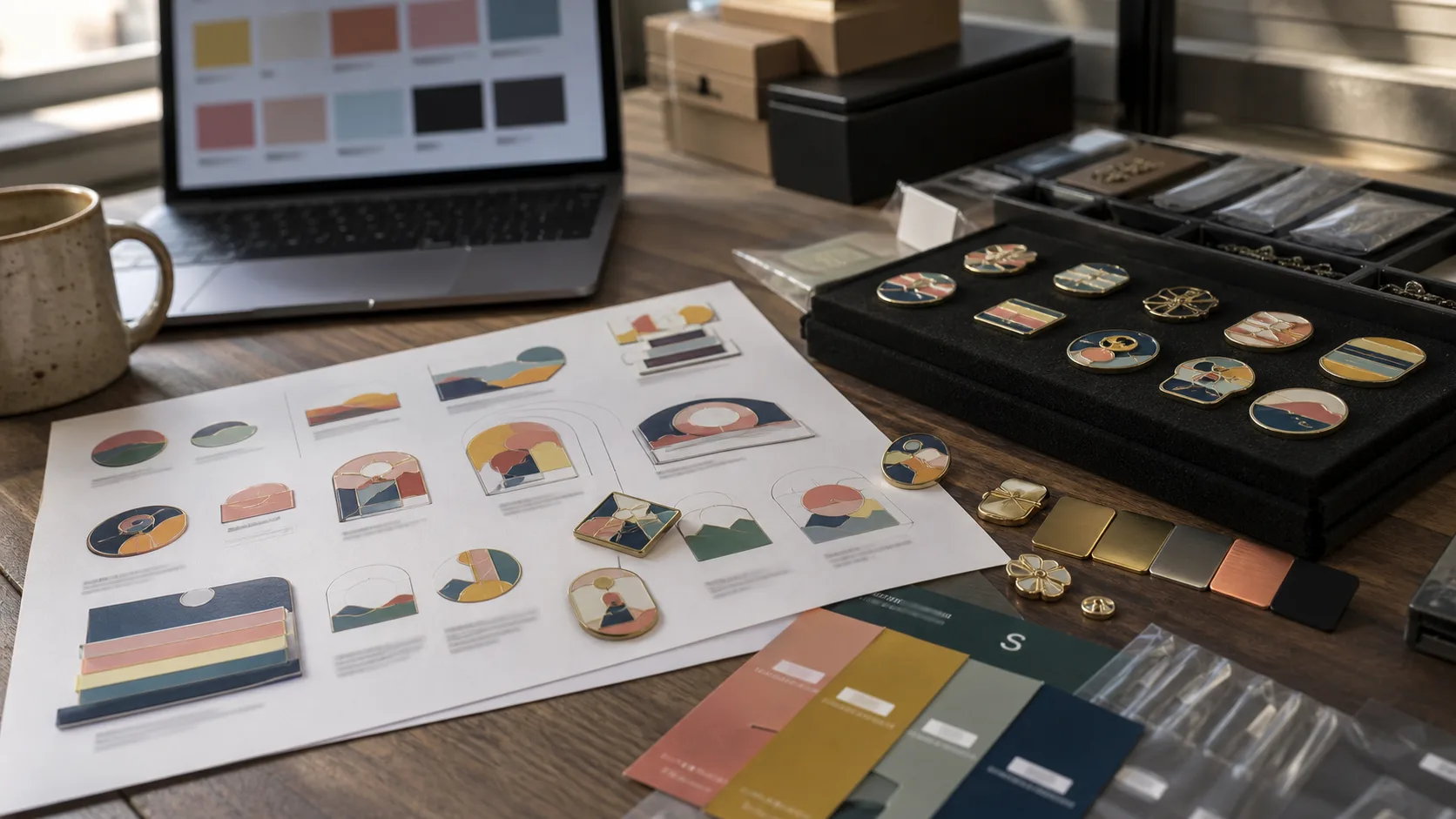
The artwork proof is not just a pretty preview. It is a production document. It should clarify size, shape, metal lines, enamel areas, colors, plating, backing, packaging, and any special instructions. If a design has small lettering, the proof stage is where someone should ask whether that lettering will be readable. If a shape has thin cut-out areas, this is where production feasibility should be checked.
A careful proof can save money because it prevents remakes, delays, and disappointment. It also helps buyers understand which upgrades are actually needed. Maybe the design does not need hard enamel. Maybe it does need two posts. Maybe the backing card should be simplified. Maybe a printed detail is better than forcing a tiny enamel area.
Do not rush approval just because the proof looks close. Zoom out. Print it if you can. Ask whether the most important part of the design is obvious. Check spelling, dates, sponsor names, and color notes. The cheapest correction is the one made before production begins.
A realistic quote request checklist
These details can influence the custom pins cost and should be part of your planning.
If you want a faster and more accurate quote, send the information a production team actually needs. You do not need to have everything perfect, but the more complete the request, the fewer assumptions have to be made.
- Artwork file, sketch, logo, or reference image
- Preferred size or approximate size range
- Quantity, plus any quantity breaks you want compared
- Pin style, such as soft enamel, hard enamel, printed, die struck, 3D, or cut out
- Plating preference, or a note saying you need recommendations
- Backing type, especially if the pin will be worn on delicate clothing
- Packaging preference: poly bag, backing card, box, or undecided
- Deadline, event date, or target delivery window
- Shipping destination country and any special logistics requirements
Where buyers accidentally overspend
The most common overspending pattern is upgrading everything because each upgrade sounds small. A premium finish, specialty plating, deluxe backing, custom card, individual bagging, and rush shipping can all be reasonable choices. They do not all have to be in the same order.
Another pattern is choosing a design that is too complicated for the budget. A simpler design can sometimes look stronger and cost less. Metal pins are not paper prints. They reward clarity. Large color fields, strong silhouettes, and clean lines often feel more confident than tiny details squeezed into a small shape.
A third pattern is ordering too few. This sounds strange, but a very small order can have a high unit price. If the pins are for an ongoing brand or recurring event, it may be cheaper over time to order a sensible buffer instead of repeating small runs.
Where spending more is worth it
There are also places where spending more makes sense. If the pin will be sold as merchandise, the finish and packaging affect perceived value. If it is an award, the recipient should feel that it was made with care. If it represents a sponsor or partner, cheap presentation can send the wrong signal. If the pin will be photographed for a campaign, better plating and packaging can improve the whole launch.
Understanding these factors can prevent overspending on custom pins cost.
In short: save money on details the recipient will not notice. Spend money on details that change how the pin is used, kept, worn, photographed, or remembered.
FAQ: Custom Pins Cost
This section aims to address common questions regarding custom pins cost.
Why do two similar custom pins sometimes receive different quotes?
Small production details can change the quote: metal size, number of enamel colors, plating choice, backing type, packaging, proof complexity and delivery schedule. Two pins may look similar at a glance but require different setup or finishing work.
Different factors contribute to variations in custom pins cost, which buyers should consider.
Is soft enamel always cheaper than hard enamel?
Soft enamel is often the more budget-friendly choice, especially for colorful promotional pins, but it is not a universal rule. Size, quantity, plating, packaging and schedule can matter as much as the enamel style.
Understanding the nuances of custom pins cost can help you make more informed choices.
Can I reduce cost without making the pin feel cheap?
Yes. Simplify tiny details, choose a practical size, use standard plating when it fits the design, and reserve upgraded packaging for orders where presentation matters. A clean design often feels better than an overcomplicated one.
Strategies to reduce custom pins cost without compromising quality can be beneficial.
When should I ask for multiple quantity breaks?
Ask for quantity breaks whenever the order may grow, when you are near a budget threshold, or when the pin will support an ongoing program. Comparing 200, 300 and 500 pieces can reveal whether ordering more creates meaningful value.
Establishing quantity breaks can help you optimize custom pins cost across orders.
What should I prepare before requesting a custom pin quote?
Prepare the artwork or reference image, target size, quantity, preferred pin style, plating, backing, packaging, deadline and shipping country. If some details are undecided, say so and ask for recommendations during the free artwork proof stage.
Providing clear details can help clarify expectations around custom pins cost.
Final thought: the best quote is a conversation, not a calculator
A price calculator can be useful for rough planning, but custom pins have too many human details for a calculator to replace judgment. The best quotes come from a real conversation about use case, design, quantity, finish, packaging, and deadline.
Engaging in a conversation about custom pins cost can yield better outcomes than relying solely on numbers.
If you are comparing suppliers, compare more than the lowest number. Look at whether the team explains trade-offs clearly. Look at proof quality. Look at whether they ask useful questions. Look at whether the quote matches the job the pin is supposed to do.
For a starting point, review the main صفحة مصنّع الدبابيس المخصصة, compare custom soft enamel pins with custom hard enamel pins, or request a free custom pins quote with artwork proof. A clear request today usually saves a few rounds of confusion tomorrow.
Reviewing various suppliers can provide insights into managing custom pins cost effectively.