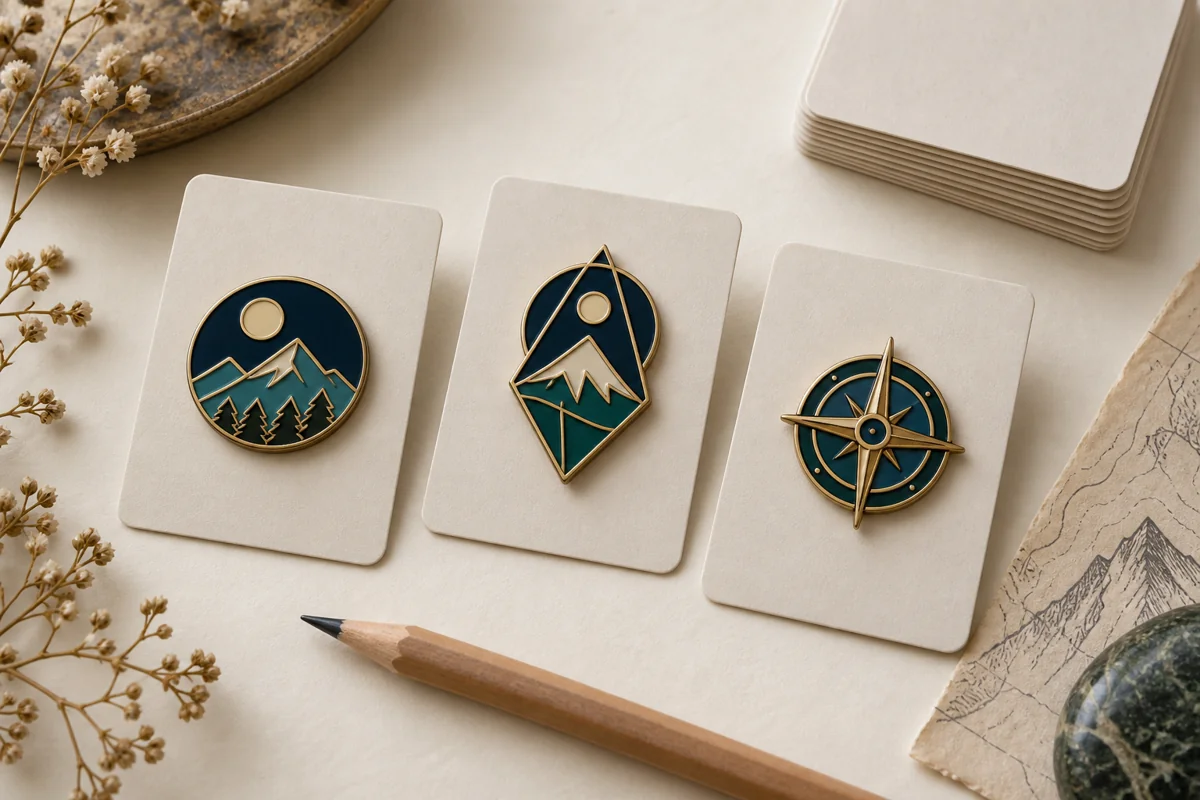


Soccer trading pins look small on a lanyard, but the best ones carry a surprising amount of team identity. A strong pin gives players something they are proud to trade, gives parents a fundraising piece that feels worth buying, and gives the club a compact reminder of the season. The work is not only choosing a cute mascot or putting a ball next to a shield. The real planning happens when the team connects design, production, packaging and timing in one clean order.
This guide walks through that process from the perspective of a team manager, club director or parent volunteer who needs custom soccer trading pins that look sharp, arrive on time and stay within budget. It also links to related PinsCraftPro pages where the next decision is easier to make, including custom trading pins, custom pins, soft enamel pins and hard enamel pins.
Start With the Moment the Pin Needs to Serve
Before choosing size, shape or finish, decide what the pin is supposed to do at the tournament. Some teams need an affordable swap pin that every player can trade freely. Others want a premium commemorative pin for a state cup, international trip, senior night or club anniversary. A third group uses trading pins as a fundraising product, so the design has to feel retail-ready enough for parents, supporters and alumni to buy extras.
Those goals change the design brief. A pure trading pin should be bold from a few feet away, easy to recognize and not too fragile. A fundraising pin can carry a little more detail, stronger packaging and a price point that supports margin. A commemorative pin may deserve a special finish, event date, limited edition numbering or a presentation card. The mistake many teams make is trying to make one pin do every job. It can, but only when the hierarchy is clear: team name first, identity second, special event details third.
Choose a Shape That Supports Recognition
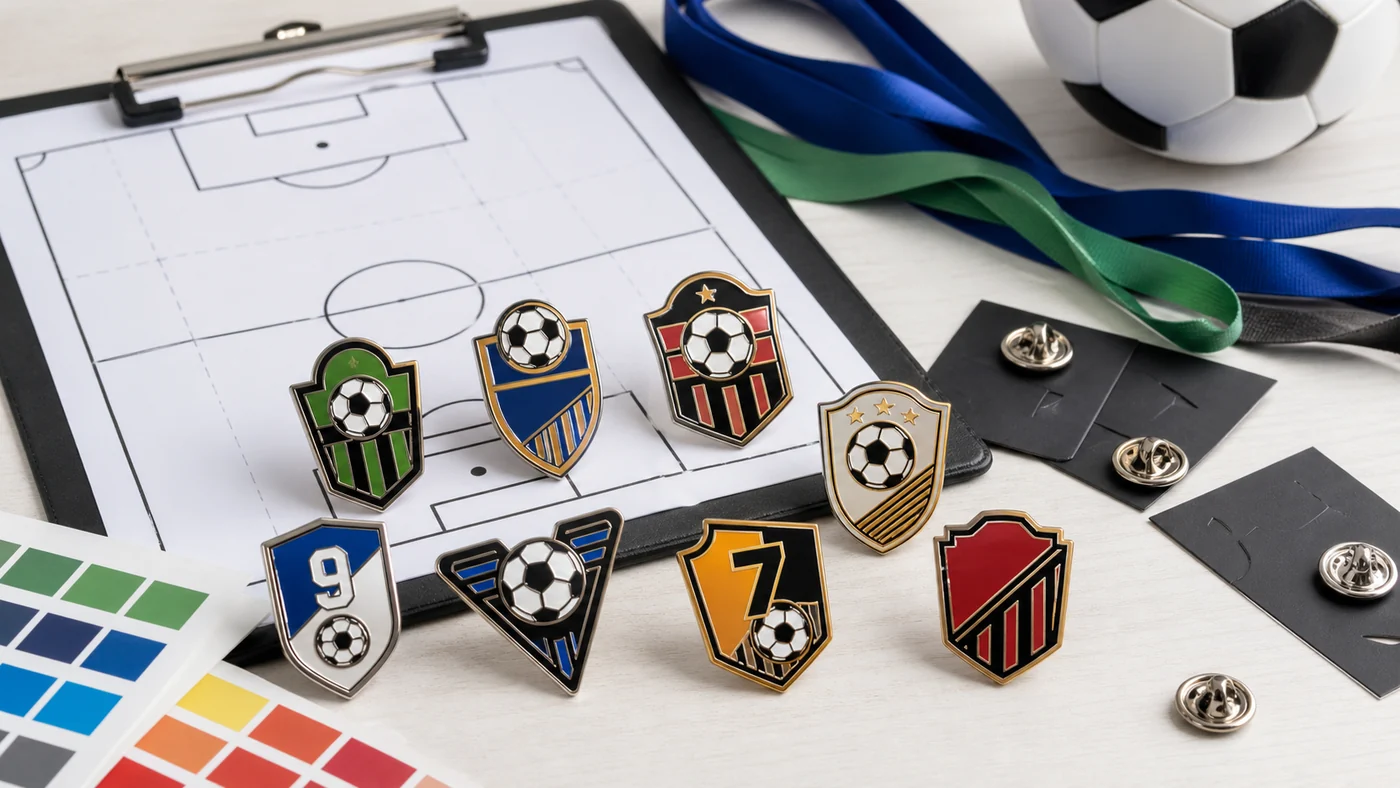
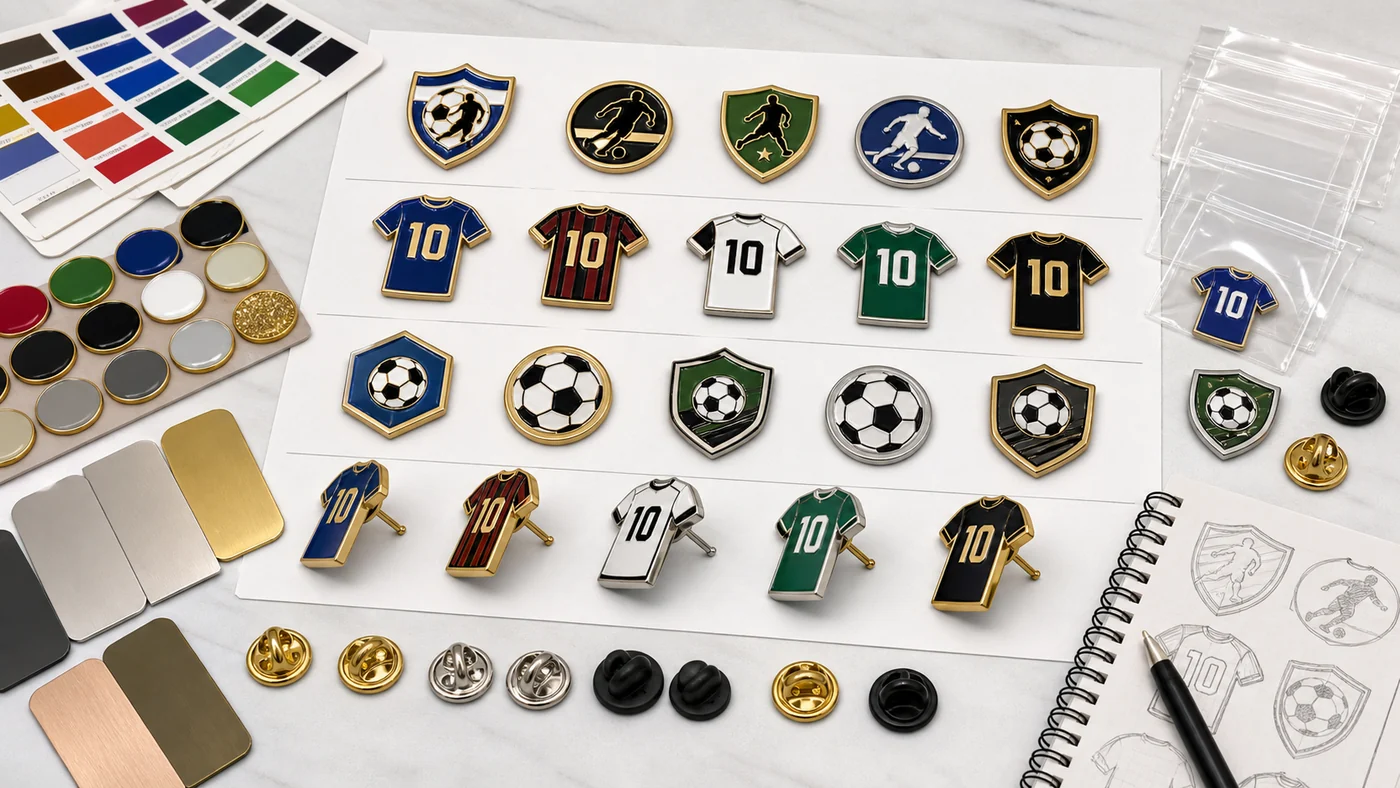
Round and shield shapes are reliable because they frame a crest cleanly. Jersey shapes are popular for youth teams because player numbers, club colors and sponsor logos can be arranged naturally. Soccer ball shapes are instantly readable, although the panel pattern can compete with small text if the design is crowded. Mascot silhouettes, state outlines and tournament landmark shapes can work beautifully, but they need enough metal border to stay durable.
If the team already has a strong crest, avoid rebuilding the entire identity from scratch. Instead, place the crest in the center, simplify tiny text, then use the outer edge for season, tournament or location details. If the team does not have a crest, a simple ball, year, team name and two-color enamel layout may perform better than an overly detailed illustration. For more general pin planning, the custom pins page is a useful place to compare formats.
Use Color Like a Uniform, Not a Poster
Trading pins become stronger when they borrow the discipline of a uniform. Pick the main jersey color, the secondary trim color and one metal finish. That is usually enough. Adding every possible accent from a logo file can make a small pin noisy, especially if it is less than 1.5 inches wide. Enamel colors should create immediate contrast between the team name, mascot, ball and date. If the pin uses dark enamel, raised polished metal can become the highlight. If the team colors are very bright, antique or black nickel plating can bring the design back under control.
Soft enamel is often the practical choice for sports trading pins because the recessed color and raised metal lines create texture at a friendly price point. Hard enamel gives a smooth jewelry-like surface and can be excellent for premium commemorative pins. When in doubt, compare the differences on the soft enamel pins and hard enamel pins pages before approving the final proof.
Build the Artwork Proof Around Readability
The proof is where a team should become a little picky. Not difficult, just clear. Check whether every word is readable at the actual pin size, not only when the proof is zoomed on a laptop. Names, years and tournament locations should have enough breathing room. Thin lines around a soccer ball, grass texture or skyline may need to be simplified. Tiny sponsor logos may need to become initials, a wordmark or a larger backing card instead of being forced into the metal pin.
A good proof also clarifies plating, enamel colors, backing, attachment points and special effects. If the design uses a dangler, spinner, glitter enamel or blink light, confirm how that feature affects production time and packaging. Fun add-ons can make a pin more tradeable, but they should support the story rather than distract from it.
Pick Backings and Packaging Based on Use
Most soccer trading pins use a clutch backing because it is familiar and easy to handle. For younger players, coaches may prefer rubber clutches because they feel softer and are easier to remove. Safety pins can work for larger event badges, but they are less common for collectible trading pins. If the team plans to sell pins on cards, make sure the backing and card hole pattern are considered together.
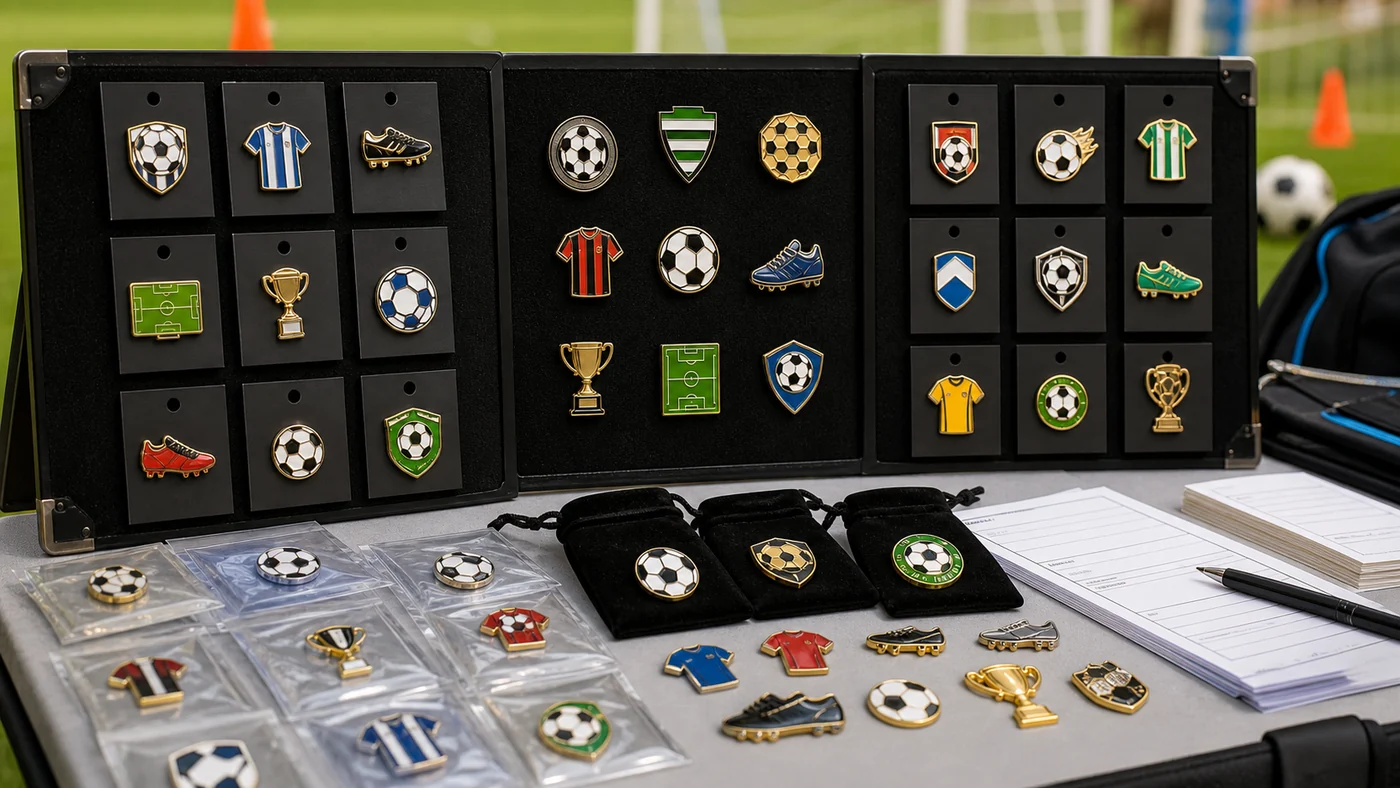
Packaging matters more than teams expect. A simple poly bag protects pins during shipping and team sorting. A backing card gives the pin a retail feeling and can include the club name, website, social handle, tournament name or fundraising message. For larger campaigns, dividing pins into player bundles, team bags or display trays can save hours when everyone is packing before travel. The guide to pin backings, plating and packaging is useful for teams that want the order to feel organized from the box to the field.
Estimate Quantity With Trading Behavior in Mind
Quantity is not only a roster count. A player at a major tournament may trade many pins in a single day. Parents may want keepsakes. Coaches, siblings, sponsors and club directors may all ask for extras after seeing the finished design. For a small local tournament, a modest buffer may be enough. For a destination tournament or a season-ending event, teams often regret ordering exactly one pin per person.
A practical way to estimate is to separate the order into three buckets: player trading supply, keepsake supply and fundraising supply. Player trading supply should be generous enough that kids do not feel anxious about giving pins away. Keepsake supply covers families and team archives. Fundraising supply is the amount the team can confidently sell before, during and after the event. The pricing guide at how much custom pins cost can help frame this decision before the quote stage.
Give Fundraising Pins a Reason to Be Bought
A trading pin can raise money when it feels like more than an obligation. Add a small story: a tournament city, championship run, anniversary year, travel goal, limited edition phrase or player-designed detail. The backing card can explain the fundraising purpose without crowding the pin itself. Teams can sell pins at send-off events, school spirit nights, concession tables, alumni gatherings, club banquets and online order forms.
Pricing should feel fair. A very low price may move units but leave little margin. A higher price may work if the pin is larger, packaged and tied to a meaningful campaign. Teams often do best with a simple bundle: one keepsake pin for a set price, or a small pack for families who want to support the trip and keep extras for grandparents or siblings.
Timing: Work Backward From the Event
Teams should not wait until the tournament schedule is posted to begin the pin order. Artwork, proof revisions, production, quality inspection, packing and shipping all take time. The safest process is to work backward from the date the pins must be in hand, not the date the event begins. If the team needs pins for a travel day, build in time for sorting and distribution before everyone leaves.
A good request includes logo files, preferred size, quantity, event date, delivery location, plating preference, enamel style, backing choice and packaging needs. If the team is unsure, provide the use case and budget range, then ask for a recommendation. Clear inputs reduce revision loops and help the proofing team solve problems early.
Plan Variations Before the First Proof
Some clubs need one master design for the entire organization. Others need a family of pins for several age groups, travel teams or tournament squads. It is much easier to plan those variations before the first proof is built. A shared template can keep the crest, border, plating and backing card consistent while changing the age group, team color, year or small icon. This gives the club a unified look without forcing every team into an identical pin.
For example, the U10 team might use a compact shield pin with a bright enamel stripe, while the U14 team uses the same outline with a darker accent and tournament date. Coaches can approve their own details, but the club still protects the brand system. This matters when pins are photographed together on social media or displayed at a fundraising table. A coordinated set looks more professional and can encourage families to collect multiple teams.
Variation planning also helps with reorder strategy. If the basic layout is stable, a team can update the year, event name or color accent in a future season without starting over. That saves proofing time and makes the next order feel familiar. When a club expects to run tournaments every year, this simple design system can become a repeatable asset instead of a one-time rush project.
Create a Review Workflow for Busy Volunteers
Many soccer pin orders are managed by parents and coaches who are already juggling travel, rosters, uniforms and schedules. A simple review workflow prevents small decisions from slowing the project down. Assign one person to collect feedback, one person to approve budget and one person to confirm spelling, dates and sponsor names. If every parent comments directly on the proof, the project can drift quickly.
The first review should focus on factual accuracy: team name, age group, year, tournament title, city, colors and logo. The second review should focus on production choices: size, finish, enamel style, backing, packaging and quantity. The final approval should be short and decisive. If a team keeps reopening approved choices, the delivery timeline becomes harder to protect.
Common Design Mistakes to Avoid
- Putting too many words into the pin instead of moving secondary details to a backing card.
- Using low-contrast colors that disappear when the pin is viewed at actual size.
- Choosing a complicated outline that makes the mold fragile or expensive.
- Forgetting to order extras for coaches, family, sponsors and late requests.
- Approving a proof without checking the backing, plating and packaging details.
A Simple Soccer Trading Pin Brief
Teams can make the ordering process smoother by sending one clean brief: team name, age group, club colors, mascot or crest, tournament name, preferred shape, desired quantity, deadline, shipping country, backing preference and budget sensitivity. Attach vector art if available. If only a PNG or screenshot exists, send the best version and explain which parts are most important to preserve.
That brief allows the supplier to recommend whether the pin should be soft enamel, hard enamel, printed with epoxy, or simplified for cleaner metal lines. It also helps avoid the awkward moment when a beautiful digital design cannot be produced at the requested size.
FAQ
What size works best for soccer trading pins?
Many team pins fall between 1.25 and 2 inches. Smaller pins are budget-friendly and easy to trade, while larger pins allow more text, mascots and event details. The right size depends on design complexity and how the pins will be packaged.
Should a team choose soft enamel or hard enamel?
Soft enamel is popular for sports trading pins because it gives raised metal texture and strong color at a practical cost. Hard enamel is smoother and more premium, which can work well for commemorative or retail-style pins.
How early should a team start the order?
Start as early as possible, especially before major tournaments. The team needs time for artwork, proof approval, production, quality checking, shipping and distribution. Rush orders are easier when the design brief is clear.
Final Takeaway
A good soccer trading pin does not happen by accident. It comes from a clear purpose, readable artwork, disciplined color, realistic quantity planning and packaging that matches the event. When those pieces line up, the pin becomes more than a small metal souvenir. It becomes a piece of the season that players actually want to trade, keep and talk about.
To begin the next step, review custom trading pins or request guidance through the custom pins order path.