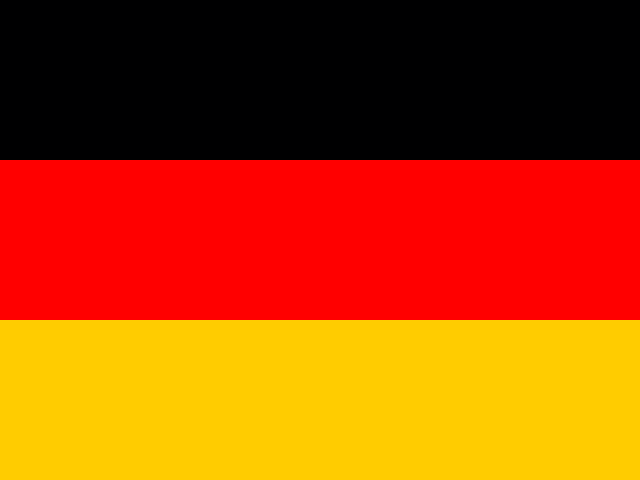
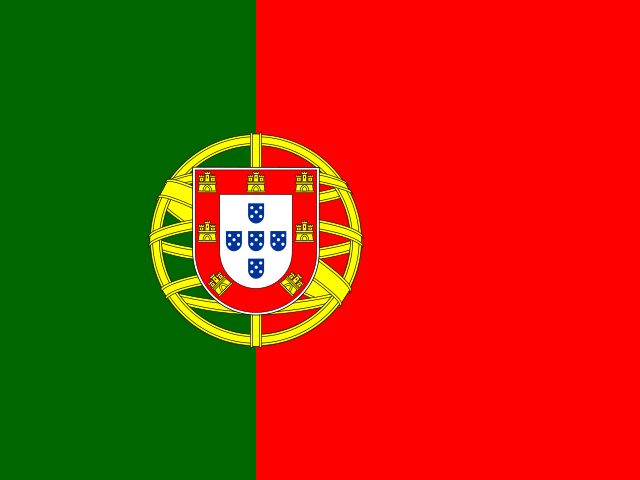
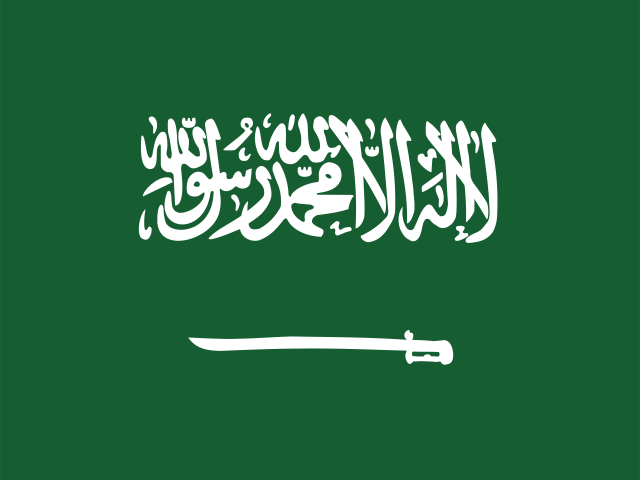
The 2026 tournament is not only a football event; it is a month-long global display of belonging. Supporters arrive with colors, songs, family rituals, regional references and memories of earlier tournaments. A small badge can hold that entire emotional system—if the design goes beyond placing a flag beside a ball.
With the expanded 48-team competition bringing more national stories into view, the design opportunity is unusually broad. For clubs, licensed merchandisers, supporter groups and event buyers, the most effective World Cup merchandise will not simply announce that a tournament happened. It will help a fan remember what the tournament felt like.
Why the 2026 World Cup Is Changing Badge Design
The 2026 FIFA World Cup runs from June 11 to July 19 across Canada, Mexico and the United States, with 48 teams and 104 matches. That scale changes the merchandise landscape. More teams mean more supporter communities, more host-city encounters and more reasons for fans to trade, compare and collect physical objects. The official tournament schedule also creates a sequence of group-stage, knockout and final-week moments that can support an evolving collection.
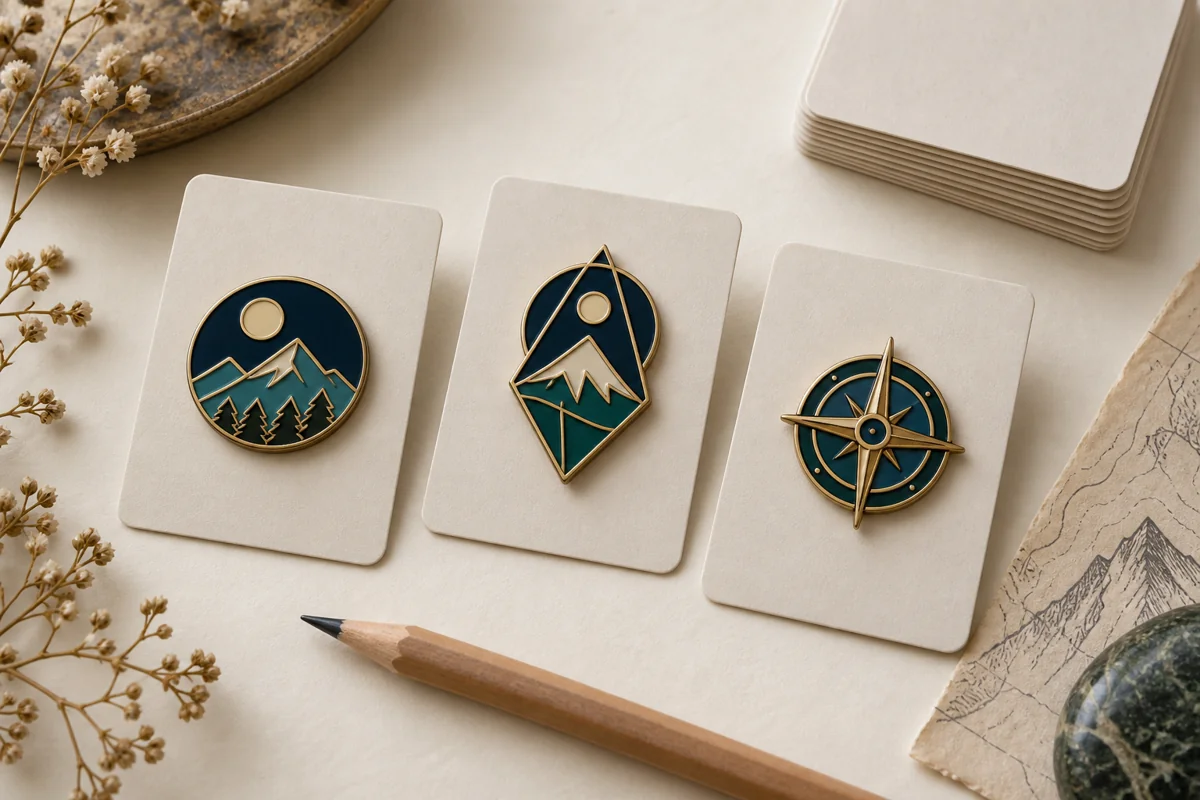
At the same time, modern supporters see hundreds of graphics every day. A generic shield with a football and a flag may be recognizable, but it rarely feels personal. The strongest football team pins use a more selective visual language: one memorable color relationship, one culturally grounded motif and one detail connected to a specific match, place or supporter ritual.
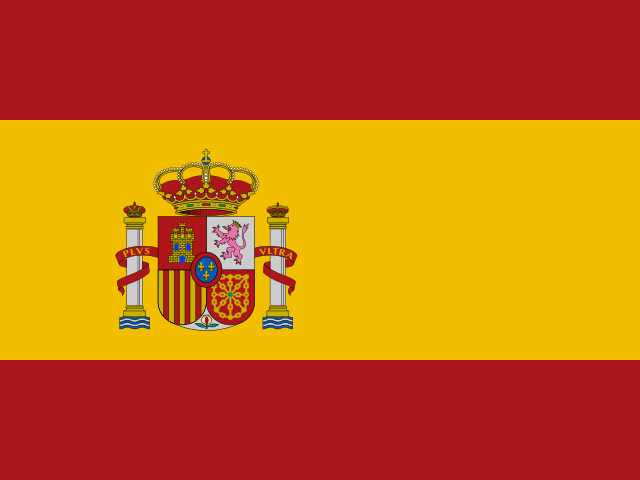
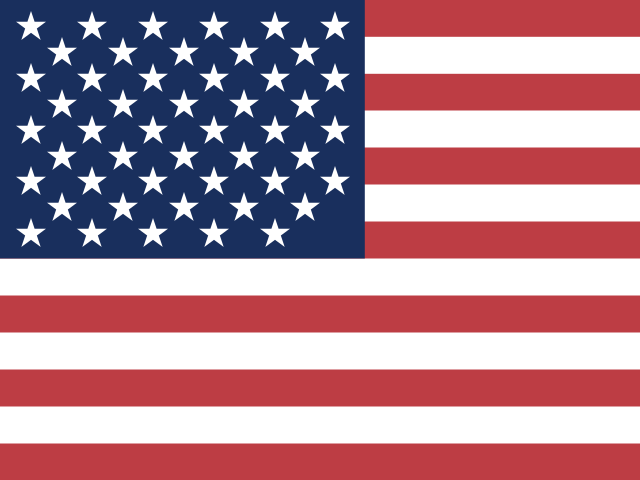
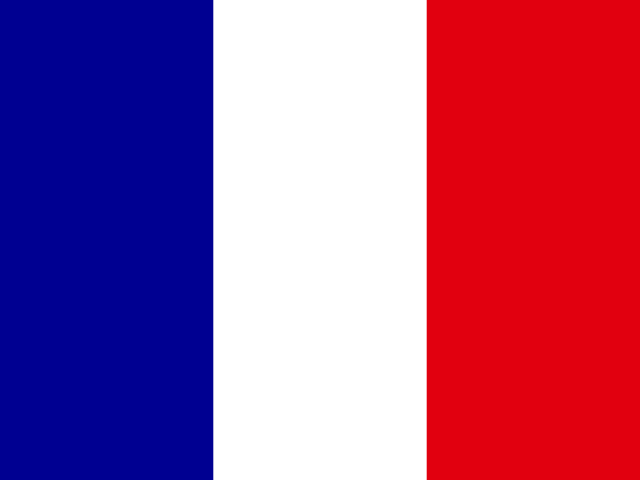
From Flag Colors to a National Identity System
A national flag is an important reference, but it is only the first layer. National identity can also appear through architecture, landscape, textile patterns, native plants, traditional geometry, local animals, folk art and the visual rhythm of a written language. The key is not to place every possible symbol on one pin. It is to build a system in which each choice has a role.
Use color as recognition, not decoration
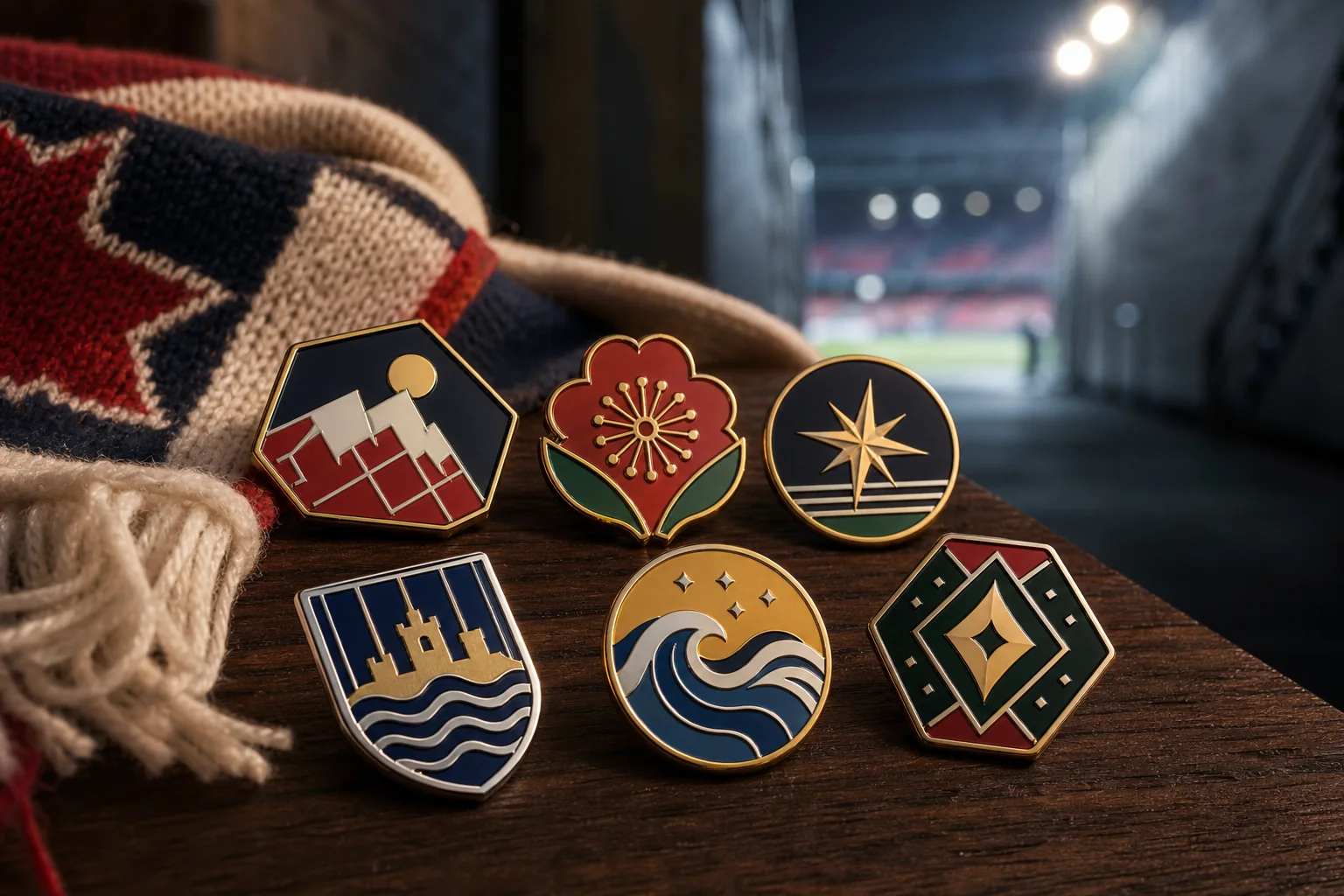
Supporters should recognize the emotional direction of a pin from several feet away. That usually requires a dominant field color, a secondary color and a metal finish that separates the forms. A restrained palette often performs better than a literal full-color illustration, especially on small pins esmaltados personalizados. It also makes a series feel coherent when several national or city editions appear together.
Choose symbols with cultural depth
A mountain line may refer to geography, a flower may carry historical meaning, and a repeating border may echo a regional craft tradition. Before using such references, designers should understand their context and confirm that they are appropriate for commercial use. Research is not a decorative step; it is part of responsible design.
Give the silhouette a job
The outer shape is the first part a collector sees. Shields suggest competition and protection; circles feel commemorative; banners imply celebration; irregular cutouts can turn a landmark or mascot into the entire form. A distinctive silhouette also improves recognition when the pin is displayed among dozens of other pieces.
Five Team Badge Design Trends for 2026
1. Heritage geometry with contemporary spacing
Traditional patterns are being simplified into strong, manufacturable lines. Rather than reproducing a textile or architectural detail literally, designers isolate its rhythm and rebuild it with enough metal separation for enamel filling. The result feels rooted in culture while still looking modern on a jacket, cap or scarf.
2. Material contrast instead of visual clutter
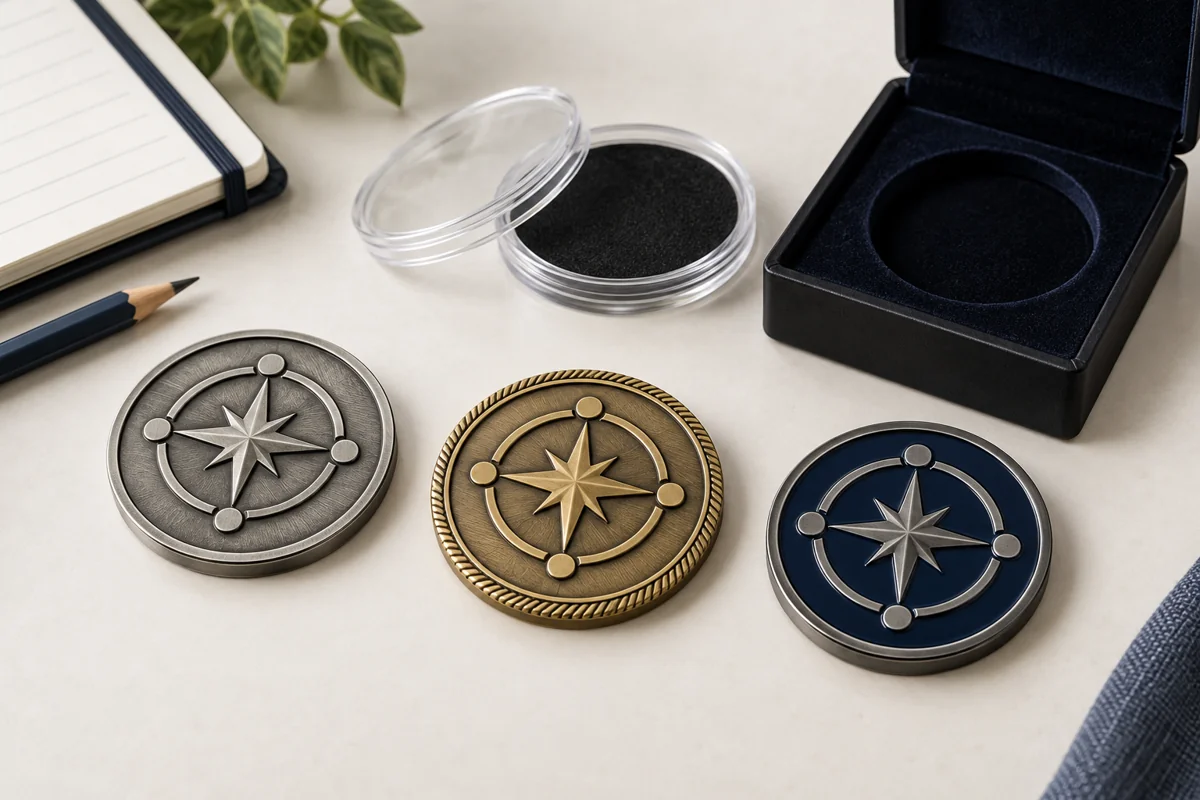
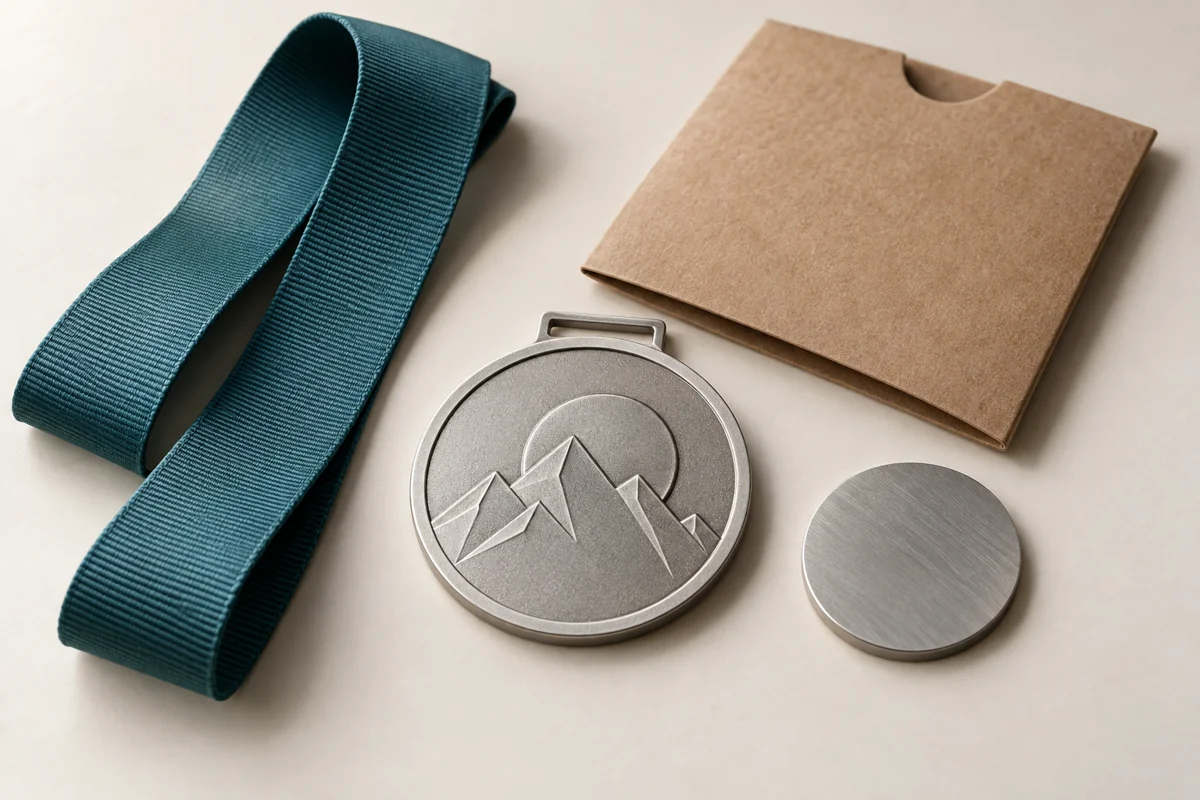
Polished and matte metal can create hierarchy without adding another color. Recessed soft enamel gives a tactile, high-contrast finish that suits energetic supporter pieces. Smooth hard enamel creates a refined surface for premium sets and formal sports lapel pins. Sandblasting, translucent enamel or selective printing can be useful, but each upgrade should communicate something—not merely raise the specification.
3. Match-specific micro-collections
Collectors respond to a story they can complete. A base team badge can be followed by host-city editions, rivalry-match variants or milestone pieces. The design system remains recognizable while one controlled element changes: border color, date panel, city motif or metal finish. For buyers, this approach creates variety without requiring a completely new production system for every release.
4. Quiet national symbolism
Some of the most sophisticated designs use national references indirectly. A coastline becomes a metal contour. A flower appears as negative space. A familiar color is used only on one focal detail. This restraint helps the item remain wearable after the tournament, which is crucial if the goal is to create a collectible rather than a disposable event giveaway.
5. The back of the pin becomes part of the story
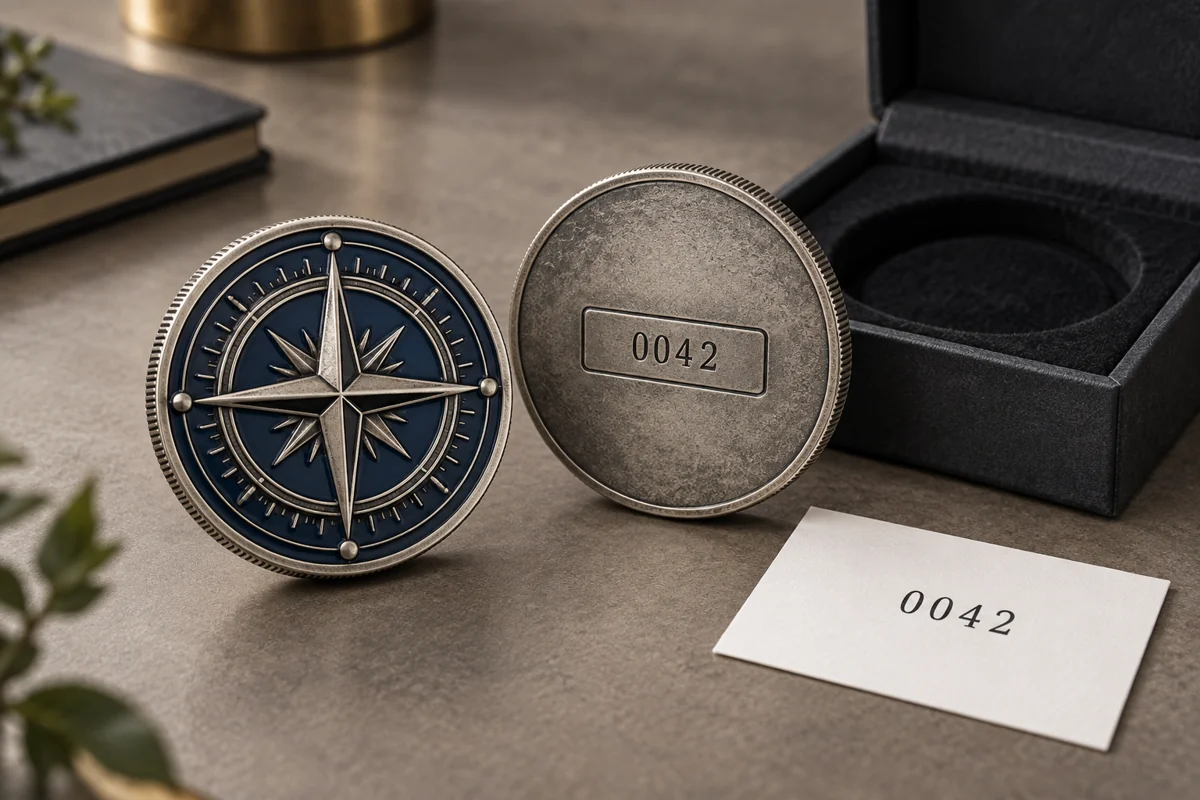
The reverse can include a tournament year, a collection number, a short place reference or a custom texture. It is also the practical area for required brand or copyright information. Collectors inspect this side when evaluating quality, so a deliberate back stamp can reinforce authenticity and make the object feel finished.
Why Fans Keep, Wear and Exchange Badges
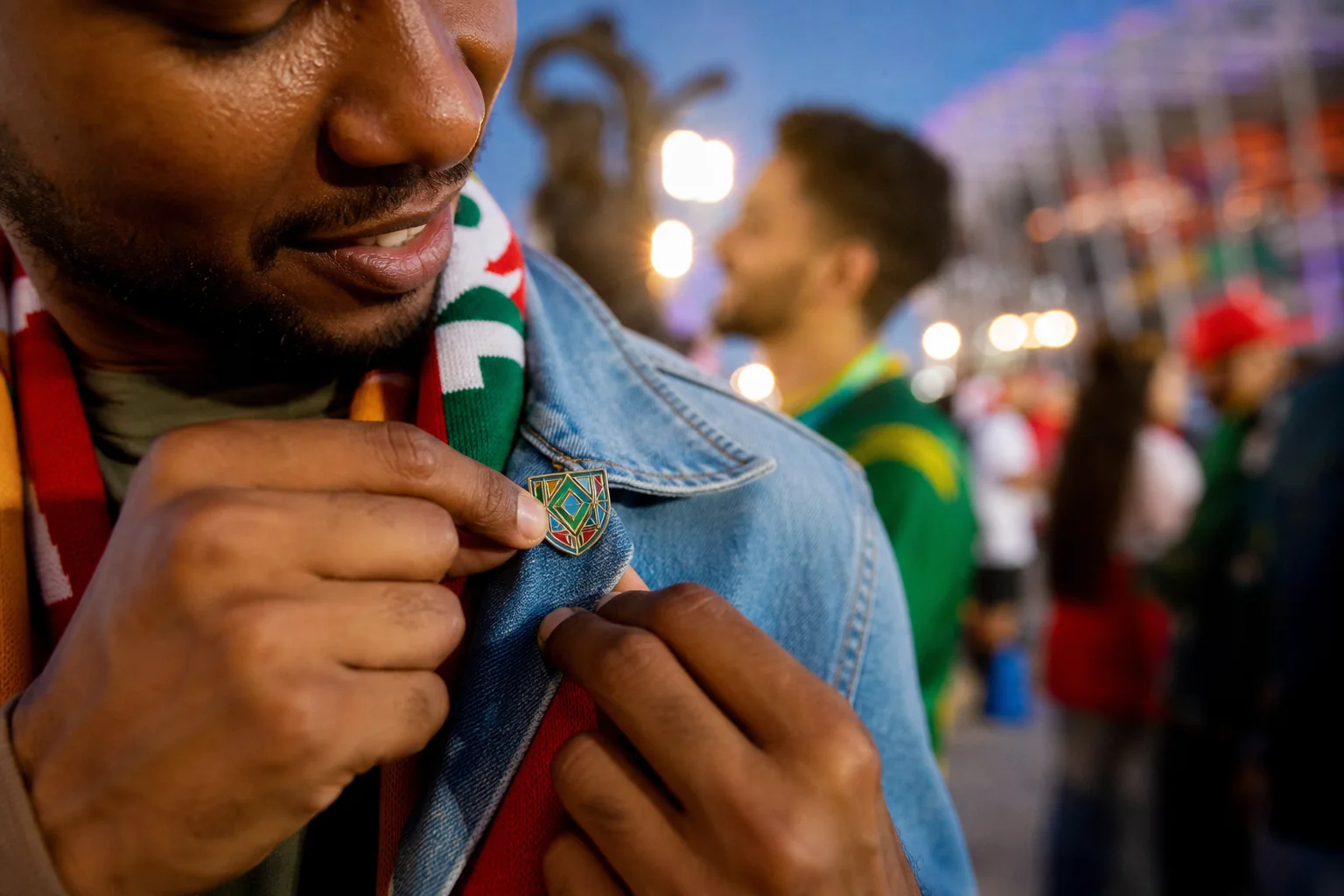
Collecting is rarely about metal alone. A pin may represent the first match a family attended together, a meeting with supporters from another country or a dramatic result watched in a crowded public square. Its value comes from association. That is why two objects with similar production costs can have very different emotional value.
Fans tend to keep pieces that satisfy at least one of four motives:
- Identity: “This is my team, city or community.”
- Memory: “I was there when this happened.”
- Participation: “I traded for this or completed the set.”
- Display: “This object is attractive enough to wear or show.”
Good badge programs design for these behaviors from the beginning. A numbered backer card supports memory. A limited color variant supports participation. A balanced silhouette and secure backing support wear. A coherent set supports display.
Turning Cultural Ideas into Manufacturable Enamel Pin Design
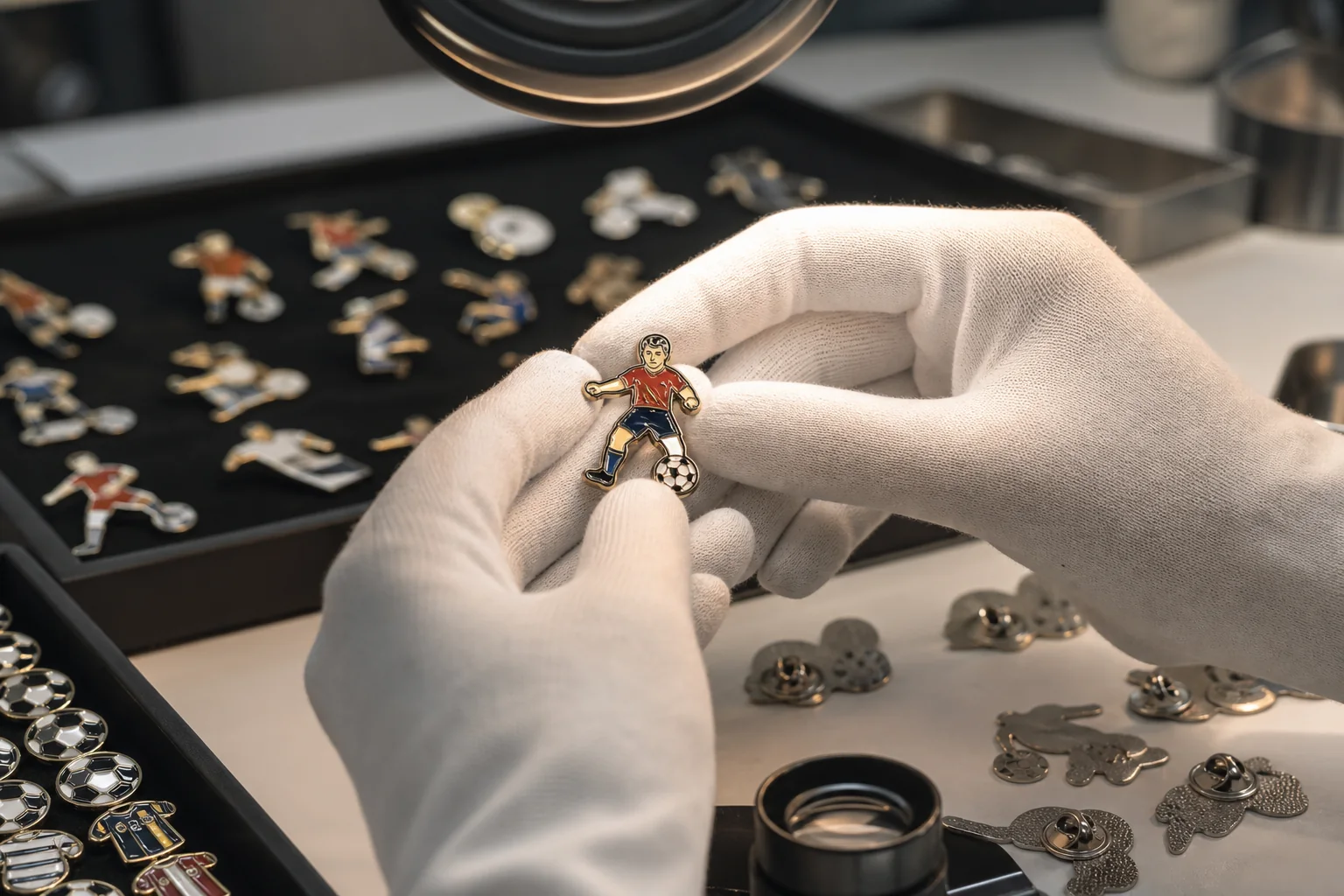
A strong concept still has to survive reduction, metal tooling and enamel filling. This is where collaboration with an experienced enamel pin manufacturer becomes technical rather than promotional. The artwork proof should answer practical questions before production begins.
Protect legibility at real size
Review the design at the intended physical dimensions, not only on a large monitor. Thin lines may merge, tiny type may fill in, and neighboring enamel areas need metal boundaries. If a cultural pattern loses meaning when simplified, move it to the backer card or packaging instead of forcing it onto the pin.
Match the process to the design
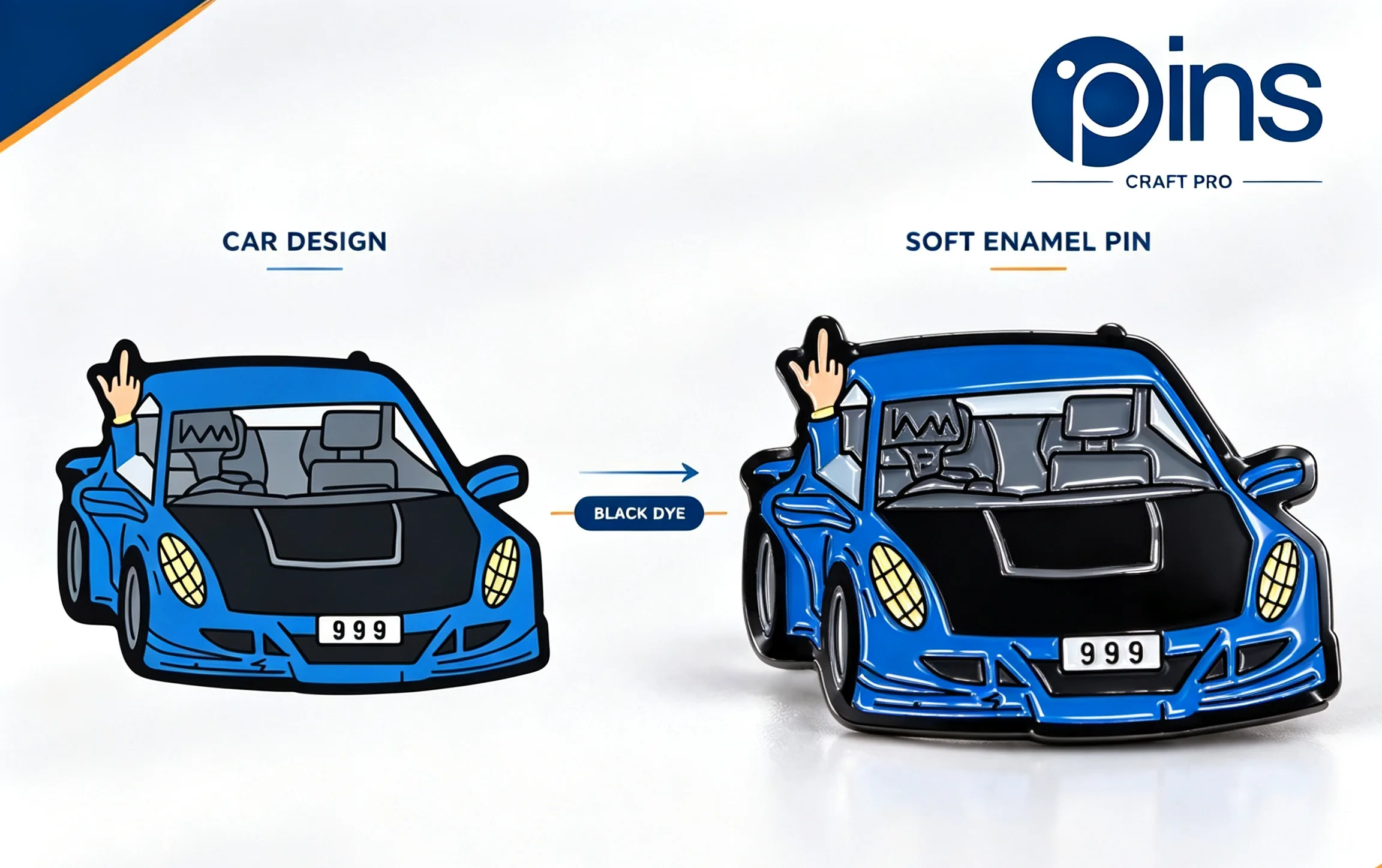
Soft enamel is effective for bold lines, tactile depth and active trading pieces. Hard enamel supports a smooth, jewelry-like surface and is often chosen for premium retail or presentation sets. Printed details can handle gradients and very small marks, while die-struck metal may suit a restrained commemorative badge. PinsCraftPro offers these formats as separate production paths, which is useful when a buyer wants the material to follow the concept rather than applying one process to every idea.
Specify plating, backing and packaging together
Gold, silver, black nickel and antique finishes change both contrast and tone. A rubber clutch may be comfortable for casual wear; a locking backing may be preferable for a high-value piece; paired posts can prevent a wide badge from rotating. Packaging should also be part of the brief. A backer card can explain a symbol that the pin itself only suggests.
A B2B Planning Framework for Clubs, Brands and Event Buyers
World Cup-related demand can create urgency, but urgency is not a strategy. Buyers should begin with the audience and distribution moment, then build the product specification.
- Define the rights boundary. Confirm which team names, crests, player likenesses, tournament terms and sponsor assets may legally be used.
- Choose one primary behavior. Decide whether the piece is meant to be worn, traded, sold, gifted or used as sponsor recognition.
- Build a visual system. Establish common shape logic, typography, border treatment and packaging before creating variants.
- Approve a physical-scale proof. Check line weight, enamel areas, plating contrast and back-stamp placement.
- Plan quantities by channel. Separate retail inventory, partner allocations, staff use, media kits and contingency stock.
- Work backward from the event. Leave time for artwork revisions, proof approval, production, quality control, international transit and local fulfillment.
This framework applies whether the program contains one premium badge or a broader range of pins, insignias comerciales, keychains and commemorative medals.
Design With Respect—and Without Accidental Infringement
National colors and general football imagery do not automatically grant the right to use official tournament marks, federation crests, protected mascots, player portraits or sponsor logos. Commercial buyers should obtain the necessary permissions and provide clear rights documentation to designers and suppliers.
There is also a cultural responsibility. Sacred imagery, Indigenous patterns, military symbols and community-specific marks should not be treated as generic decoration. When the meaning is uncertain, consult someone with relevant cultural knowledge or choose a different source of inspiration.
Preguntas frecuentes
What makes a football team pin feel collectible?
A distinct silhouette, a clear story, controlled variants and thoughtful packaging make a pin easier to recognize and more rewarding to keep. Scarcity can help, but meaning matters more than a vague “limited edition” label.
¿Debería un equipo optar por el esmalte blando o el esmalte duro?
Choose soft enamel for tactile depth, bold outlines and a traditional trading-pin feel. Choose hard enamel for a smooth, polished surface and premium presentation. The artwork, use case and budget should determine the process.
How early should B2B buyers begin?
Begin as early as the rights, artwork and distribution plan allow. Custom production includes proofing, manufacturing, inspection and shipping, and tournament deadlines leave little room for late design changes.
Conclusión final
The best 2026 team badges will not be miniature posters. They will be small, durable symbols that connect national identity, supporter experience and manufacturing craft. When cultural research guides the concept and production choices protect the design, a badge becomes more than merchandise. It becomes a portable memory of the tournament.