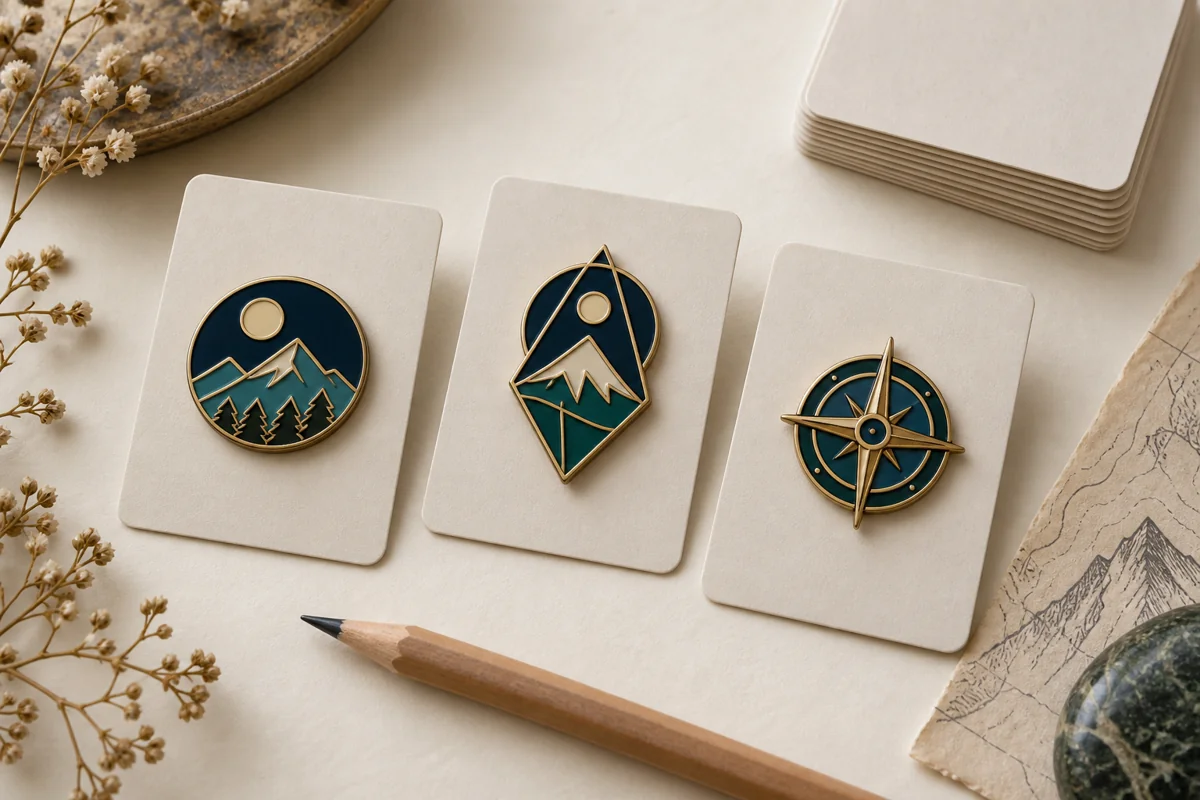





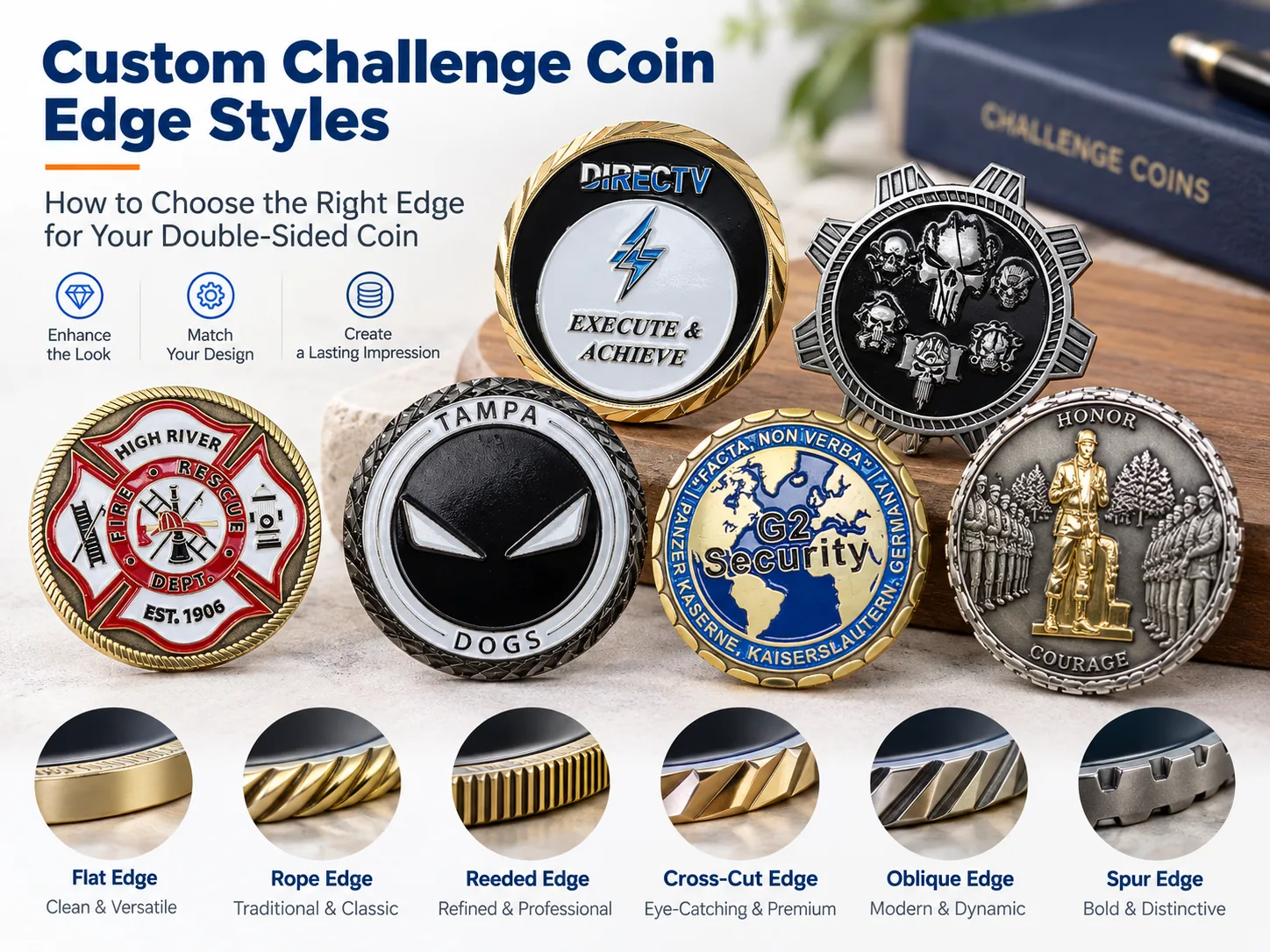
Custom metal keychains can work as corporate gifts because they are compact, useful, easy to include in a mailer, and capable of carrying a brand without becoming a large piece of merchandise. Those advantages are also why the category is easy to underestimate. A generic shape with an oversized logo may meet the order specification but still feel like an afterthought.
For a year-end client or employee program, the better question is not “Which keychain is cheapest?” It is “What role should this object play in the relationship?” The answer may be a practical thank-you, a membership marker, a product-launch reminder, a travel accessory, or one element in a larger gift kit. That role should guide the design, finish, packaging, quantity, and distribution plan.
This 2026 planning guide explains how to brief custom metal keychains for corporate gifts without relying on invented performance claims or one-size-fits-all specifications. Manufacturing capabilities, material options, color tolerances, safety requirements, prices, and production schedules vary, so confirm them on the quotation, proof, and approved sample for the actual design.
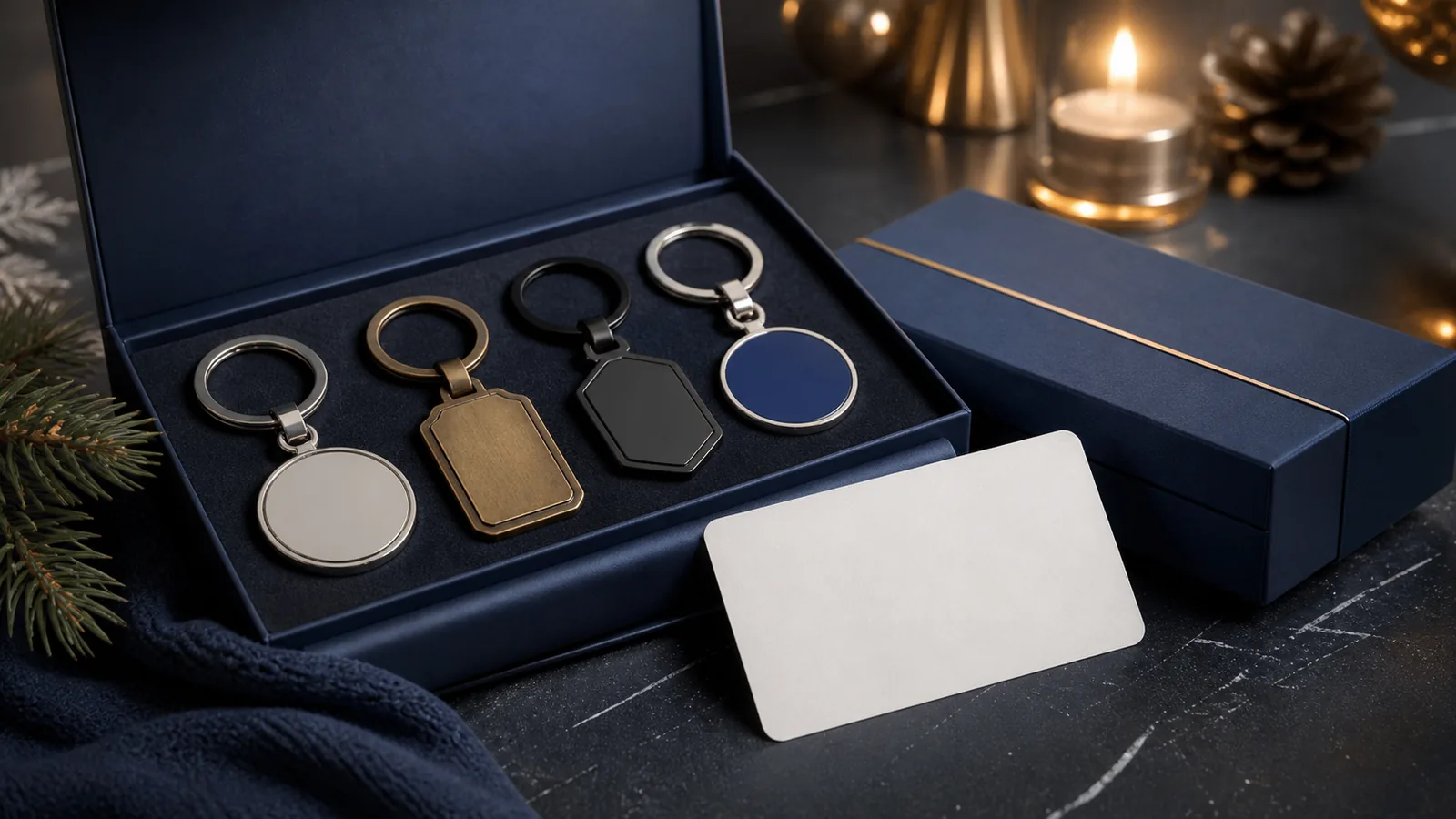
Quick answer: what makes a corporate keychain gift effective?
An effective keychain is relevant to the recipient, proportioned for daily use, visually clear without a sales-heavy message, and presented in a way that fits the occasion. The object should make sense even when it is separated from the original campaign. A strong silhouette, controlled logo, useful hardware, and thoughtful card can do more than extra colors or decorative complexity.
Use this decision sequence:
- Define the audience, business goal, and delivery moment.
- Choose a product role: everyday utility, premium keepsake, membership marker, or kit component.
- Select a construction and finish that support the approved artwork.
- Approve actual dimensions, weight, ring or attachment, front, back, and packaging.
- Plan fulfillment and inspection before confirming the delivery date.
For a broader comparison of construction and ordering options, start with the custom keychains ordering guide.
What 2026 promotional-product trends mean for gift planning
Two recent industry reports point in the same direction: usefulness and relevance matter more than novelty alone. At ASI Show Chicago in July 2026, speakers highlighted useful, high-quality products, personalized lifestyle programs, perceived value, and the continued role of budget-friendly options under $10 in year-end campaigns. That does not set a price target for a custom metal keychain; it shows that corporate gifting spans several budget tiers and that each tier still needs an intentional use case.
In August 2026, PPAI launched an industry initiative urging marketers to treat branded merchandise as a strategic channel connected to a goal, audience, and moment. Its supporting research emphasized usefulness, personalization, quality, long-term visibility, and emotional connection. For keychain buyers, the practical interpretation is simple: decide why the recipient would keep the item before deciding how prominently the logo appears.
Planning implication: a metal keychain should be evaluated as part of a relationship or campaign, not in isolation. Usefulness creates the opportunity for repeated presence; thoughtful design and distribution determine whether that opportunity feels welcome.
Define one business goal for the gift
A single program can have several stakeholders, but it should have one primary goal. A client-retention gift, employee anniversary item, dealer-launch kit, and conference follow-up serve different moments. If the team cannot describe the purpose in one sentence, artwork discussions will drift toward personal preference.
| Program goal | Recipient context | Useful design direction | What to measure |
|---|---|---|---|
| Client appreciation | Existing relationship | Restrained branding and considered presentation | Delivery completion, responses, follow-up conversations |
| Employee recognition | Milestone or team achievement | Shared symbol with optional year or tier | Recipient coverage, corrections, replacements |
| Product or property handover | A key is already part of the moment | Shape tied to the product or place | Distribution accuracy and continued use feedback |
| Membership or loyalty | Ongoing affiliation | Collectible series or controlled annual variant | Renewal-program participation and reorders |
| Event follow-up | Post-event mailer or kit | Compact, mail-friendly construction | Successful deliveries and campaign responses |
Do not claim that the keychain alone caused retention, loyalty, or sales. Use it as one identifiable part of a larger program and measure the operational and engagement signals that can reasonably be connected to the handoff.
Segment the audience before creating product tiers
Tiering can help a large program fit several relationships, but only when the differences are meaningful and manageable. Start with audience needs, not an assumption that executives require the heaviest option.
A simple structure might use:
- Core tier: one durable design with a simple card for broad employee or event distribution.
- Relationship tier: the same visual system with upgraded finish, back engraving, or packaging for established clients and partners.
- Milestone tier: a dated, numbered, or personalized variation for a smaller recipient group.
Keep as many specifications common as possible. One shared outline, ring, and master artwork can reduce version errors. Put variable names, messages, regions, or dates on inserts when the metal does not need to carry them.
Choose the metal keychain construction
Construction should support the visual hierarchy and intended handling. The supplier may recommend different processes after reviewing the artwork; record the selected process on the proof rather than relying on a generic label such as “premium metal.”
Die-struck and relief designs
Raised and recessed metal can create a clean emblem, seal, architectural motif, or textured pattern without color. Antique finishes can increase contrast in recessed areas, while polished finishes can emphasize a modern silhouette. Fine lines, deep recesses, and open areas still need a feasibility review.
Enamel-filled metal keychains
Enamel can carry a controlled brand palette and separate bold shapes. Keep color fields large enough for the selected process and avoid treating a screen rendering as an exact physical match. Plating color changes the apparent contrast around the enamel.
Printed details
Printing can reproduce gradients, small illustrations, or information that would be difficult to form with metal borders. Ask which surfaces are printed, how edges are finished, and whether the intended use calls for any project-specific performance test.
Functional and multi-part forms
Bottle-opening shapes, swivel parts, leather or fabric tabs, tokens, and other functional constructions add decisions beyond appearance. Confirm the intended function, materials, assembly, applicable market requirements, and sample review instead of assuming that every decorative keychain is suitable for every functional claim.
The custom keychains product overview shows a starting range of styles that can be discussed during quotation.
Design the silhouette for use away from the campaign
A keychain is often seen without its packaging, email, or event context. The shape must therefore stand on its own. Begin with the longest dimension, the relationship between the body and the ring, and the way the item will sit in a pocket or bag. Sharp projections, narrow bridges, deep cut-outs, and excessive thickness can affect comfort and feasibility.
Test three views:
- Actual size: print the front and back at 100% scale.
- Silhouette: remove color and confirm the outline is distinctive.
- In use: compare the body to a typical key ring, pouch, or gift box rather than judging it alone.
Browse the custom keychain gallery for format ideas, then create an original brief that fits your brand rather than copying a recognizable commercial product.
Control logo size, text, and the reverse side
The recipient does not need to see the logo from across a room. A smaller mark can feel more intentional when the overall object is already recognizable. If a long business name is essential, consider placing it on the reverse, using an approved short form, or moving the message to the insert card.
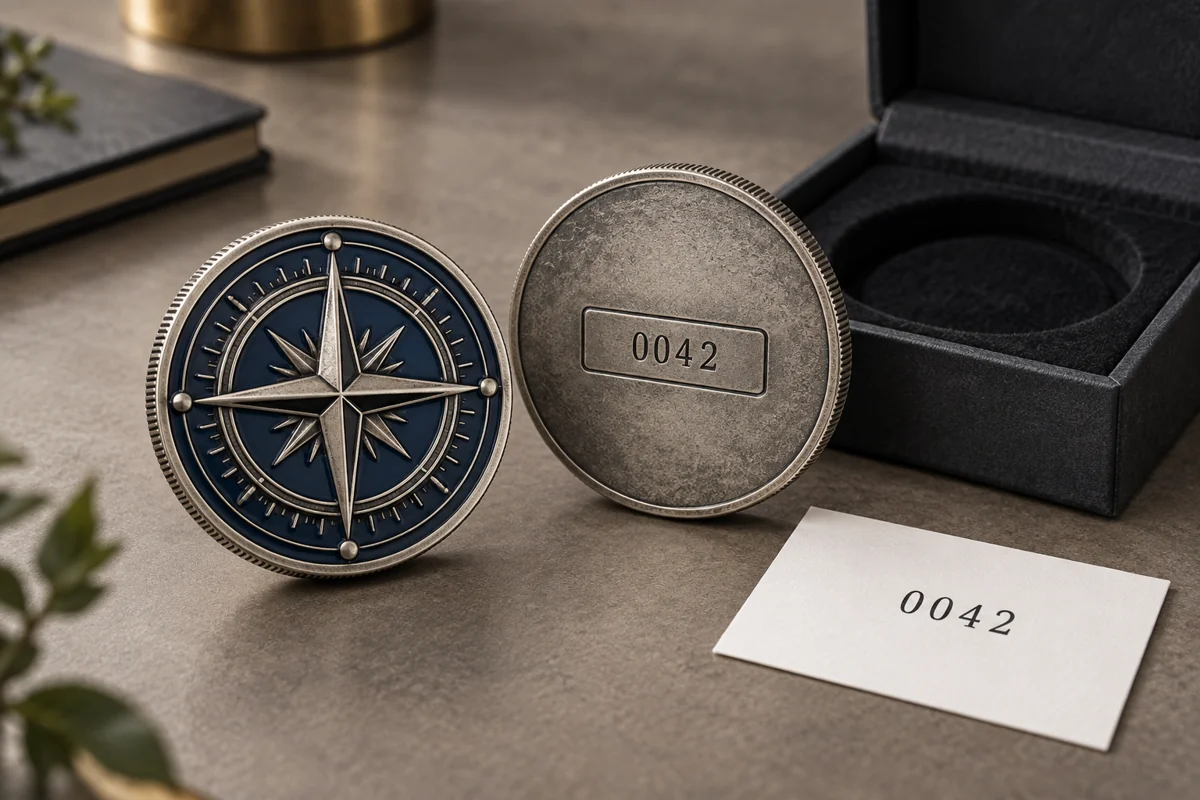
The reverse side is valuable space. It may hold a short URL, milestone, serial number, date, contact detail, or secondary brand cue, but every addition must remain readable and authorized. Personalized names introduce variable-data and privacy workflows; they should not be added casually.
Use the artwork proof checklist even though it was written for pins: its checks for dimensions, small gaps, colors, metal, back details, and approval ownership also apply to many metal keychain projects.
Choose finishes for the recipient and brand
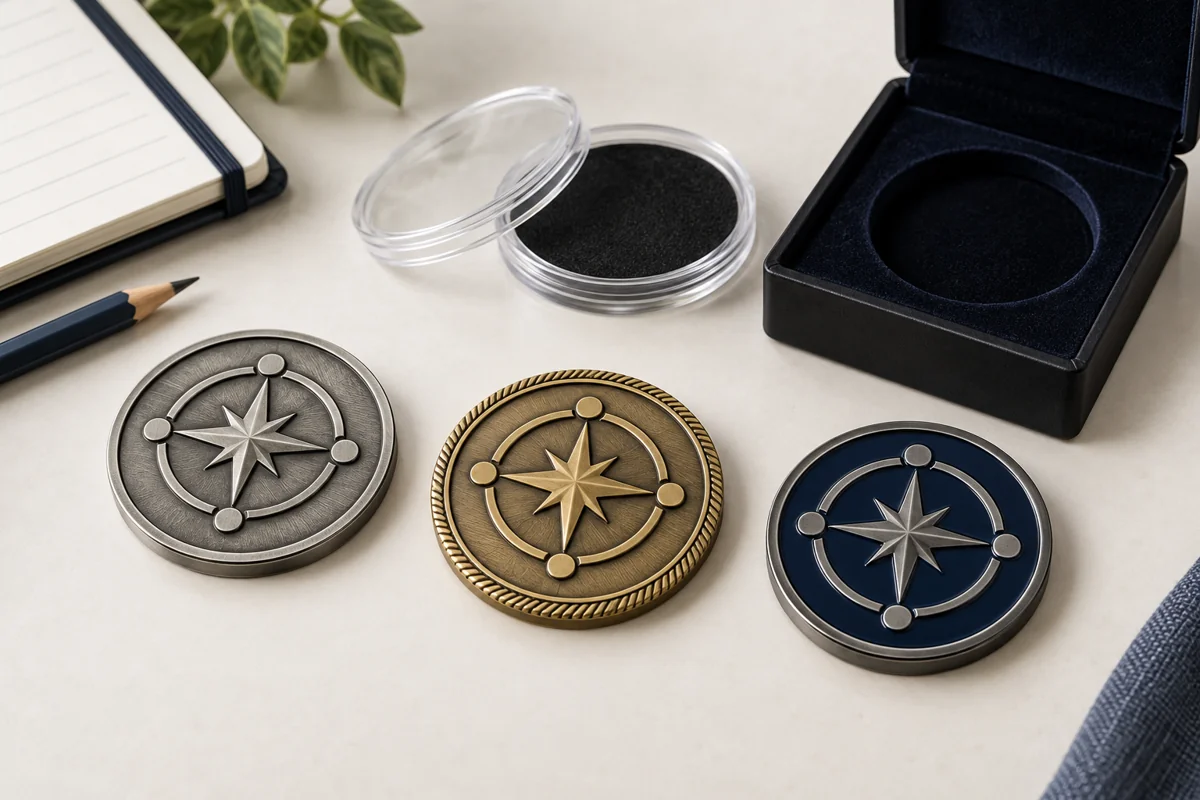
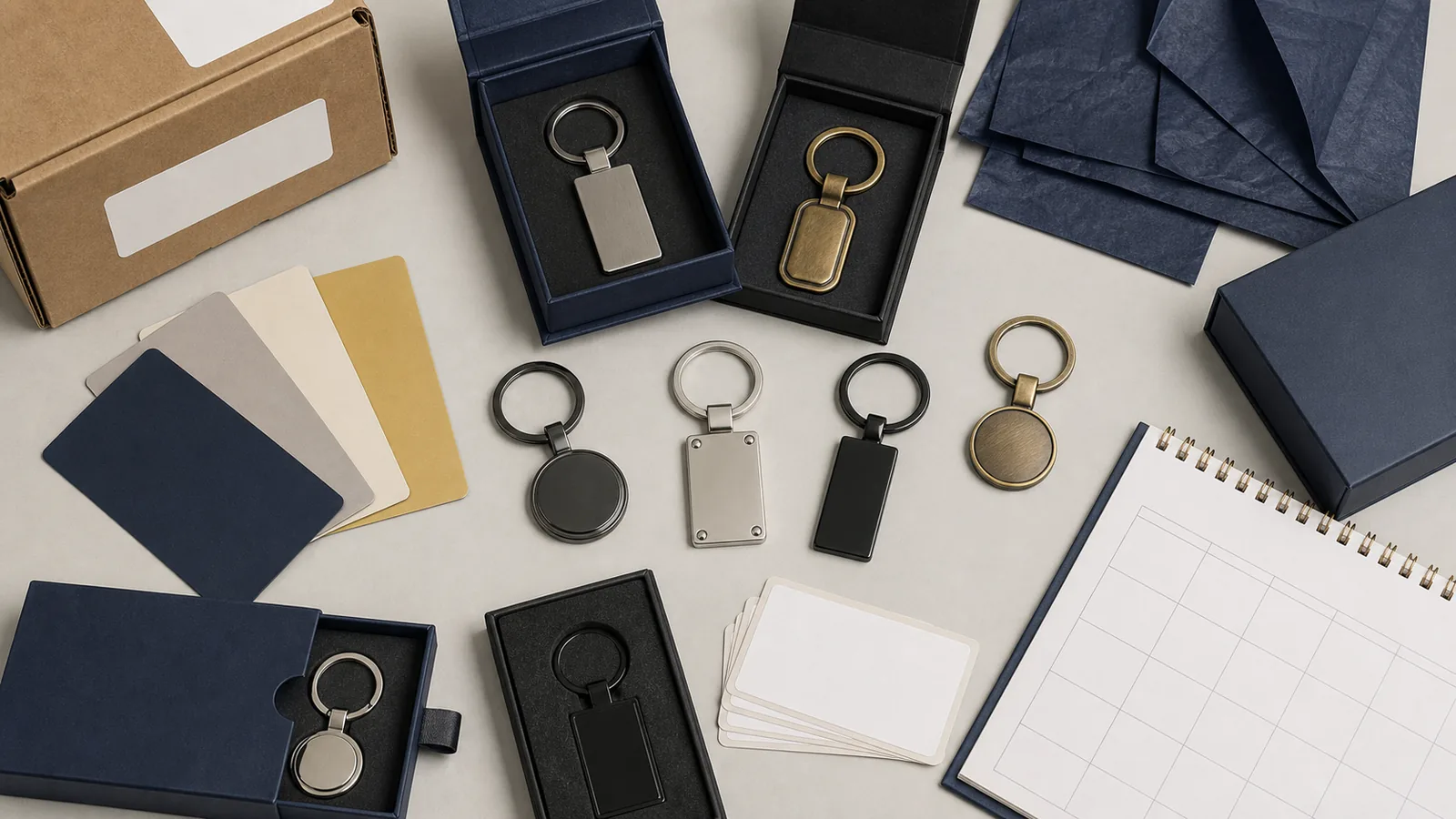
Polished nickel can feel crisp and contemporary. Antique brass or copper can emphasize relief and warmth. Black metal can support a restrained or technical palette. Mixed finishes, cut-outs, and textures can add contrast, but each extra treatment should have a visual purpose.
Ask how the proposed finish interacts with fingerprints, recesses, enamel colors, back engraving, and the connecting hardware. If color is controlled, place references on the proof and distinguish enamel, print, metal, and packaging colors. A “gold” screen swatch is not a metal specification.
Use personalization selectively
Personalization can make a corporate gift feel specific, but it also adds data handling, proofing, sorting, and replacement risk. Decide whether the value comes from an individual name, a shared milestone, a numbered edition, a region, or a handwritten card. Sometimes the card provides more emotional value and is easier to correct than permanently marking the metal.
If the keychain will be personalized:
- Choose one controlled spreadsheet owner.
- Define capitalization, special characters, name length, and blank-field rules.
- Remove duplicate recipients and confirm delivery addresses separately.
- Approve a variable-data proof or representative samples.
- Plan how misprints, late additions, and replacements will be produced.
- Limit access to personal data and remove it when no longer needed.
Do not place confidential identifiers on an everyday object. Legal, privacy, and information-security teams should review any data beyond ordinary display names.
Make packaging part of the message
Packaging has three jobs: protect the finish and hardware, explain the reason for the gift, and make distribution manageable. The right solution could be a card and protective sleeve, a folded card, a drawstring pouch, a rigid box, or an insert inside a larger kit.
Use the message area wisely. The card can name the program, provide a short thank-you, explain a symbolic shape, or direct the recipient to an experience. That allows the keychain to remain useful after seasonal wording has expired.
Before approving a box, test the full assembly. The body, ring, connector, insert, and closure need clearance. For mailed gifts, pack one complete unit in the intended mailer and check movement, abrasion, presentation after transit, and the final parcel dimensions. The custom merchandise packaging strategy explains how to match cards, pouches, cases, and shipping protection to the program.
Build a budget architecture instead of one unit-price target
A useful budget includes development, product, personalization, packaging, sorting, freight, duties or taxes where applicable, internal handling, and a sensible replacement allowance. A low ex-factory unit price can be misleading when the program requires several destinations or complex recipient data.
| Budget level | Where to focus | Avoid |
|---|---|---|
| High-volume core gift | Clear silhouette, one finish, reliable ring, efficient card | Unnecessary versions and oversized packaging |
| Mid-tier relationship gift | Better presentation, considered finish, concise message | Adding decoration without relevance |
| Small premium tier | Material detail, controlled personalization, fitted presentation | Complexity that cannot be proofed or sorted accurately |
| Gift-kit component | Consistent palette, scale, and pack-out with other items | Designing the keychain before knowing the kit dimensions |
When comparing quotations, hold the essential specification constant. If one option changes size, metal, ring, packaging, and delivery method, the unit prices are not directly comparable.
Create the specification before requesting final prices
A short specification sheet reduces assumptions between marketing, procurement, the designer, and the manufacturer. Include the front and back artwork, dimensions, thickness or profile where relevant, construction, base material, finish, colors, ring and connector, reverse details, quantity by version, packaging, destination, and required delivery date.
The custom metal product specification workflow can be adapted for keychains. Record alternatives separately so a cost-saving option does not accidentally replace the approved design.
Schedule backward from the handoff date
Year-end programs compete with internal approvals, production capacity, carrier deadlines, and staff holidays. Begin with the date recipients must have the gift, then reserve time for internal distribution or individual mailing, receiving inspection, transit, packaging, production, sample review if needed, artwork proofing, and data cleanup.
Ask for current project-specific timing. Do not copy a lead time from an unrelated product or previous year. Complexity, quantity, personalization, destination, shipping method, and holiday closures can change the schedule.
A practical timeline includes decision gates:
- Business goal, audience, quantity range, and budget owner approved.
- Artwork and product direction selected.
- Quotation and specification reconciled.
- Front, back, dimensions, hardware, colors, and packaging proof approved.
- Sample reviewed when the risk or value justifies it.
- Recipient data frozen and fulfillment file checked.
- Finished goods inspected before final distribution.
Decide between bulk delivery and individual fulfillment
Bulk delivery to one office is operationally simple, but it transfers sorting and last-mile work to the organization. Individual fulfillment can reach remote recipients directly but requires cleaner data, stronger packaging, address privacy controls, and a process for returned parcels.
For multi-location programs, assign location codes before production and keep them off the visible product unless recipients need them. Label master cartons consistently and create a packing list that can be checked without opening every gift box. If several product tiers look similar, use controlled packaging marks that do not diminish the presentation.
Approve the physical experience, not only the rendering
A digital proof can confirm layout, dimensions, finish callouts, and back details, but it cannot fully communicate weight, edge feel, ring tension, surface reflection, box fit, or how a connector moves. The appropriate level of sampling depends on quantity, novelty, value, schedule, and risk.
If a pre-production sample is not practical, ask what reference samples, material chips, close-up photos, video, or first-article checks are available. Write down what each review can and cannot confirm. Final approval should identify the artwork version and complete specification so an earlier mock-up is not mistaken for production approval.
Measure what the gifting program can actually show
Track operational quality first: delivery rate, damaged packages, incorrect names, missing units, replacements, and arrival before the intended moment. Then connect the gift to a clearly defined next action, such as a thank-you reply, meeting, event registration, landing-page visit, or employee-program survey.
Use a campaign-specific URL or code only when it improves the recipient experience and complies with privacy rules. Do not assume every later sale or retention event was caused by the keychain. The more credible question is whether the complete program reached the right people, delivered the intended message, and supported the next relationship step.
Common corporate keychain mistakes
- Starting with a catalog item instead of a program goal. Define the audience and moment first.
- Making the logo the entire concept. Use shape, texture, finish, and the card to build meaning.
- Approving only the front. Review the back, ring, connector, edge, and packaging.
- Creating too many tiers. Every version adds proofing, sorting, and reorder risk.
- Putting dated copy on the reusable object. Move campaign-specific messaging to the insert when possible.
- Ignoring the parcel. A beautiful box can still be impractical or arrive damaged.
- Using recipient data without a correction plan. Define validation, privacy, late additions, and replacements.
- Promising a delivery date before approval. Confirm the current schedule for the exact specification.
Corporate gift keychain briefing checklist
- Primary business goal and gifting moment
- Recipient segments and quantity by segment
- Core, relationship, or milestone tier structure
- Approved vector logo and brand permissions
- Finished dimensions and intended use
- Construction, base material, finish, colors, and texture
- Ring, connector, moving parts, and functional claims
- Front, back, engraving, numbering, or personalization
- Card copy, pouch, box, kit, mailer, and pack-out
- Privacy owner for names and addresses
- Delivery locations, shipping terms, inspection, and distribution time
- Named proof approver and final specification version
- Measurement plan and replacement process
Custom metal keychains for corporate gifts FAQ
Are custom metal keychains suitable for employee gifts?
They can be when the design marks a real milestone or shared identity and the organization knows how the item will be presented. A generic logo alone may not feel like recognition; a concise message or program-specific symbol can provide context.
What finish should a corporate keychain use?
Choose a finish that supports the brand palette, artwork relief, intended handling, and gift tone. Polished nickel, antique brass, black metal, and other finishes create different contrast and surface behavior. Review a physical reference when finish is critical.
Should the company name be on the front or back?
Put the strongest visual idea on the front. A long company name, URL, date, or secondary message may fit the back or insert better, provided it remains readable and approved.
Is individual engraving worth it?
It can add relevance for a small milestone group, but it also introduces data, proofing, sorting, and replacement work. Compare engraving with a personalized card before choosing the more complex workflow.
How early should a holiday keychain order start?
Start by mapping backward from the recipient handoff date. Ask the supplier for current artwork, proof, sampling, production, packaging, and transit windows for the exact project, then add receiving and distribution time.
What should be sent for a bulk keychain quote?
Provide artwork, purpose, dimensions, quantity by version, preferred construction and finish, ring or attachment, reverse details, personalization, packaging, destination, and deadline. Flag any flexible items so alternatives can be compared clearly.
Plan the gift as a complete recipient experience
The best custom metal keychains for corporate gifts balance utility, brand restraint, durable construction, and a clear reason for being given. They do not need to be elaborate. They need to feel intentional at the moment of handoff and remain understandable afterward.
When the audience, quantity, artwork, packaging, destination, and date are defined, review the custom metal keychain options and contact PinsCraftPro for a project quotation. Ask for the complete front, back, hardware, and packaging specification to be approved before production.
Industry sources consulted
- Advertising Specialty Institute, “ASI Show Chicago 2026: Holiday Gifting Trends”, published July 22, 2026.
- Promotional Products Association International, “Merch Moves Us”, published August 24, 2026.
Editorial note: industry findings above are used as planning context, not as performance guarantees. The concept images in this article were created with ChatGPT Image and reviewed for relevance, brand safety, and accuracy of the accompanying captions.