



Custom Challenge Coins
When designing a custom challenge coin, most buyers naturally focus on the front and back artwork. Logos, text, colors, relief details, plating, and overall size are usually discussed first. However, there is another design element that can significantly influence the appearance and feel of the finished coin: the edge.
For a double-sided challenge coin, the edge is more than just the outer perimeter. It connects both sides of the coin and can add texture, contrast, depth, and a distinctive finishing detail. The right edge can make a simple coin look more refined, while a highly detailed edge can enhance a premium or commemorative design.
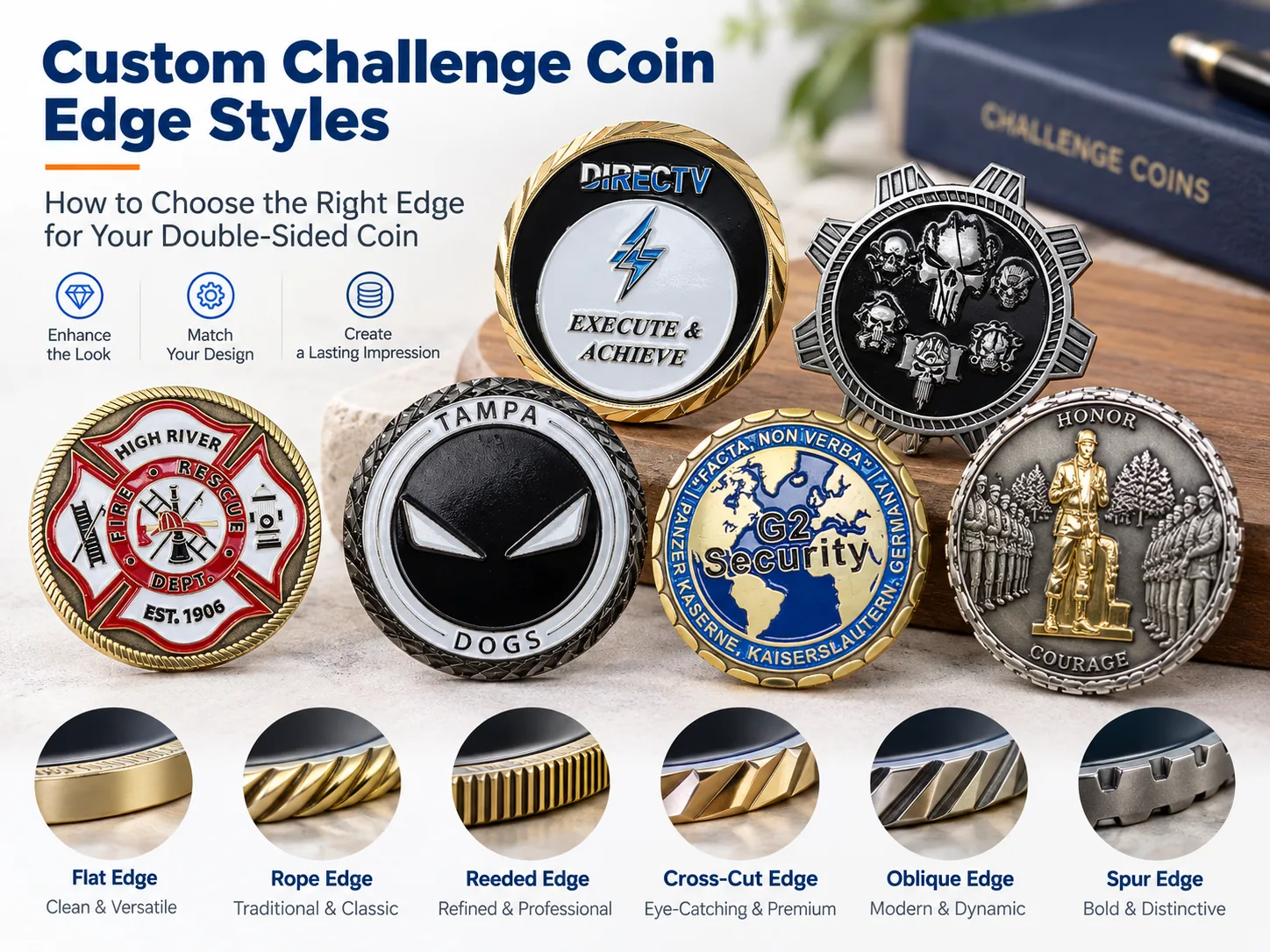
With several edge styles available—including flat, rope, reeded, cross-cut, and other decorative options—how do you choose the right one for your custom challenge coin?
This guide explains the most popular custom challenge coin edge styles, their visual characteristics, and how to select an edge that works with your coin’s overall design.
Why Does the Edge Matter on a Double-Sided Challenge Coin?
A double-sided challenge coin is designed as one complete piece. The front and back may feature different artwork, but the edge visually connects them.
A well-selected edge can:
- Create a more finished appearance
- Add texture and visual interest
- Enhance the premium feel of the coin
- Complement the front and back artwork
- Improve the overall balance of the design
- Help create a distinctive collectible or commemorative look
For example, a military challenge coin with detailed relief artwork may look particularly suitable with a traditional rope edge, while a corporate recognition coin may benefit from a cleaner flat or reeded edge.
The key is to choose the edge as part of the overall coin design, rather than treating it as an afterthought.
Popular Custom Challenge Coin Edge Styles
Different edge styles create different visual effects. Below are some of the most commonly requested options for custom challenge coins.
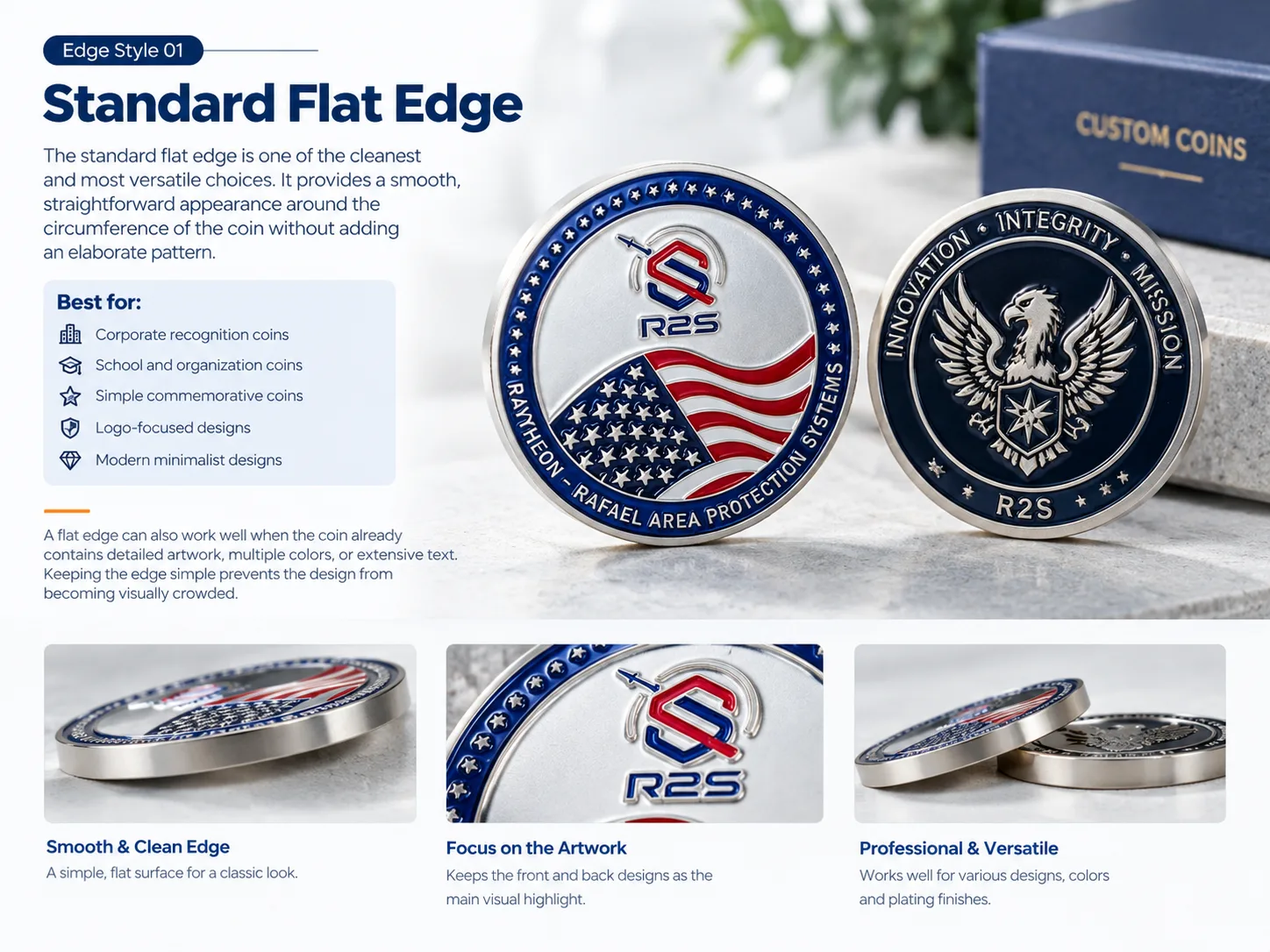
1. Standard Flat Edge
The standard flat edge is one of the cleanest and most versatile choices.
It provides a smooth, straightforward appearance around the circumference of the coin without adding an elaborate pattern. This makes it particularly suitable for designs where the front and back artwork should remain the primary visual focus.
Best for:
- Corporate recognition coins
- School and organization coins
- Simple commemorative coins
- Logo-focused designs
- Modern minimalist designs
A flat edge can also work well when the coin already contains detailed artwork, multiple colors, or extensive text. Keeping the edge simple prevents the overall design from becoming visually crowded.
 2. Rope Edge
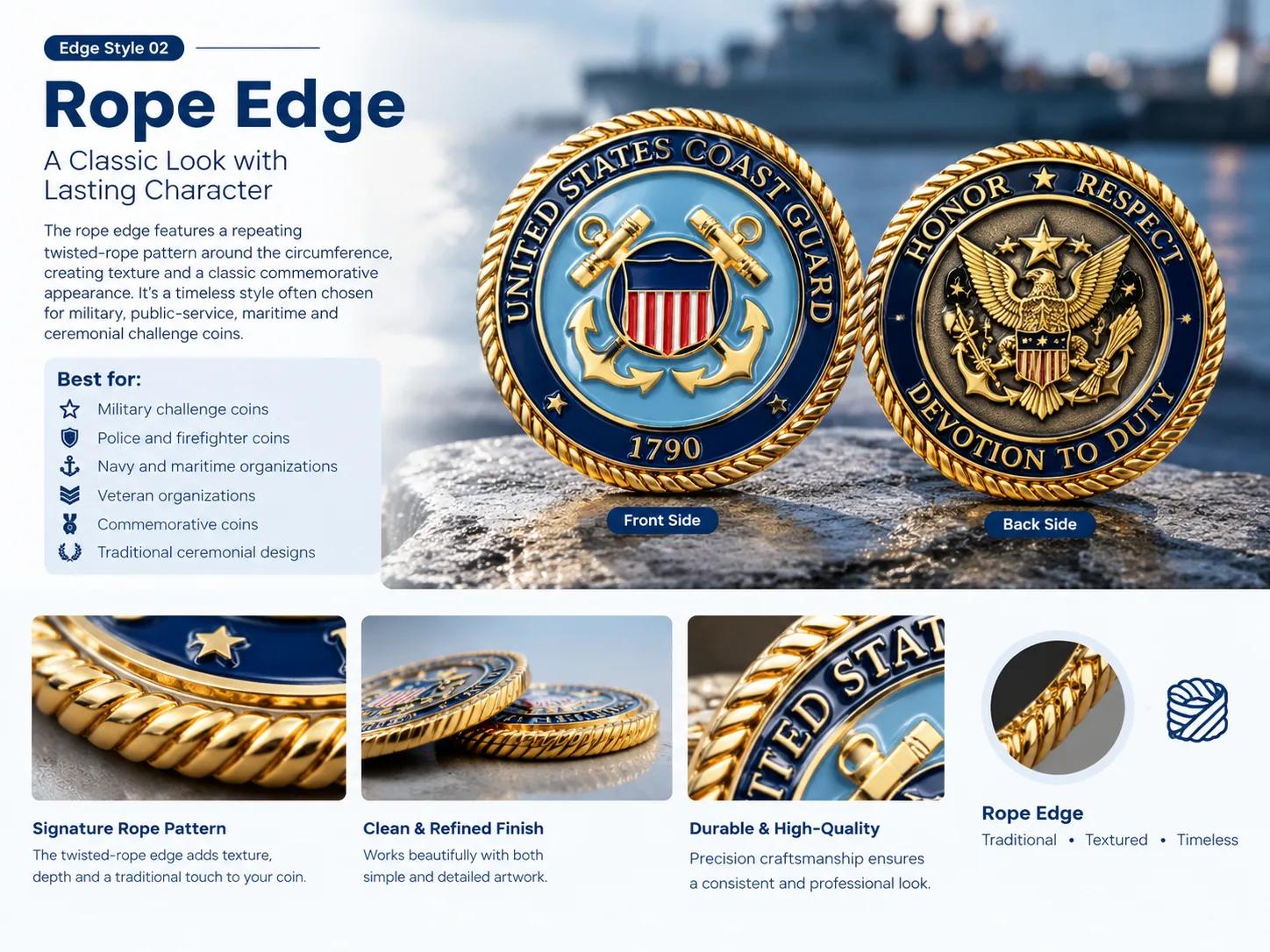
The rope edge is one of the most recognizable decorative styles for traditional challenge coins.
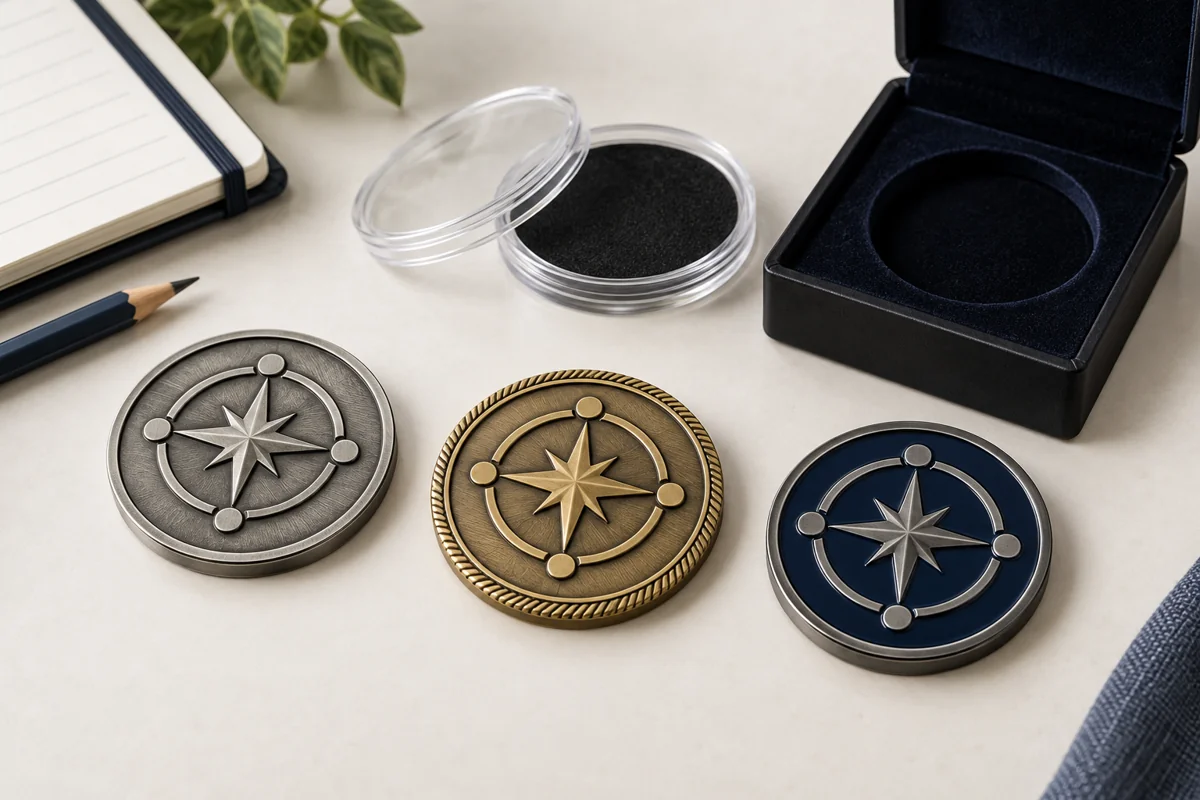
It features a repeating twisted-rope pattern around the circumference, creating texture and a classic commemorative appearance. Because of its traditional character, the rope edge is often associated with military, public-service, maritime, and ceremonial challenge coins.
Best for:
- Military challenge coins
- Police and firefighter coins
- Navy and maritime organizations
- Veteran organizations
- Commemorative coins
- Traditional ceremonial designs
A rope edge is especially effective when the coin artwork already has a strong emblematic or institutional character.
For example, a double-sided military challenge coin with a detailed unit emblem on one side and a mission or motto on the other can be complemented by a rope edge to create a cohesive, traditional appearance.
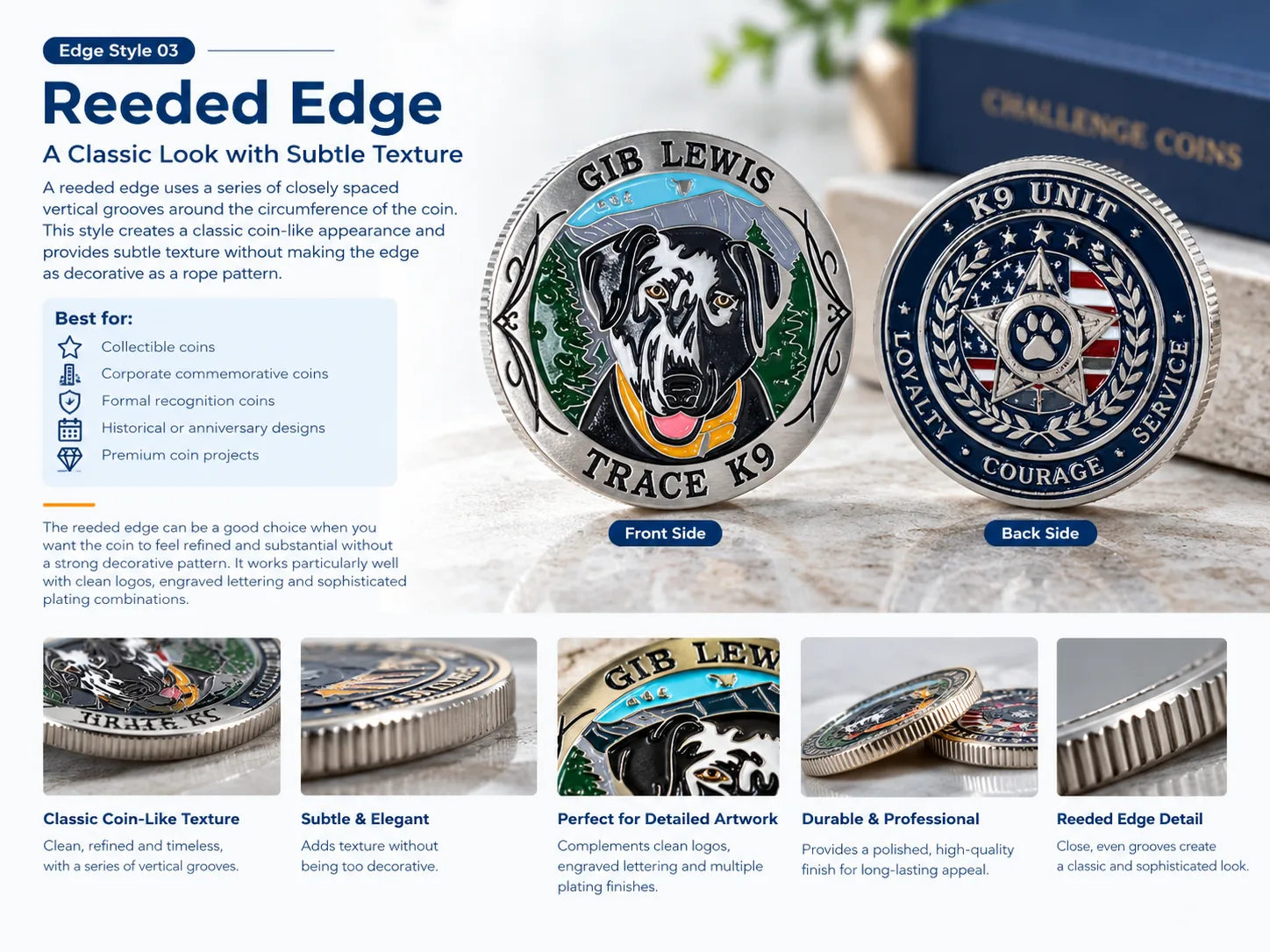
 3. Reeded Edge
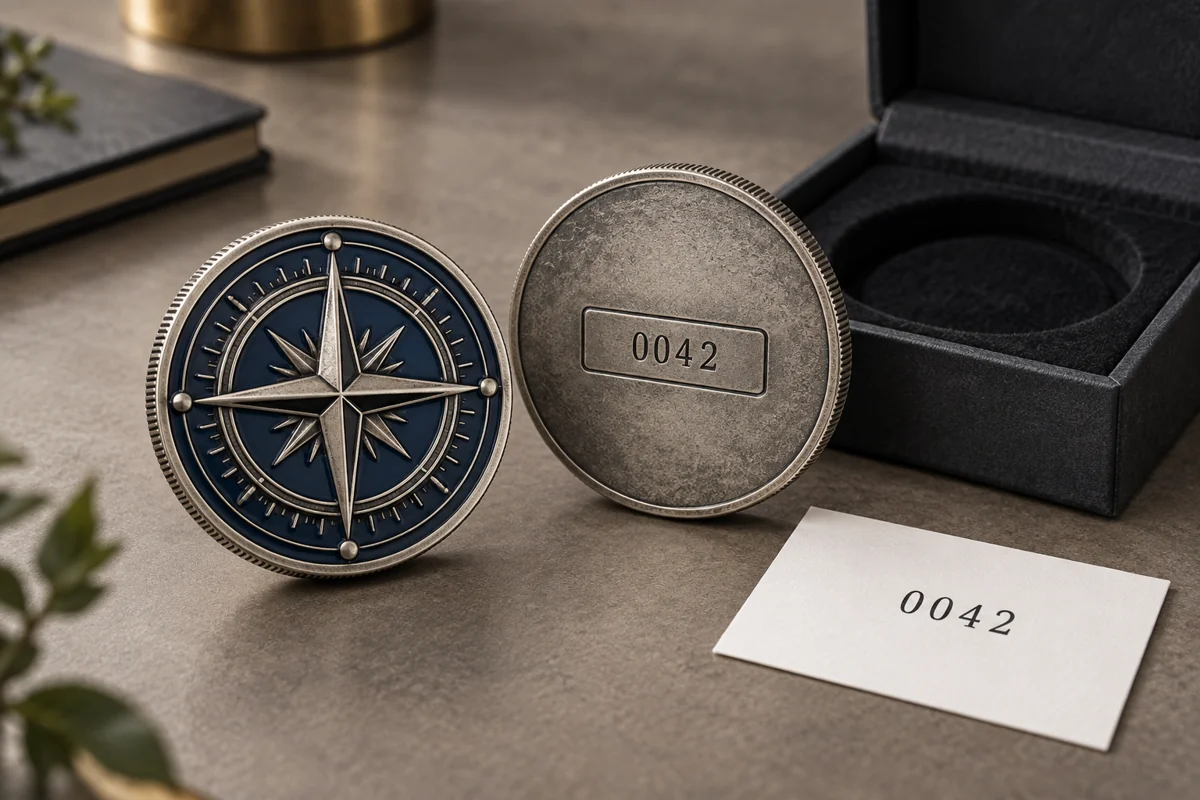
A reeded edge uses a series of closely spaced vertical grooves around the circumference of the coin.
This style creates a classic coin-like appearance and provides subtle texture without making the edge as decorative as a rope pattern.
Best for:
- Collectible coins
- Corporate commemorative coins
- Formal recognition coins
- Historical or anniversary designs
- Premium coin projects
The reeded edge can be a good choice when you want the coin to feel refined and substantial without introducing a strong decorative pattern.
It works particularly well with clean logos, engraved lettering, and sophisticated plating combinations.
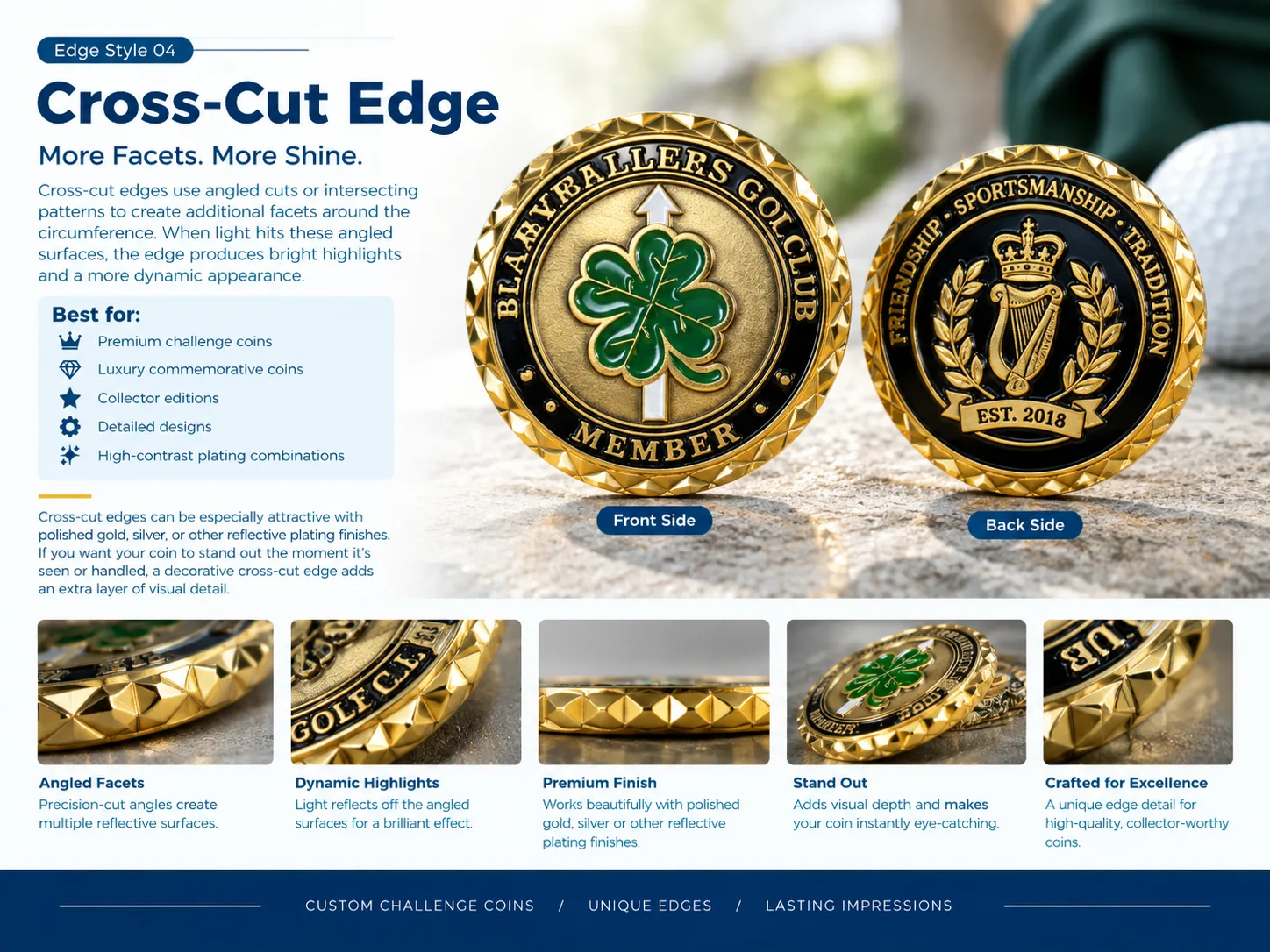
 4. Cross-Cut Edge
Cross-cut edges use angled cuts or intersecting patterns to create additional facets around the circumference.
When light hits these angled surfaces, the edge can produce bright highlights and a more dynamic appearance.
Best for:
- Premium challenge coins
- Luxury commemorative coins
- Collector editions
- Detailed designs
- High-contrast plating combinations
Cross-cut edges can be especially attractive with polished gold, silver, or other reflective plating finishes.
If your goal is to create a challenge coin that immediately catches attention when viewed or handled, a decorative cross-cut edge can add another layer of visual detail.
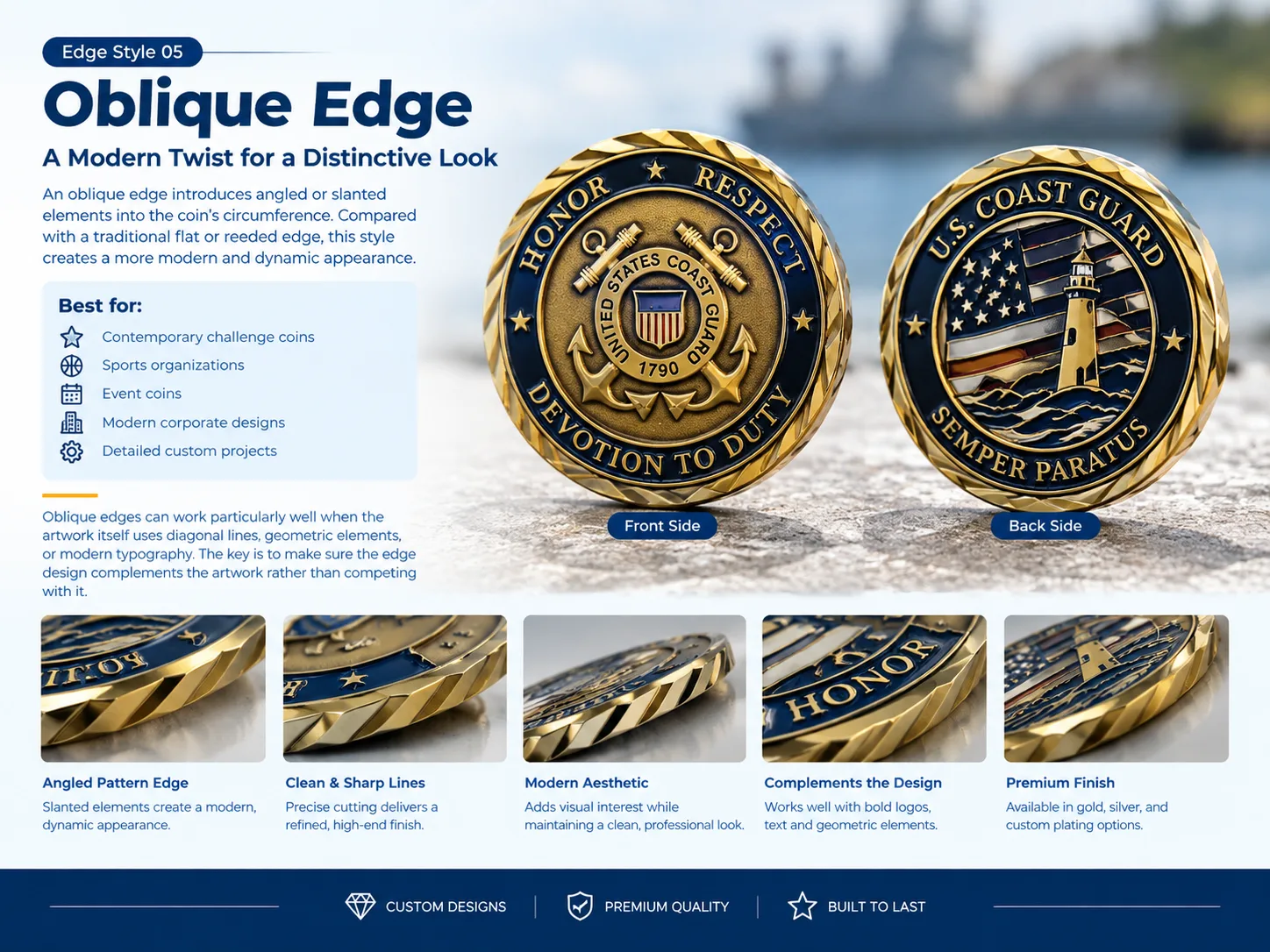
 5. Oblique Edge
An oblique edge introduces angled or slanted elements into the coin’s circumference.
Compared with a traditional flat or reeded edge, this style can create a more modern and dynamic appearance.
Best for:
- Contemporary challenge coins
- Sports organizations
- Event coins
- Modern corporate designs
- Detailed custom projects
Oblique edges can work particularly well when the artwork itself uses diagonal lines, geometric elements, or modern typography.
The important point is to make sure the edge design complements the artwork rather than competing with it.
 6. Other Decorative Edges
Some challenge coins use more distinctive edge patterns, including spur-style or other custom decorative structures.
These options can give a coin a more mechanical, tactical, or highly customized appearance.
Best for:
- Tactical-themed coins
- Police and security organizations
- Industrial organizations
- Special-edition coins
- Unique collector pieces
If your organization wants a challenge coin that looks different from a conventional round coin, a more distinctive edge can help create that identity.
How to Match the Edge With Your Double-Sided Coin Design
Choosing an edge should not be based on appearance alone. It should also complement the artwork on both sides of the coin.
Military & Public-Service Coins
Traditional designs often pair well with:
Rope Edge · Reeded Edge · Spur Edge · Cross-Cut Edge
For military and public-service coins, the edge can reinforce the formal and commemorative character of the design.
Corporate Recognition Coins
For business awards, employee recognition, and corporate anniversary coins, consider:
Flat Edge · Reeded Edge · Cross-Cut Edge
A cleaner edge can help keep attention on the company logo, message, or recognition details.
Sports & Event Coins
Sports teams, competitions, tournaments, and special events often benefit from:
Flat Edge · Oblique Edge · Cross-Cut Edge · Custom Edge
Modern and dynamic edge styles can complement bold logos and energetic graphics.
Collector & Premium Coins
For limited-edition or highly detailed coins, consider:
Cross-Cut Edge · Oblique Edge · Reeded Edge · Custom Edge
These options can add another layer of detail to a coin intended to feel special or collectible.
Edge vs. Border: What’s the Difference?
One common point of confusion when designing challenge coins is the difference between the edge and the border.
They are not the same element.
The edge refers to the circumference or side of the coin—the area visible when looking at the coin from its side.
The border refers to the raised or defined area around the artwork on the front or back face of the coin.
For example, a coin may have:
- A rope edge
- A raised outer border
- 3D relief artwork
- Soft enamel color
- Different plating finishes
These elements can all exist together.
Understanding the difference makes it easier to communicate your requirements clearly with a manufacturer before production begins.
Does Edge Design Affect Coin Thickness?
The edge should be considered together with the coin’s diameter, thickness, relief, plating, and production method.
A highly detailed coin edge may require different production considerations from a simple flat edge. The available space around the circumference can also influence how clearly a decorative pattern or edge detail can be reproduced.
For this reason, the final edge specification should be confirmed before tooling begins.
A professional manufacturer can review the complete design and help determine whether the selected edge is appropriate for the coin’s dimensions and production requirements.
This is particularly important for double-sided challenge coins featuring:
- Deep 3D relief
- Multiple plating finishes
- Fine lettering
- Detailed borders
- Enamel colors
- UV-printed elements
- Complex edge patterns
The goal is not simply to choose the most complicated edge. The goal is to choose an edge that can be manufactured accurately while supporting the overall design.
Combining Edge Styles With Plating and Finishes
The edge can also work together with the coin’s plating finish to create different visual effects.
For example:
Gold Plating + Rope Edge
Creates a traditional and ceremonial appearance, making it suitable for military, commemorative, or award-style coins.
Silver Plating + Cross-Cut Edge
The reflective facets of a cross-cut edge can stand out particularly well against a silver finish.
Black Nickel + Reeded Edge
A darker plating finish combined with a structured reeded edge can create a modern and sophisticated appearance.
Two-Tone Plating + Decorative Edge
Combining different plating colors can visually separate the edge from the main coin surface and create a more premium appearance.
The same edge can therefore produce very different results depending on the plating, relief, color, and artwork used on the coin.
What About 3D Relief, Enamel and UV Printing?
Modern custom challenge coins are no longer limited to simple engraved artwork.
A double-sided coin can combine multiple production techniques, including:
- 2D engraved details
- 3D relief
- Soft enamel
- Hard enamel
- Glitter enamel
- Transparent enamel
- UV printing
- Multiple plating finishes
For highly detailed designs, the edge should support—not compete with—the main artwork.
For example, if the front side contains a complex 3D emblem and the back features a detailed logo with gradient colors or UV printing, a relatively clean edge may create better visual balance.
On the other hand, a simple emblem can leave more room for a decorative edge to become a major design feature.
How to Choose the Right Edge for Your Custom Challenge Coin
If you are unsure which edge style to choose, consider these five questions:
1. What is the purpose of the coin?
Is it for military recognition, corporate awards, a sports event, a commemorative occasion, or a collector edition?
2. How detailed are the front and back designs?
Highly detailed artwork may benefit from a simpler edge, while simpler artwork can accommodate a more decorative edge.
3. What visual style do you want?
Choose between traditional, formal, modern, tactical, luxury, or collectible aesthetics.
4. What plating and colors will you use?
Gold, silver, black nickel, rose gold, rainbow plating, and two-tone finishes can all interact differently with the edge.
5. What are the coin’s size and thickness?
The final edge design should be reviewed together with the coin’s dimensions and relief before production.
When these factors are considered together, it becomes much easier to select an edge that looks right and can be produced accurately.
Design Your Double-Sided Challenge Coin With the Right Edge
The edge may only represent a small part of a challenge coin’s total surface area, but it can have a significant impact on the final appearance.
A flat edge provides a clean and versatile finish. A rope edge adds traditional character. A reeded edge creates a classic coin-like appearance. A cross-cut edge adds reflective highlights, while oblique and decorative edges can give modern or specialized projects a more distinctive identity.
The best choice depends on the purpose of the coin, artwork complexity, plating, dimensions, and desired visual style.
At PinsCraftPro, we help businesses, organizations, military and public-service groups, clubs, event planners, and other buyers develop custom double-sided challenge coins based on their artwork and production requirements.
From 2D and 3D artwork to mold making, relief production, coloring, UV printing, polishing, and plating, each detail can be reviewed before mass production.
Whether you need a traditional rope edge or a more distinctive custom edge, the right combination of edge, artwork, finish, and craftsmanship can turn a custom challenge coin into a piece that people will be proud to keep.
Ready to create your custom double-sided challenge coin?
Send us your artwork, preferred size, quantity, and desired edge style for a free quote and production artwork.